
Key Points
- Congress
is considering rescinding more than $1 billion from the Corporation for
Public Broadcasting (CPB), jeopardizing funding for 59 tribal radio
stations nationwide. - The
House of Representatives has already approved the cuts; the Senate is
expected to vote this week. - Industry
leaders estimate that up to 90% of Native American radio stations could
cease operations if the cuts are enacted. - Rural
and isolated Indigenous communities rely heavily on tribal radio for news,
emergency alerts, weather updates, cultural programming, and language
preservation. - Lack
of alternative media access—such as broadband internet and cable
TV—intensifies the impact of the potential shutdown. - Public
media leaders, including those from NPR, PBS, and CPB, have described the
proposed cuts as “devastating” for rural communities. - Supporters
of public broadcasting emphasize its critical role in providing
educational, safety, and civic information to underserved areas. - The
rescissions package forms part of a broader $9 billion rollback in federal
spending as driven by the Department of Government Efficiency and the
White House. - Local
media and advocacy organizations urge the public to voice opposition and
support continued funding.
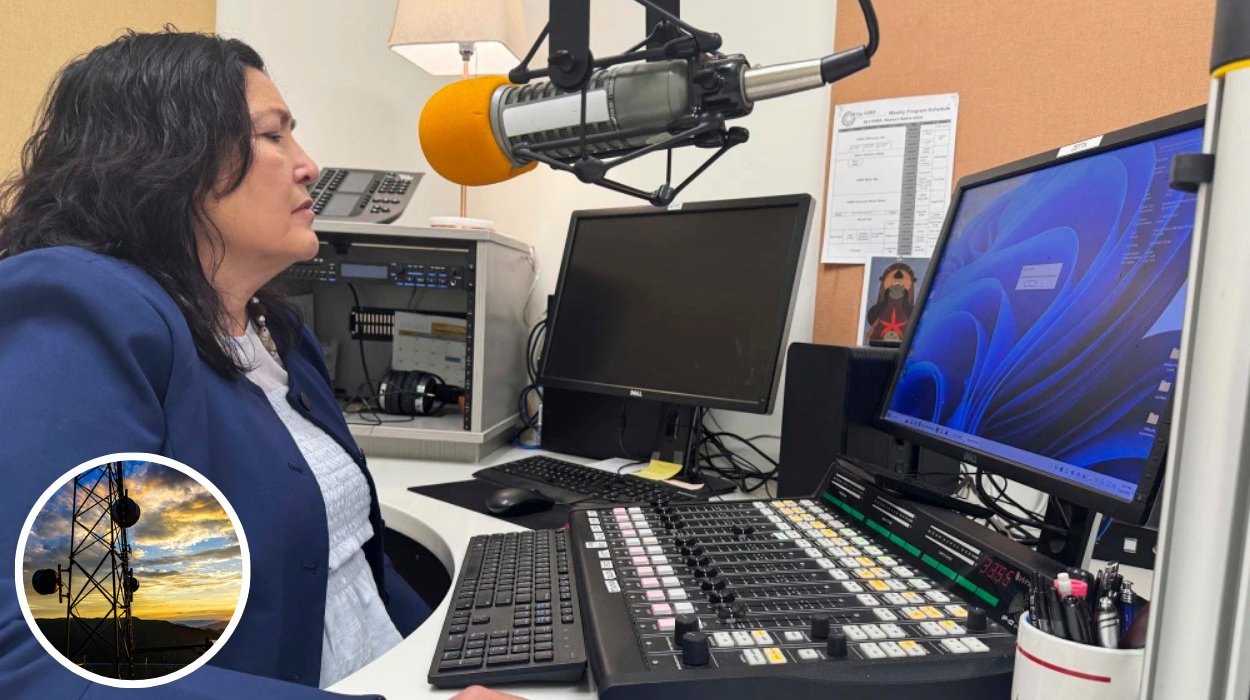
A majority of Native American radio stations serving
tribal communities across the United States face an uncertain future as
Congress prepares to vote on a proposal rescinding more than $1 billion from
the Corporation for Public Broadcasting. The move, already passed by the House,
would strip essential funding from 59 tribal radio outlets that represent a
lifeline for rural and isolated Native populations, putting crucial news,
emergency information, and Indigenous language programming at imminent risk.
What Is Happening With Public Broadcasting Funding in
Congress?
According to NBC News, ABC News, and the Associated Press,
Congress is set to decide whether to approve a recommendation by the Department
of Government Efficiency that would claw back previously approved funds for
public broadcasting in fiscal years 2026 and 2027. The House has already
backed the measure; Senate deliberations are imminent.
Citing the proposal, The New York Times and BroadwayWorld report
that the White House formally requested the $1.1 billion rescission as part of
a larger $9 billion federal savings program championed by the Office of
Management and Budget. Unless the Senate rejects the plan within 45 days,
the reduction will eliminate vital funding slated for the CPB and, in turn,
public radio and television stations nationwide.
Why Are Native American Radio Stations Especially
Vulnerable?
As explained by Francene Blythe-Lewis, CEO of Vision Maker
Media (as cited by NBC News, The Independent, and the Star Tribune),
“For
Indian Country as a whole, 80% of the communities are situated in rural areas,
and their sole means of accessing national news, sharing native stories, and
receiving community updates is through PBS stations or public radio. If these
cuts occur, I would estimate that around 90% of those stations will no longer
exist”.
Local radio holds outsized significance in Indigenous
communities, where internet service and cable television are limited—or
altogether unavailable. According to reporting by ABC News and the
Associated Press, many Native households depend solely on over-the-air signals
for timely news, local events, music from Indigenous artists, and health or
weather alerts. Radio stations also provide vital election coverage and help
preserve tribal languages by broadcasting in Indigenous tongues.
Who Are the Community Voices Warning About the Impact?
Loris Taylor, CEO of Native Public Media, told the Star
Tribune and ABC News that “about three dozen of those radio stations that rely
heavily on Corporation for Public Broadcasting funding will be the first to go
dark if funding is cut for the coming fiscal year.” Taylor emphasized that
these outlets reach more than 1.5 million people and “may be the only source of
locally relevant news, emergency alerts, public safety announcements, language
preservation, health information, and election coverage” for their communities.
Paula Kerger, president of PBS, stressed to Scripps News,
“For stations in rural areas, up to half of their funding could be eliminated
because of the rescission bill… Many of our stations’ sustainability would be
threatened”.
Kerger added that the cutbacks could particularly hurt
educational programming benefiting children, “especially the 50% of kids in
this country that do not attend formal pre-K”.
Patricia Harrison, President and CEO of the Corporation for
Public Broadcasting, delivered a public statement carried by the CPB newsroom
on June 12, 2025, following House approval of the rescissions package. “Public
media delivers unmatched value to the American taxpayer… Every dollar from CPB
brings nearly seven more from state, local, and private donors—the kind of
return any taxpayer would insist upon. Cutting off federal funding to public
media will not only damage local stations, it will disrupt millions of
Americans who rely on it for news and information that helps them make
decisions about their lives and participate in their communities”.
NPR CEO Katherine Maher told BroadwayWorld that
the cuts would have a “devastating impact” on public radio and television,
especially in underserved and rural areas.
How Would Funding Cuts Affect Other Public Media?
According to reporting by WFAE and the Public Media
Alliance, the proposed $1.1 billion rollback would dismantle most of the CPB’s
forward-funded budget, thus “effectively eliminating nearly all federal support
for NPR, PBS, and their local affiliates.” Over 330 stations nationwide receive
significant operating revenue from CPB; for some rural outlets, the rescission
could erase up to half their funding.
Ju-Don Marshall, President & CEO of WFAE, wrote in an
open letter that for regional stations,
“This effort to cut funding could not
come at a worse time. Communities… are still grappling with the aftermath of
natural disasters… The strain is compounded by the broader loss of federal
support for nonprofits, putting even greater pressure on limited charitable
dollars.”
Marshall urged listeners nationwide to contact senators and voice
support for public broadcasting.
Why Do Native American Radio Stations Matter?
Francene Blythe-Lewis of Vision Maker Media,frequently cited across the NBC News, Star Tribune, and Independent reports, highlighted
that local radio is fundamental where “cable television and broadband internet
access are spotty, at best, and nonexistent for many.” She further stated, “It
means we’re not going to hear our language on the radio” if funding disappears.
According to Native Public Media, tribal stations are the
main conduit for emergency notifications, health advisories, and government
communications in regions where other infrastructure is lacking. The
absence of these services would leave numerous Native residents disconnected
from crucial lifesaving and civic information.
What Do Lawmakers and Advocates Say?
Bipartisan concern has emerged in the Senate, as reported by
The Washington Post and NPR, with senators questioning the impact of the
rescissions on rural areas and Native communities in particular. Nevertheless,
the push for the rollback remains strong within the framework of broad federal
spending reductions.
Public media advocacy groups, including the Public Media
Alliance and Protect My Public Media, have mobilized efforts to lobby for
continued funding, encouraging Americans to contact their representatives.
What Happens Next?
The CPB explained the next step: “The rescissions package
now goes to the Senate,” and if not rejected within 45 days, “the
administration must spend the funds as originally appropriated.” The outcome of
the Senate’s vote is expected to be decisive for the future of tribal and rural
public broadcasting in America.
In summary, the imminent Senate decision holds dramatic
consequences for Native American radio, public broadcasting at large, and the
communities that rely upon them for news, education, cultural preservation, and
public safety. Indigenous and rural advocates, media executives, and public
officials are united in their warnings that these cuts could leave the most
isolated Americans in silence, reinforcing the urgency of the debate at the
heart of this national issue.