
Key Points
- President
Donald Trump announced a new trade deal with Vietnam, imposing a 20%
tariff on all Vietnamese goods exported to the United States and a 40%
tariff on any transshipped goods. - In
exchange, the United States will receive “total access” to
Vietnam’s domestic market, with American products entering Vietnam at zero
tariff. - Trump
personally negotiated the agreement with To Lam, General Secretary of the
Communist Party of Vietnam, and described the deal as a “Great Deal
of Cooperation”. - The
announcement comes just days before the expiration of a 90-day pause on
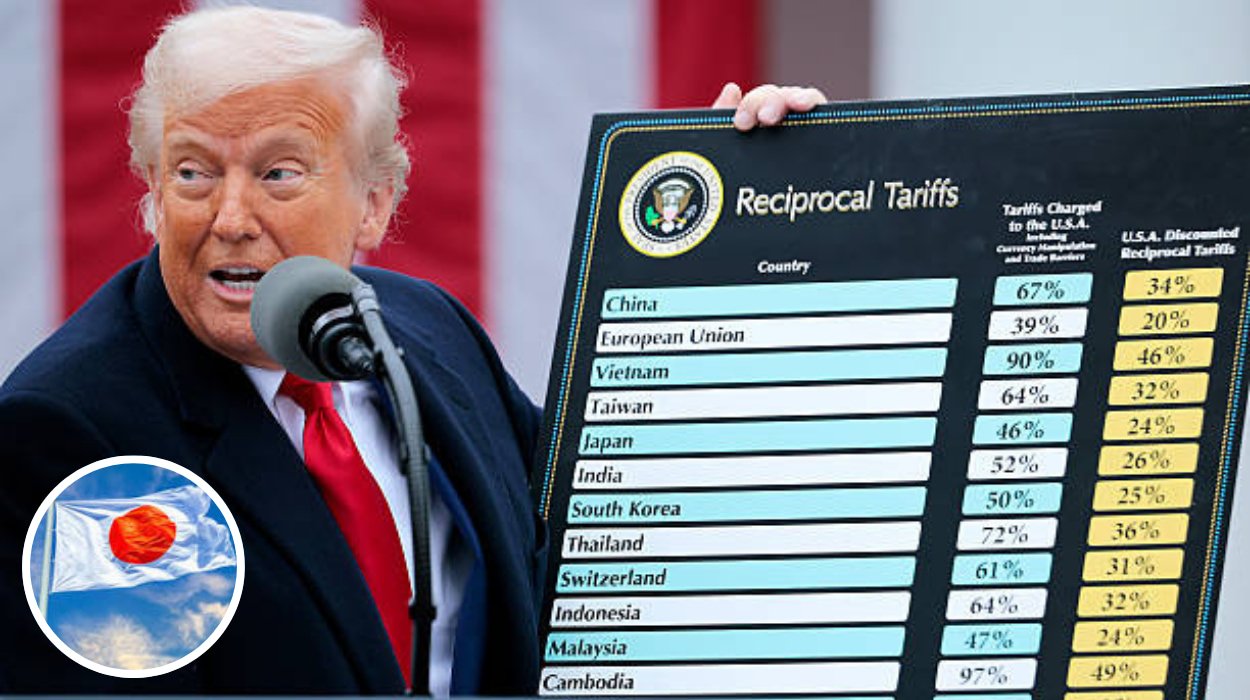
Trump’s reciprocal tariffs, which had subjected Vietnamese imports to a
46% tariff. - President
Trump also threatened to impose tariffs of up to 35% on Japanese goods if
a trade deal is not reached before the July 9 deadline. - Trump
criticized Japan as “spoiled” and accused the country of unfair
trade practices, particularly in rice and automobile imports. - Japan’s
Deputy Chief Cabinet Secretary Aoki Kazuhiko acknowledged Trump’s
statements but declined to comment on specifics, while negotiations
continue. - The
United States had a $68 billion trade deficit with Japan in 2024,
importing $148 billion in goods from Japan last year. - Vietnam
is the sixth-largest source of U.S. imports, with $137 billion in goods
shipped to the U.S. in 2024. - The
U.S. administration is engaged in ongoing trade negotiations with over a
dozen countries as the tariff pause nears its end.
President Donald Trump has announced sweeping new trade
measures targeting two of Asia’s largest economies, imposing a 20% tariff on
all Vietnamese exports to the United States and threatening to levy tariffs of
up to 35% on Japanese goods if a bilateral agreement is not reached by July 9.
The moves, which Donald Trump described as part of his broader effort to secure “fair
and reciprocal” trade for the United States, mark a significant escalation in
his administration’s trade policy as the 90-day pause on reciprocal tariffs
draws to a close.
What Are the Details of the New U.S.-Vietnam Trade Deal?
As reported by the Times of India, President
Donald Trump announced the new trade deal with Vietnam on Wednesday via his
social media platform Truth Social, declaring, “I just made a Trade Deal with
Vietnam. Details to follow!” Trump emphasized that the agreement was finalized
after direct talks with To Lam, the General Secretary of the Communist Party of
Vietnam. In his statement, Trump wrote,
“It is my Great Honor to announce
that I have just made a Trade Deal with the Socialist Republic of Vietnam after
speaking with To Lam, the Highly Respected General Secretary of the Communist
Party of Vietnam”.
What Are the Key Terms of the Agreement?
According to Economic Times and Nikkei
Asia, the deal stipulates that:
- Vietnam
will pay a 20% tariff on all goods exported to the U.S. - A
40% tariff will be imposed on any goods transshipped through Vietnam to
the U.S. - In
return, the U.S. will have “TOTAL ACCESS” to Vietnam’s domestic market,
allowing American products to be sold there without any import tariffs.
Trump stated,
“Vietnam will do something that they have
never done before, give the United States of America TOTAL ACCESS to their
Markets for Trade. In other words, they will ‘OPEN THEIR MARKET TO THE UNITED
STATES,’ meaning that, we will be able to sell our product into Vietnam at ZERO
Tariff”.
What Is the Economic Significance of the Deal?
As reported by CNN Business, Vietnam is a
crucial trading partner for the United States, ranking as the sixth-largest
source of U.S. imports, with $137 billion in goods shipped to the U.S. last
year—more than double the figure from five years ago. The deal is being
touted by Trump as a major win for U.S. exporters, particularly American
automakers. Trump expressed confidence that large American vehicles,
particularly SUVs, would thrive in Vietnam under the new agreement, stating,
“The SUV, or as it is sometimes referred to, Large Engine Vehicle, which does
so well in the United States, will be a wonderful addition to the various
product lines within Vietnam”.
Has Vietnam Confirmed the Agreement?
While Trump has publicly promoted the deal, Indian
Express notes that Vietnamese officials have yet to publicly confirm
the agreement or its details. The announcement comes just days before a
90-day pause on many of Trump’s reciprocal tariffs is set to expire, with
Vietnamese imports previously subject to a 46% tariff.
What Did Trump Say About Japan and the Tariff Threat?
As reported by Manufacturing Dive, President
Trump told reporters on Tuesday that the U.S. may levy tariffs of up to 35% on
Japanese goods once the administration’s 90-day pause on country-specific
duties expires next week. Trump stated,
“So what I’m going to do is I’ll
write a letter, say ‘We thank you very much and we know you can’t do the kind
of things that we need and therefore you’ll pay 30%, 35% or whatever the number
is that we determined’”.
According to The Hill, Trump expressed
skepticism about reaching a deal with Japan before the July 8 deadline,
labeling the country as “spoiled.” He remarked,
“I have my doubts about
Japan—they are quite formidable. You must realize, they are spoiled. I have a
great fondness for Japan, and I also appreciate the new prime minister. As you
know, Abe was one of my closest allies”.
Trump criticized Japan for
refusing to import American rice and cars, while selling millions of vehicles
in the U.S., calling the trade deficit “quite unjust to the American populace”.
What Are the Main Sticking Points in U.S.-Japan
Negotiations?
The major points of contention, as outlined by Manufacturing
Dive and NHK WORLD-JAPAN, are:
- The
Trump administration’s demand for Japan to import more rice and
automobiles from the U.S.. - Japan’s
reluctance to open its market to these products, despite a domestic rice
shortage. - The
U.S. currently has a $68 billion trade deficit with Japan, importing $148
billion in goods last year. - Trump’s
insistence on “reciprocal” tariffs, with a baseline 10% rate currently in
place, but country-specific rates set to rise after July 9.
How Has Japan Responded?
Japan’s Deputy Chief Cabinet Secretary Aoki Kazuhiko
acknowledged Trump’s statements but declined to comment further, stating only
that negotiations are ongoing. Japanese officials have emphasized Japan’s
contributions to the U.S. economy, such as manufacturing 300,000 vehicles in
the U.S. for export, and have offered cooperation on rare-earth supplies in
response to China’s export controls. However, these overtures have not
swayed the Trump administration, which remains focused on reducing the trade
deficit and increasing U.S. exports to Japan.
What Is the Broader Context of Trump’s Trade Policy Moves?
As reported by CNN Business and The
Hill, the Trump administration is engaged in trade negotiations with over a
dozen countries as the 90-day pause on reciprocal tariffs nears its end. The
Vietnam deal represents the third trade pact Trump has brokered in the past
three months, though it remains unclear whether all details have been finalized. Trump
has repeatedly framed these moves as efforts to correct what he views as
decades of unfair trade practices that have disadvantaged American workers and
businesses.
What Are the Potential Impacts on Global Trade?
The new tariffs and threatened measures signal a significant
escalation in U.S. trade tensions with key Asian partners. The steep tariffs on
Vietnamese goods could disrupt supply chains and raise costs for American
consumers and businesses reliant on imports from Vietnam. The threatened
tariffs on Japan risk further straining relations with a major ally and trading
partner, potentially impacting sectors ranging from agriculture to automobiles.
What Comes Next for U.S. Trade Relations with Vietnam and
Japan?
While President Trump has announced the deal as a major
achievement, the lack of public confirmation from Vietnamese officials leaves
some uncertainty about its implementation. The expiration of the 90-day
tariff pause on July 9 adds urgency to finalizing and enforcing the agreement.
Is a U.S.-Japan Trade Deal Likely Before the Deadline?
Given Trump’s public skepticism and the unresolved issues
around rice and automobile imports, a comprehensive trade agreement with Japan
appears unlikely before the July 9 deadline. If no deal is reached,
Japanese goods could face tariffs as high as 35%, further complicating trade
between the two nations.
What Is the Reaction in Vietnam and Japan?
As of this writing, Vietnamese officials have not issued a
formal response to Trump’s announcement. In Japan, government officials
have acknowledged the U.S. statements but have refrained from public comment on
the specifics, while business leaders and policymakers weigh the potential
impact on key export sectors.
What Are the Implications for U.S. Consumers and Businesses?
The imposition of higher tariffs on Vietnamese and
potentially Japanese goods is likely to increase costs for American consumers
and businesses, particularly in industries that rely on imported components or
finished products from these countries. Conversely, U.S. exporters may benefit
from improved access to the Vietnamese market if the agreement is fully
implemented.