
Key Points
- Leonid
Pasechnik, the Moscow-appointed leader of Luhansk, announced Russia
now has “100% control” of the region. - This
is the first Ukrainian region fully occupied by Russian
forces since the 2014 annexation of Crimea. - The
claim follows more than three years of war since
President Vladimir Putin ordered the invasion in February 2022. - Ukraine
has not confirmed the loss of the entire region and continues to
reject Russia’s claims as illegal. - Western
governments and most of the international community do not
recognize Russia’s annexation of Luhansk and other Ukrainian territories. - The
announcement coincided with a visit by Germany’s foreign minister
to Kyiv, who pledged further support for Ukraine’s defense efforts. - Russia
claims nearly 19% of internationally recognized Ukrainian
territory is under its control. - The
fate of Luhansk and other occupied regions remains a central issue
in ongoing and future peace talks. - No
immediate response from Ukraine’s government or military to the
Russian claims as of publication. - The
Kremlin insists the region is now under Russian nuclear protection and
will not be relinquished.
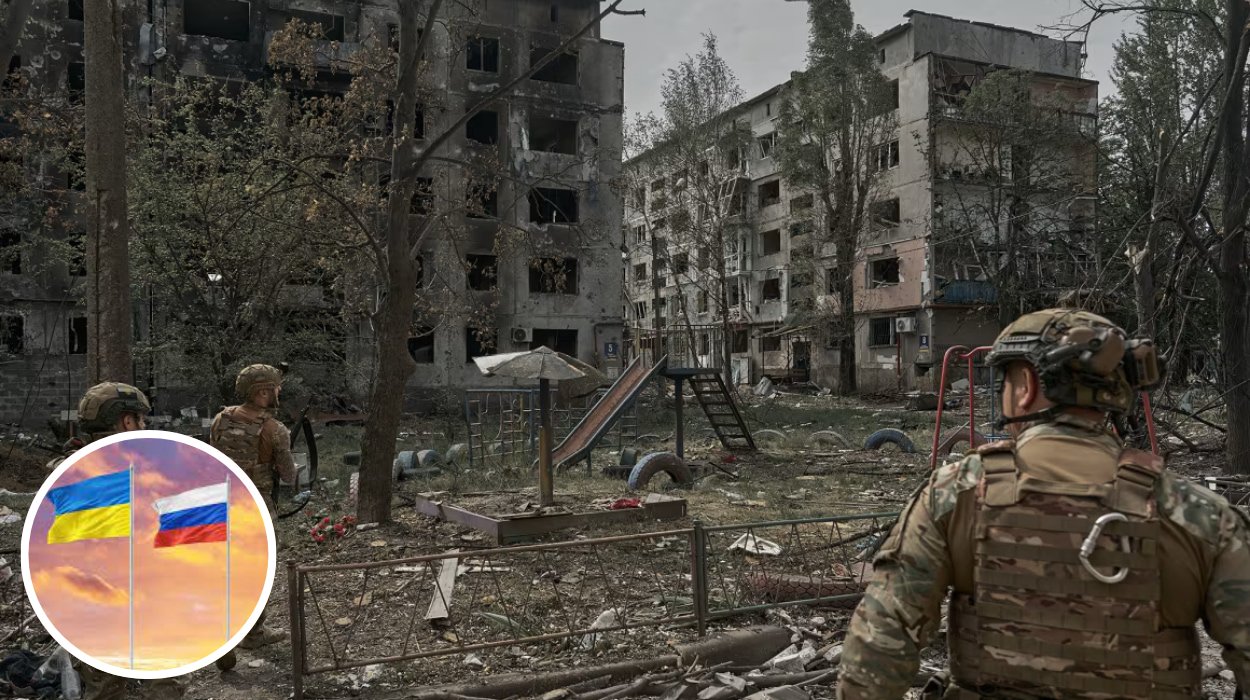
The declaration of full Russian control over Ukraine’s Luhansk region signals a significant moment in the ongoing war. If verified, this marks the first complete occupation of a Ukrainian region by Russia since Crimea in 2014. The move has intensified international scrutiny and is expected to influence both military actions and diplomatic efforts in the months ahead.
How Did Russia Announce Its Control Over Luhansk?
As reported by Reuters, Leonid Pasechnik, the
Russian-appointed leader of Luhansk, declared on Russian state television that
the “territory of the Luhansk People’s Republic is fully liberated – 100%”. Pasechnik,
who was born in Soviet Ukraine, made the statement during a broadcast on
Channel One, Russia’s flagship state TV network. He emphasized that the report
confirming total control had been received “just two days ago”.
The Moscow Times’ Arpan Rai and Rachel Clun further noted
that if confirmed, this would make Luhansk the first Ukrainian region
to fall entirely under Russian control since the annexation of Crimea
in 2014. Russian President Vladimir Putin had previously claimed in March
2025 that Moscow held 99% of the region, but this is the first time officials
have asserted full control since the initial invasion.
What Is the Strategic and Symbolic Importance of Luhansk?
According to Reuters and The Independent, Luhansk covers an
area of 26,700 square kilometers (10,308 square miles) and has been a focal
point of conflict since 2014, when Russian-backed separatists began fighting
Ukrainian forces following the ousting of a pro-Russian president in Kyiv. The
region, together with neighboring Donetsk, forms the industrial heartland of
eastern Ukraine and has been at the center of Russia’s efforts to expand its
influence in the country.
The Independent highlights that Luhansk was among the first
regions to see a major Russian advance at the start of the 2022 war, but
Ukraine had managed to retain small pockets of territory until recently. The
Russian claim, if independently verified, would mark a significant territorial
gain for Moscow and a symbolic blow to Ukrainian resistance.
How Has Ukraine Responded to Russia’s Claims?
As of the time of publication, there has been no
immediate response from Ukraine’s government or military regarding the
Russian announcement. Ukraine has consistently rejected Russia’s
assertions over Luhansk and other occupied regions, labeling them as “unfounded
and unlawful”. Kyiv has vowed never to recognize Russian control over
these territories and continues to assert its sovereignty over all
internationally recognized Ukrainian land.
What Has Been the International Reaction to the Occupation?
The annexation and occupation of Luhansk, along with
Donetsk, Kherson, and Zaporizhzhia, were widely condemned by Western
governments and the broader international community. As reported by
Reuters and The Independent, these actions are considered illegal under
international law, and most countries refuse to recognize Russian sovereignty
over the regions.
A historical perspective from Wikipedia notes that the international
response to Russia’s territorial expansion in Ukraine has been overwhelmingly
negative, with countries such as the Czech Republic, Denmark, and the
United States calling for strong sanctions and condemning the violation of
Ukraine’s sovereignty. The European Union and the United States have
repeatedly stated that they will not accept any changes to Ukraine’s borders
imposed by force.
What Is Russia’s Position on the Annexed Territories?
As reported by Reuters and The Moscow Times, Russia
maintains that Luhansk and the other annexed regions are now part of its
territory, are under its nuclear protection, and will never be relinquished. During
the 2022 ceremony for the signing of accession treaties, President Vladimir
Putin declared,
“The choice of the people in Donetsk, Lugansk, Zaporozhye, and
Kherson will not be discussed. The decision has been made, and Russia will not
betray it”.
Putin has dismissed calls for a ceasefire that do not
include Moscow’s authority over the four annexed regions, insisting that the
“free expression of the people’s will” must be respected. The Kremlin has
repeatedly stated that it will defend these territories with “all the forces
and resources we have”.
How Did Luhansk’s Status Change Over the Course of the War?
According to The Moscow Times and Reuters, Russia previously
claimed full control over Luhansk in July 2022, following the capture of the
city of Lysychansk and surrounding towns. However, Ukraine recaptured
Lysychansk and parts of the Luhansk region during a rapid counteroffensive in
the fall of 2022, which also saw Kyiv regain large areas in the Kharkiv and
Kherson regions.
The current claim of total occupation comes after months of
incremental advances by Russian forces and follows a period in which Ukraine
was able to hold onto small slivers of territory in Luhansk. The region’s
fate is expected to be a central issue in any future peace negotiations.
What Are the Broader Implications for the Ukraine War?
The occupation of Luhansk represents a significant milestone
for Russia, as it now claims to control nearly 19% of internationally
recognized Ukrainian territory, including large portions of Donetsk,
Kherson, Zaporizhzhia, and other regions. The Independent notes that the
fate of these territories is likely to be a key element in any future peace
talks aimed at ending the conflict.
Meanwhile, fighting continues elsewhere along the front
lines. The Ukrainian military recently reported pushing back Russian troops in
the northeastern Sumy region, where Kyiv is preparing a counteroffensive
following Russian advances. The ongoing conflict has resulted in massive
destruction, displacement, and loss of life, with no clear end in sight.
What Support Is Ukraine Receiving from Its Allies?
As reported by the Associated Press, the Russian
announcement coincided with a visit to Kyiv by Germany’s foreign minister, who
pledged to help Ukraine accelerate its weapons production as part of efforts to
strengthen its negotiating position in peace talks with Russia. Western
countries continue to provide military, financial, and humanitarian aid to
Ukraine, although the scale and pace of support remain subjects of debate among
allies.
What Happens Next for Luhansk and the Wider Region?
The future of Luhansk and other occupied regions remains
uncertain. Russia insists that the territories are now irrevocably part of its
federation, while Ukraine and its Western allies continue to reject any changes
to Ukraine’s borders by force. The situation on the ground remains fluid,
with the potential for further military escalation or renewed diplomatic
efforts depending on developments in the coming weeks and months.
As the world watches, the fate of Luhansk stands as a
stark symbol of the enduring and unresolved conflict at the heart of Europe.