
The US defense establishment witnessed a significant
upheaval in August 2025 when Defense Secretary Pete Hegseth dismissed
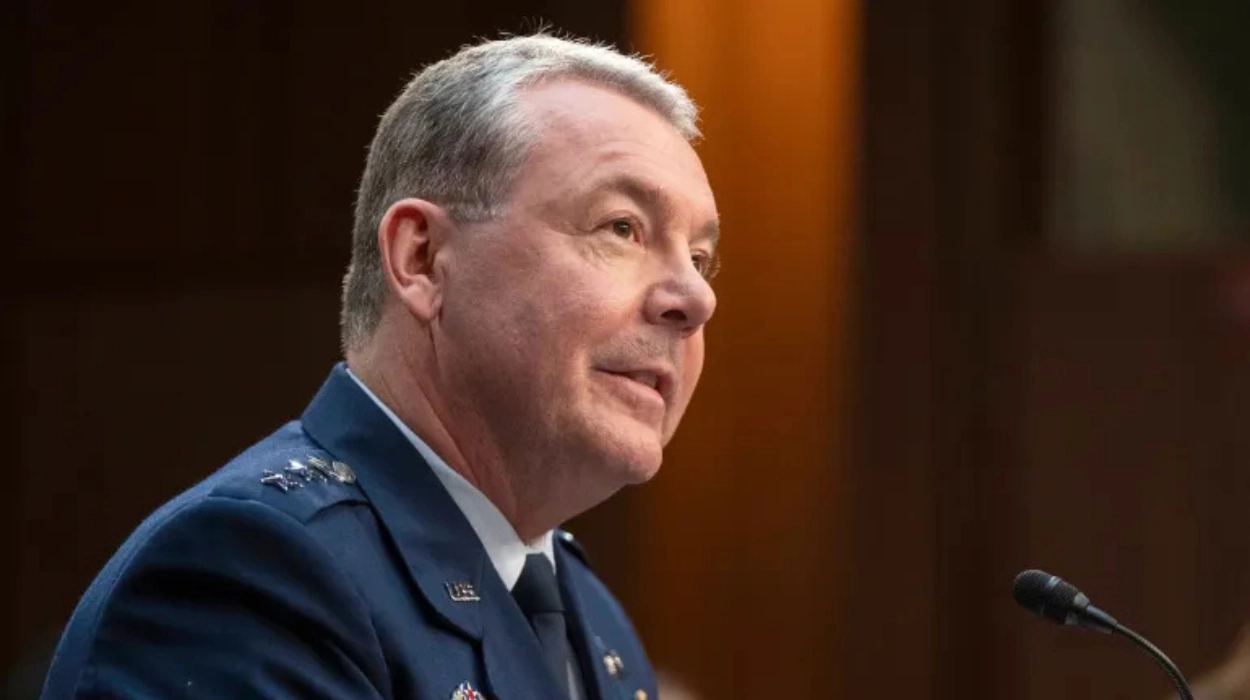
Lieutenant General Jeffrey Kruse, the head of the Defense Intelligence Agency
(DIA). This decision followed the release of a preliminary DIA report on the
June strikes against Iranian nuclear sites that contradicted President Donald
Trump‘s claims of total destruction. Kruse’s firing, along with removals of
other senior military officers, has sparked debates over political influence in
intelligence and military assessments.
Background of the DIA Report and Its Impact
The US military operation in June 2025 targeted three
Iranian nuclear facilities with an intensity that involved more than 125
aircraft sorties and a guided missile submarine. President Trump publicly
hailed the strikes as a “spectacular military success” and claimed
the Iranian nuclear sites were utterly “obliterated.” However, the
Defense Intelligence Agency’s preliminary assessment offered a starkly
different view, concluding that the strikes only delayed Tehran’s nuclear
ambitions by a few months—falling short of the president’s assertions.
The DIA report’s findings, which gained widespread media
coverage, reportedly angered Trump and his administration. Senior defense
officials, speaking anonymously, confirmed that Kruse’s dismissal was directly
linked to the agency’s assessment, which was viewed as undermining Trump’s
narrative. One official said,
“He will no longer serve as DIA director,”
without elaborating further.
This contradiction between political rhetoric and
intelligence assessment highlighted the growing tensions between the Pentagon’s
professional military analysis and the political leadership’s messaging.
The Significance of Jeffrey Kruse’s Role
Lieutenant General Jeffrey Kruse was appointed DIA director
in early 2024, bringing extensive experience in military intelligence. Before
leading the DIA, Kruse served as the military affairs adviser to the director
of national intelligence and held intelligence roles including in the coalition
against ISIS. His leadership was marked by his commitment to nonpartisan and
fact-based intelligence evaluations.
Kruse’s firing, however, was part of a broader pattern in
the Trump administration’s handling of senior military and intelligence
officials perceived as insufficiently supportive of the administration’s narratives.
Earlier in 2025, General Timothy Haugh, director of the National Security
Agency, was removed following political pressure. The simultaneous dismissal of
two other senior officers—Vice Admiral Nancy Lacore, chief of Navy Reserve, and
Rear Admiral Milton Sands, commander of Naval Special Warfare Command—reflects
a purge
that many critics see as politically motivated.
Reactions and Implications
The purge of high-ranking officials has drawn sharp
criticism from lawmakers and analysts concerned about the politicization of
intelligence.
Senator Mark Warner of Virginia, senior Democrat on the
Senate Intelligence Committee, remarked,
“The dismissal of yet another senior national security
figure highlights the Trump administration’s troubling tendency to treat
intelligence as a test of loyalty instead of a critical resource for our
nation.”
Warner’s concerns echo a broader fear that intelligence
assessments are increasingly being weaponized for political ends rather than
objective decision-making.
The Pentagon has remained reticent about providing detailed
reasons for these dismissals. However, insiders suggest that the White House
was displeased not only with the contents of the report but also with the leak
of its findings to the press, which intensified public scrutiny.
Political Context and Trump’s Response
President Trump has consistently maintained a tough stance
on Iran, emphasizing the success of US military operations and presenting a
firm front internationally. Trump accused the media of attempting to undermine
the military achievements by “undermining one of the most successful
military strikes in history.” This combative posture fits his broader
approach of controlling the political narrative around national security.
Following the DIA report leak, the White House characterized
the assessment as “flat out wrong” and attributed it to “low
intelligence,” reflecting a dismissal of professional military evaluations
that conflicted with political messaging. Defense Secretary Hegseth also
criticized what he called anti-military sentiment in the media, although he
acknowledged the challenges posed by leaks.
These developments underscore the fraught relationship
between intelligence agencies and political leadership under Trump’s
presidency, as well as the pressure on military officials to align assessments
with administration claims.
Broader Military and Intelligence Impacts
The Defense Intelligence Agency plays a crucial role in
gathering and analyzing intelligence on foreign military capabilities,
providing strategic assessments to policymakers and military commanders. Its
work impacts decisions on military operations, defense procurement, and threat
evaluations.
The firing of DIA leadership at a time of heightened US-Iran
tensions raises concerns about operational continuity and morale within
intelligence ranks. Critics warn that such dismissals may discourage candid
intelligence reporting and encourage a culture of conformity to political
expectations.
Additionally, the firings came amid other structural
changes, including announced reductions in workforce and budget at the Office
of the Director of National Intelligence. These moves have been interpreted as
attempts to reshape the intelligence community’s functioning and priorities.
Summary of the June Strikes on Iranian Nuclear Sites
The June 2025 airstrikes represented one of the most
significant US military actions in the Middle East in recent years. Targeting
facilities believed to be central to Iran’s nuclear weapons development, the
operation was intended to significantly degrade Tehran’s capabilities and deter
future nuclear ambitions.
While Trump and Israeli Prime Minister Benjamin Netanyahu
described the operation as a decisive blow, intelligence assessments indicated
that the effects were more limited, providing only a temporary setback.
The divergence in assessments illustrates the tension
between political messaging and the complex realities of military operations
and intelligence gathering.
The dismissal of Lieutenant General Jeffrey Kruse as head of
the Defense Intelligence Agency highlights the contentious intersection of
intelligence, military operations, and political narratives in the Trump
administration. The contrasting views on the effectiveness of US strikes
against Iranian nuclear sites exposed a rift that culminated in a high-profile
firing, raising questions about the independence and resilience of America’s
intelligence institutions under political pressure.
These events underscore the challenges facing the US
government in balancing transparency, accountability, and political realities
in the conduct of national security policy. As tensions with Iran persist, the
integrity of intelligence assessments remains crucial to ensuring informed
decisions and maintaining strategic stability.