
Summary
- Defense
Secretary Pete Hegseth deployed a carrier strike group. - Deployment
targets U.S. Southern Command area. - Aim is
to disrupt narcotics trafficking and criminal organizations.
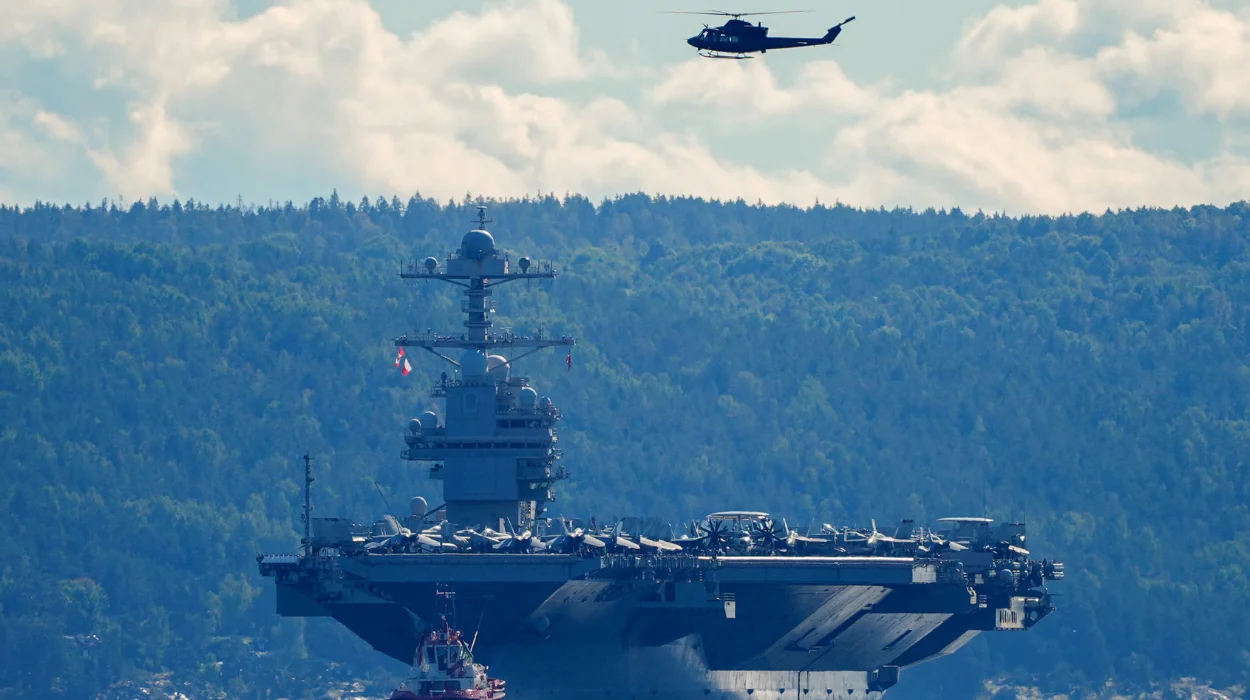
The USS Gerald R. Ford, its onboard warplanes, and the other
ships in its strike group are deploying to “dismantle Transnational
Criminal Organizations… and counter narco-terrorism” in the region,
according to Sean Parnell, Hegseth’s associate defense secretary for public
affairs.
The administration of President Donald Trump has destroyed
at least ten suspected drug vessels off the beaches of Colombia and Venezuela
in recent months.
An important step forward in that campaign is the deployment
of a carrier strike group, which may portend the start of airstrikes against
targets in Venezuela. President Nicolas Maduro and the Venezuelan government
have come under fire from U.S. officials for allegedly supporting drug gangs
and enabling mass migration towards the southern border of the United States.
Additionally, Trump recently approved CIA land operations in
Venezuela. In recent days, Air Force bombers have also flown twice close to
Venezuela.
Maduro, who faces the possibility of being deposed or
assassinated, has alternated between appealing for peace and alerting the US
about his nation’s defense capabilities. In addition to a substantial stock of
transportable Igla-S anti-air missiles, which Maduro claimed were dispersed
across the nation, the Venezuelan military possesses a limited quantity of
contemporary anti-ship and long-range anti-aircraft missiles, according to The
War Zone.
Regional officials, including President Gustavo Petro of
Colombia, have criticized
the counter-drug effort, which legal experts say may be illegal.
The U.S. Naval Institute’s fleet tracker indicates that the
Ford and its escorting destroyers, the USS Winston Churchill, the USS
Bainbridge, and the USS Mahan, have been in the Mediterranean Sea for the
previous few weeks. They will join the land-based fighter jets, special
operations units, thousands of Marines, and at least eight Navy ships already
stationed in the Caribbean.
The highest level of U.S. seapower is represented by carrier
strike groups. With ten to fourteen F/A-18 fighter planes per squadron, the
Ford can bomb targets hundreds of miles inland from the ship. It is unknown how
many Tomahawk guided cruise missiles are already aboard strike group destroyers
or three Burke-class destroyers in the Caribbean, but each of the three Arleigh
Burke-class destroyers has the capacity to carry around 90 of them.
How have South American governments responded to the
deployment?
Venezuela, led by President Nicolas Maduro, has mobilized
troops along its streamline and air defense capabilities, including the
deployment of a large cache of Russian Igla- Santi-aircraft dumdums. Venezuelan
Defense Minister Vladimir Padrino Lopez advised that any attack launched
from bordering countries would meet direct retribution, viewing the
U.S. military presence as a trouble aimed at governance
change.
Colombia has condemned implicit U.S. ground troop
conduct on its home as an irruption and violation of sovereignty.
President Gustavo Petro has called for respect of transnational law in
response to U.S. conduct targeting contended medicine
trafficking.
Some countries like Guyana and Trinidad and Tobago have
expressed support for the U.S. action against associations in the region.