
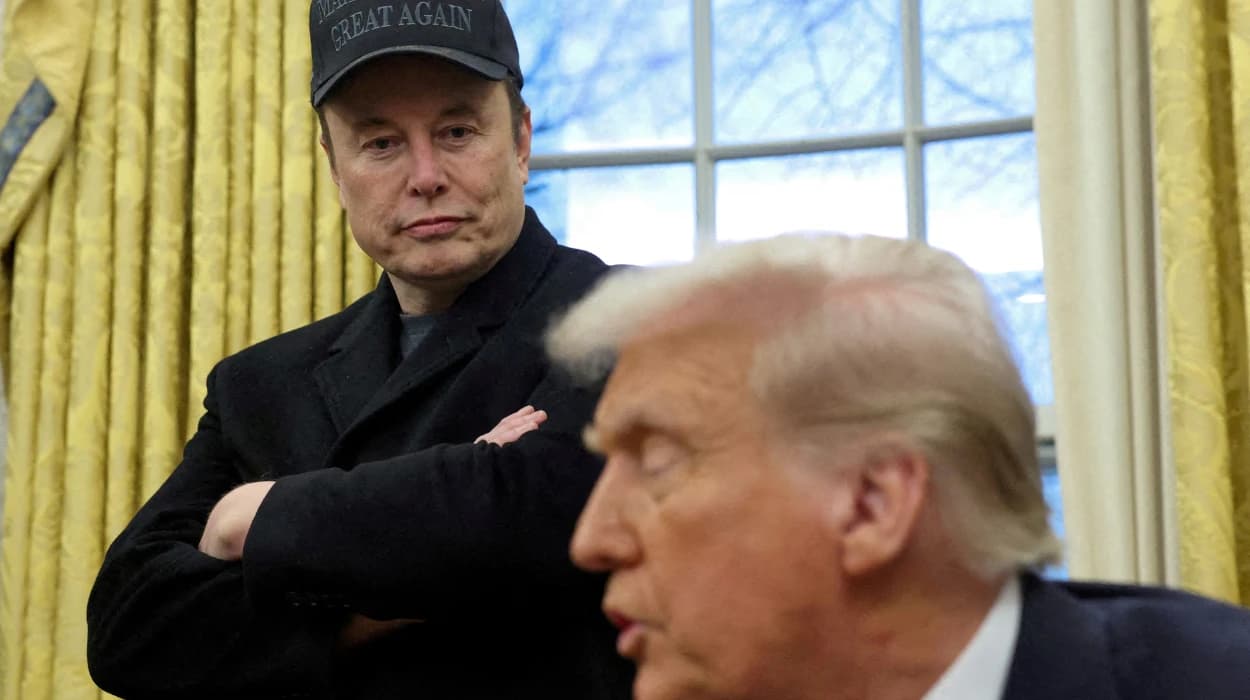
Elon Musk’s departure from the Trump administration marks the end of a distinctive chapter in the intersection of technology, politics, and government reform. Known primarily for his leadership roles at Tesla and SpaceX, Musk took on a unique role as a special government employee to help spearhead efforts to streamline the U.S. federal government under the Trump administration. His exit, announced amidst mixed reactions to his tenure, reflects both the challenges of implementing sweeping government cuts and the complexities faced by business leaders navigating political office.
Elon Musk’s Role in the Trump Administration
Elon Musk joined the White House as a special government employee in a role focused on driving efficiency and reducing wasteful spending within federal agencies. His position was tied to the Department of Government Efficiency (DOGE), a unit charged with downsizing and reforming the sprawling U.S. government bureaucracy.
As a special government employee, Musk was allowed to serve up to 130 days per year in a federal capacity while maintaining his private business ventures. His task was ambitious: he initially aimed to cut at least $2 trillion from the federal budget, a target he later scaled back to around $150 billion in cuts. This reduction included job cuts, operational streamlining, and the elimination of redundancy across government departments.
Musk’s approach reflected his entrepreneurial mindset emphasizing agility and rapid decision-making to achieve efficiency goals. However, the aggressive pace led to challenges and controversies, including mistakes such as the wrongful dismissal of some federal workers, even those involved in sensitive operations.
Impact and Controversies Surrounding DOGE
The Department of Government Efficiency’s cuts led to an estimated 260,000 federal civilian jobs being slashed or voluntarily vacated through redundancy programs. These reductions took place at a time when the federal workforce exceeded 2.3 million employees. Such drastic downsizing significantly altered the government’s functioning, igniting strong reactions from unions, politicians, and government watchdogs.
Some job cuts were legally contested, with courts ordering the reinstatement of certain employees. This pushback underscored the friction between swift reform attempts and due process protections for federal workers. In at least one notable case, staff involved in critical areas like nuclear security faced job losses mistakenly, triggering concerns about the approach’s precision.
Musk’s tenure also featured friction with key Trump cabinet members and staff, as his priorities sometimes clashed with broader political agendas within the administration. His public criticism of Trump’s budget bill, which included multi-trillion dollar tax breaks and boosted defense spending, highlighted his concerns over federal deficit expansion—contrary to the fiscal restraint ethos DOGE aimed to promote.
Musk’s Critique of the Trump Budget
Just before leaving his official role, Musk openly expressed disappointment with the Trump administration’s legislative priorities. The budget proposal dubbed the "big, beautiful bill" by Trump sought to increase defense spending significantly while offering extensive tax cuts.
Musk argued this budget undermined the efforts of DOGE to cut wasteful spending and reduce the federal deficit. His comments illustrated a fundamental tension between political objectives and fiscal conservatism, especially when defense and tax policies often conflict with austerity aims.
This public disagreement could have accelerated discussions around Musk’s exit. It also signaled broader policy conflicts within the administration regarding government spending and debt management.
Consequences for Musk’s Businesses and Public Image
Musk’s high-profile involvement in the Trump administration came when Tesla and SpaceX were facing their own pressures. Tesla experienced a notable decline in sales, recording its largest drop in quarterly deliveries at that time. The company’s stock price also suffered, plunging as much as 45% before partially recovering.
Criticism of Musk’s political involvement spilled over to consumer responses. Tesla faced vandalism and boycotts in multiple locations, linked to polarized political discourse. Law enforcement even labeled some attacks on Tesla property as domestic terrorism, signaling the intensifying conflict surrounding Musk’s dual roles as a business titan and political actor.
Despite the turmoil, Musk reaffirmed his commitment to Tesla’s leadership, pledging to focus increasingly on the company’s direction. He announced plans to curtail his political donations and concentrate more on his core enterprises.
The Challenges of Private Sector Leaders in Government
Musk’s brief stint in government highlights inherent complexities when private sector leaders enter public service, especially in reform and efficiency roles. Business executives often prioritize rapid innovation and decisive action, but public institutions operate within legal frameworks, bureaucratic processes, and political constraints.
The friction Musk faced demonstrates how navigating government rules, employee protections, and political dynamics can slow or complicate reform efforts. It also shows the risk public officials take when they simultaneously lead private companies while holding government roles.
Broader Implications for Government Reform Efforts
Government downsizing and spending reduction remain perennial goals for many administrations aiming to improve efficiency and cut deficits. According to the World Bank and OECD, governments worldwide face increasing pressure to optimize public sector workforce sizes due to rising labor costs and fiscal challenges.
Yet, as Musk’s experience confirms, these reforms must balance speed with care, ensuring vital services are maintained without losing institutional knowledge or endangering security programs. Successful reform hinges not just on cutting numbers but redesigning workflows and investing in modernization.
The Future of Public-Private Collaboration
Musk’s participation in the Trump administration illuminated the potential and pitfalls of integrating private sector expertise in public governance. While entrepreneurs bring innovative perspectives and a bias for action, they must also adapt to the slower, more stakeholder-driven environment of government.
Looking ahead, adapting best practices from the business world to public administration—such as using data analytics, performance metrics, and technology-driven efficiency tools—may deliver sustainable reform gains. However, these efforts require collaboration across political divides, transparency, and respect for public accountability.
Dogecoin and Musk’s Continued Influence
Despite stepping back from DOGE, Musk has assured that the mission to slash wasteful government spending will persist as a core government value. Meanwhile, his ongoing involvement in cryptocurrency—specifically Dogecoin—remains prominent. As an influential figure in the crypto community, Musk’s endorsements continue to affect the digital currency's public perception and adoption.
This side of his profile highlights the unique intersections between emerging technologies, economic policies, and political influence that Musk navigates. It also underscores how figures like Musk symbolize the modern melding of entrepreneurial innovation with governance challenges.
Elon Musk’s departure from the Trump administration after serving as a special government employee for the Department of Government Efficiency provides a case study in the challenges of public sector reform led by private sector innovators. While his efforts contributed to unprecedented federal workforce cuts and raised important questions about government efficiency, they also revealed critical tensions within the political and bureaucratic systems.
Musk’s critique of the Trump budget bill and his subsequent retrenchment into his core businesses show the complex trade-offs when business priorities meet government realities. His legacy in the administration may be a mix of pioneering ambition and cautionary tales about how deep reform requires more than rapid cuts.
As governments worldwide continue to seek efficiency improvements and fiscal responsibility, integrating business approaches remains promising but must be balanced with political will and institutional safeguards. Elon Musk’s experience serves as a timely reminder that transforming government is as much an art of navigation as it is of innovation.