
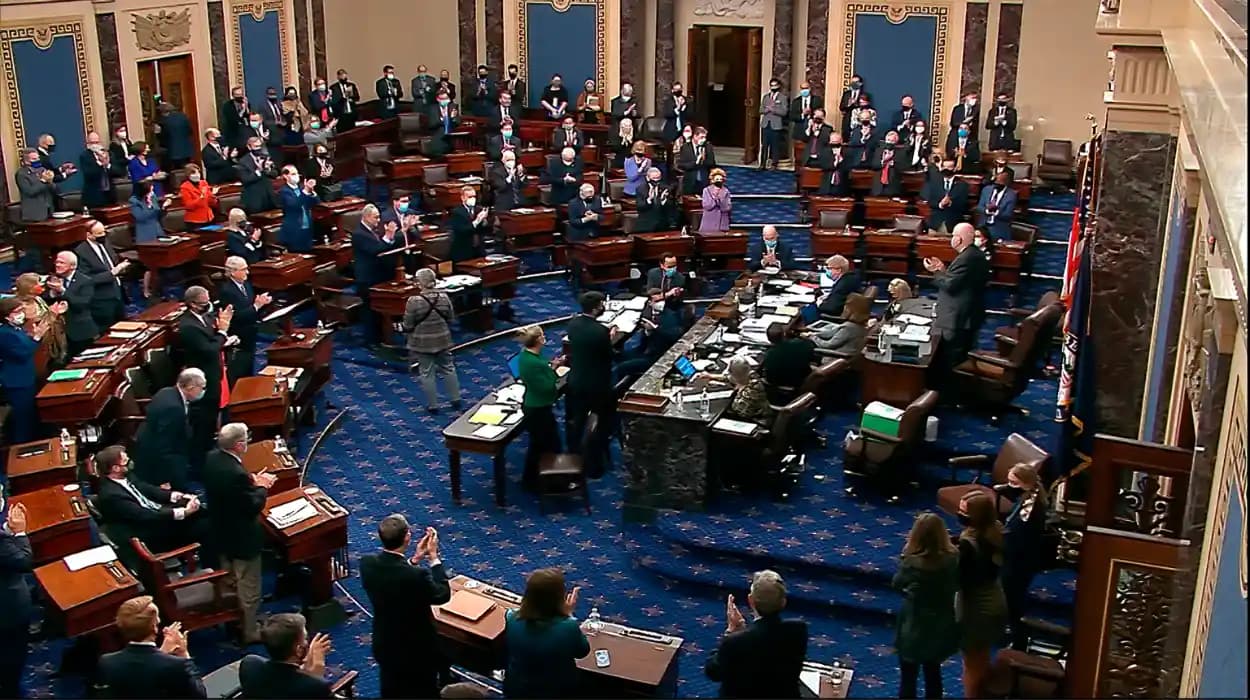
Washington (Washington Insider Megazine) January 30, 2026 – Debate over reforming the United States Senate filibuster has re‑emerged as a central procedural and political issue in Washington, intersecting with stalled appropriations talks, recurring shutdown risks and longstanding disputes over voting and civil rights legislation. Lawmakers in both parties are weighing changes ranging from targeted carve‑outs to broader rule overhauls, while key figures continue to defend the 60‑vote threshold as a protection for minority rights. Recent and proposed reforms focus on limiting obstruction without fully abolishing the filibuster, including renewed interest in a “talking filibuster” and wider Senate rules packages. The outcome of these discussions could shape the passage of spending bills and major policy measures in the current Congress and beyond.
Intensifying Debate Over Senate Filibuster Rules
The Senate filibuster, which effectively requires 60 votes to advance most legislation, continues to be at the centre of disputes over governance, law‑making and the handling of urgent national issues. The procedural tool has been prominent in recent years in fights over voting rights, abortion policy and government funding, with supporters describing it as a safeguard for extended debate and opponents characterising it as a barrier to action on broadly supported measures.
In May 2024, Democrats prepared a strategy to weaken the filibuster for major bills if they secured sufficient control of the WhiteHouse and Senate, focusing on legislation related to abortion rights and federal voting protections. Several Democratic Senate candidates publicly endorsed abolishing or significantly curbing the filibuster, while President Joe Biden stated support for specific carve‑outs covering voting rights and abortion, without extending that position to all legislative priorities. At the same time, former President Donald Trump urged Republicans to eliminate the filibuster entirely if they controlled government, although previous efforts to secure such a step met resistance inside his party. Senior Republican figures, including senators closely involved in leadership, have repeatedly argued that the filibuster encourages consensus and prevents rapid policy swings.
Previous Voting Rights Efforts and Blocked Rule Change
The most prominent recent attempt to alter the filibuster centred on federal voting rights legislation in early 2022. On 19 January 2022, Senate Democrats brought forward a combined package including the Freedom to Vote Act and the John Lewis Voting Rights Act, but the bill failed to advance after a 50‑50 vote on cloture, short of the 60 votes required to overcome a filibuster. Following that vote, Democratic leaders proposed a rules change that would have exempted this voting rights legislation from the filibuster, effectively introducing a limited carve‑out.
Two pivotal members of the Democratic caucus, Senator Joe Manchin of West Virginia and Senator Kyrsten Sinema, then a Democrat from Arizona who later became an independent, joined all Senate Republicans in opposing the rules change, preventing the proposed exemption from taking effect. Their decision maintained the existing 60‑vote threshold for that category of legislation and demonstrated the difficulty of securing even narrowly tailored alterations to the filibuster. Both senators subsequently became associated with efforts to preserve the current structure, even as they signalled broader concerns about polarisation and the long‑term viability of the rule.

Current Filibuster Reform Ideas and “Talking Filibuster” Proposals
Alongside past attempts at single‑issue carve‑outs, some senators have advanced proposals that would retain but modify the filibuster by changing how it operates in practice. Senator Jeff Merkley of Oregon has been a leading proponent of replacing what he terms the “silent filibuster” with a system requiring senators who wish to block a bill to hold the floor continuously and speak. Under this “talking filibuster” approach, the minority could still prolong debate, but only by sustaining active participation on the Senate floor.
Merkley has stated that his objective is to ensure the minority maintains a voice without possessing what he describes as an absolute veto over legislation. The proposal would maintain the filibuster as a formal mechanism, but it would alter the incentives by making extended obstruction more demanding and more visible to the public. Advocates of this model argue that it could restore an earlier form of extended debate, where opponents of a bill were required to physically occupy the chamber, while critics question whether it would significantly change outcomes given modern scheduling and media dynamics.
Broader Senate Rules Reform Package Under Discussion
Beyond specific filibuster‑focused proposals, broader Senate rules reforms have also been put forward as a way to reduce procedural deadlock, some of which would indirectly reshape how and when filibusters can occur. A rules reform package presented in January 2026 includes several measures aimed at shortening debate on certain motions, limiting procedural delays and expanding opportunities for amendments.
Key elements of this package include limiting debate on most motions to proceed to two hours after the first two hours of a legislative day, a change that would reduce the scope for filibusters at the stage of merely bringing a bill to the floor. The proposal would also restrict the practice known as “filling the amendment tree” by guaranteeing each senator a chance to offer at least one amendment before further amendments are considered, addressing concerns that majorities can currently block alternative proposals. Another component would authorise a “previous question” motion, allowing a simple majority to end debate after five days, providing a defined route to a final vote if a filibuster continues.
Additional provisions would require the presiding officer to call a vote when no senator is seeking recognition, shortening open‑ended quorum calls and other delays. The architects of this package argue that, taken together, these steps would reduce incentives for both minority filibusters and pre‑emptive majority manoeuvres, such as frequent cloture filings, by rebalancing procedural leverage in the chamber. The package does not abolish the filibuster, but it seeks to address what backers describe as a procedural “arms race” between majority and minority tactics.

Role of the Filibuster in Appropriations and Shutdown Risks
The filibuster remains a central factor in negotiations over federal appropriations and efforts to avoid government shutdowns. As lawmakers work towards full‑year funding for the 2026 fiscal year, the Senate faces a deadline tied to the expiration of a continuing resolution, with observers highlighting the risk of a partial shutdown if agreement is not reached. While the House of Representatives has advanced its spending bills, Senate action has encountered delays linked to both scheduling disruptions and policy disputes within and between the parties.
In recent years, shutdown standoffs have prompted renewed discussion among senators about whether current rules, including the filibuster, hinder timely passage of essential funding bills. Some Republican senators have suggested limited rule changes or exceptions to the 60‑vote threshold to reopen the government in the event of prolonged deadlocks, while others have continued to emphasise the importance of preserving the filibuster even in periods of high pressure. Previous shutdown episodes saw suggestions from Trump that the filibuster be removed to enable swift passage of funding legislation, but Senate Republicans did not adopt that course.
Current appropriations talks have revived questions about whether targeted reforms—such as time‑limited debate rules, tailored carve‑outs for funding bills or broader packages like those recently outlined—might change the dynamics of future negotiations. Supporters of reform argue that clearer pathways to floor votes could reduce the frequency and duration of shutdown threats, while critics of major change caution that weakening the filibuster might lead to more abrupt policy shifts between administrations and Congresses.
Civil Rights and Voting Advocacy Campaigns Against the Filibuster
Outside Congress, civil rights and voting advocacy organisations have campaigned for substantial changes to, or full abolition of, the filibuster on the grounds that it has blocked measures aimed at safeguarding ballot access and preventing discrimination. The NAACP and allied groups have argued that recent state‑level voting restrictions require a strong federal response and that the current Senate rules make it difficult to enact such protections.
In a civil rights “scorecard” and associated campaigns, the NAACP has called on senators to end the filibuster in order to pass voting rights legislation covering all states. The organisation has linked senators’ positions on the filibuster to its assessments of their performance on democracy and civil rights issues, alongside their votes on specific bills such as the For the People Act and the John Lewis Voting Rights Advancement Act. These initiatives highlight the filibuster as not only a procedural question but also a key point in national debates over equal access to the electoral system.
Advocacy groups note that repeated failures to advance comprehensive voting rights measures, despite majority support within the Senate for legislative consideration, reflect the power of the 60‑vote requirement to prevent bills reaching final passage. Their campaigns continue to apply pressure on lawmakers from both parties ahead of future elections and legislative sessions, with calls for reforms ranging from issue‑specific carve‑outs to complete removal of the filibuster for civil and voting rights bills.
Ongoing Arguments For and Against Filibuster Reform
The broader national discussion on filibuster reform features recurring arguments about the Senate’s role, the balance between majority rule and minority rights and the institution’s capacity to address pressing policy challenges. Supporters of maintaining the current rule contend that the filibuster encourages cross‑party compromise and prevents narrow majorities from enacting far‑reaching legislation without broader support. They also point to the potential for the filibuster to protect minority interests when party control of the chamber changes.
Proponents of reform, including many Democrats and advocacy organisations, counter that the modern use of the filibuster has become more frequent and more routine than in earlier decades, contributing to legislative gridlock. They argue that, in practice, the requirement for 60 votes on most substantive measures has made it difficult for Congress to respond quickly to issues such as voting rights, reproductive health policy and climate change. Some reformers favour incremental changes, such as the “talking filibuster” model or the rules package currently under consideration, while others support abolishing the 60‑vote threshold entirely for certain categories of bills.
Analyses of the filibuster published by non‑partisan and reference organisations emphasise that evidence is mixed on whether reform would significantly increase legislative productivity or alignment with public opinion. These reviews note that a range of other factors, including party polarisation, electoral incentives and institutional norms, also influence how frequently major laws are passed and how much compromise occurs across party lines. As a result, ongoing discussions about procedural change often intersect with broader debates about the functioning of American democracy and the distribution of power within the federal government.

Outlook for Future Filibuster Reform Efforts
Looking ahead, the prospects for filibuster reform will depend on the composition of the Senate, the priorities of party leaders and the outcome of continuing negotiations over appropriations, voting rights and other high‑profile legislative items. Retirements and new Senate memberships may shift internal dynamics, particularly given the departure of some lawmakers who previously opposed targeted rule changes. At the same time, lawmakers from both parties have signalled interest in at least discussing reforms that could reduce procedural stalemates without eliminating the filibuster entirely.
In the immediate term, attention remains focused on how current rules affect efforts to finalise funding measures and respond to emerging national issues. Any agreement on a broader Senate rules package, including the provisions recently set out on debate limits and amendment rights, would represent a significant development in the long‑running discussion over the filibuster’s role. Until such changes are formally adopted, the existing 60‑vote threshold continues to shape the trajectory of major legislation and the balance of power in the upper chamber of the United StatesCongress.