
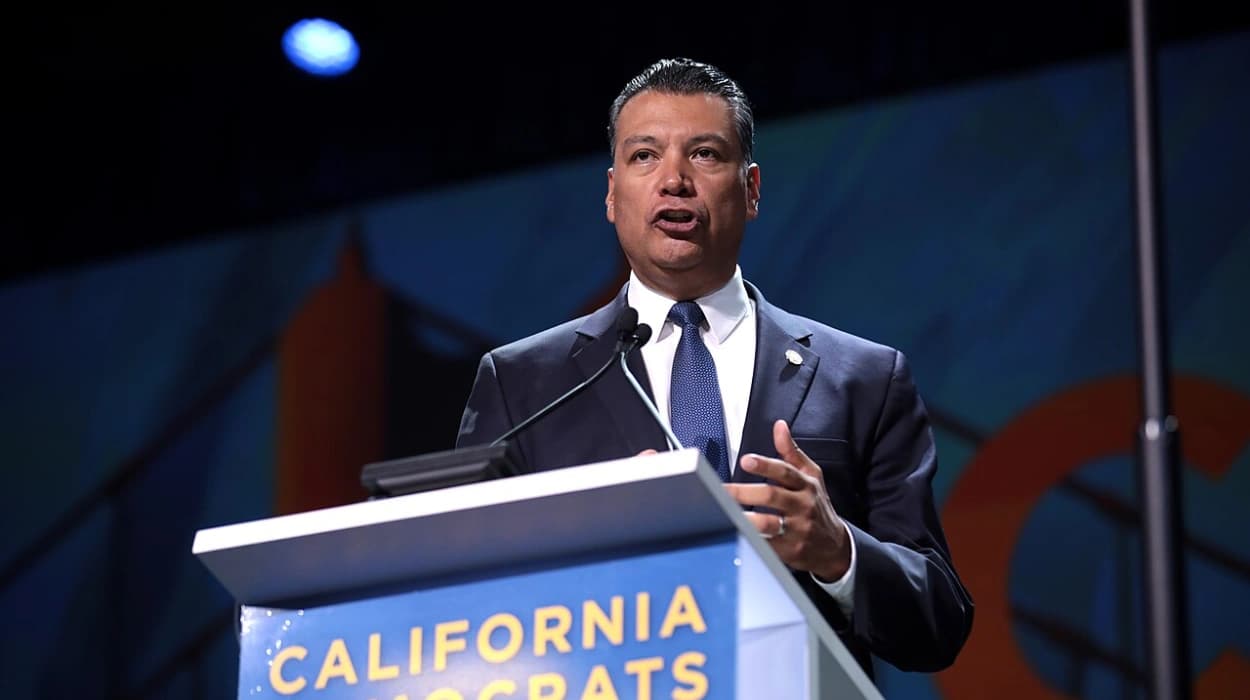
Alex Padilla is a prominent figure in U.S. politics, known for his groundbreaking role as California’s first Latino U.S. Senator and his extensive career in public service at various government levels. Understanding Alex Padilla’s net worth requires considering his professional journey, public office salaries, and typical income avenues for a political leader of his stature.
Early Life and Education Shaping a Public Service Career
Born Alejandro Padilla in Los Angeles, California, to Mexican immigrant parents, Padilla’s rise from humble beginnings reflects a common narrative of perseverance in American politics. His parents worked in modest jobs his father as a short-order cook and his mother as a housekeeper underscoring Padilla’s roots in working-class America.
Graduating from the Massachusetts Institute of Technology (MIT) with a degree in mechanical engineering, Padilla initially pursued a technical career, briefly working in software engineering for satellite systems at Hughes Aircraft. This strong educational foundation provided him with analytical skills and a technical mindset that proved valuable in his subsequent political career.
Political Career and Its Influence on Financial Standing
Alex Padilla’s career trajectory began in local politics as a member of the Los Angeles City Council at just 26 years old. He made history as the first Latino and youngest council president, which propelled him into wider state politics. His leadership at the city level involved managing budgets, influencing policy decisions, and developing a public profile that increased his influence and future earnings potential.
He subsequently served two terms in the California State Senate, a position accompanied by a public salary determined by state legislature guidelines. These roles expanded his expertise and network, both of which are crucial for future opportunities and financial growth.
Later, Padilla was elected Secretary of State of California, an office that oversees voting systems, business registrations, and state archives. This high-profile statewide office carries a competitive salary, but like most public servants, the compensation is moderate compared to private sector executives.
In 2021, Padilla was appointed to the U.S. Senate by Governor Gavin Newsom, succeeding Kamala Harris after she became Vice President. As a Senator, Padilla receives a federal salary consistent with congressional pay scales, which are transparent and publicly recorded. While the Senate salary may be substantial relative to average wages, it is not typically the sole source of wealth accumulation for politicians.
Understanding Typical Income Components for Politicians Like Alex Padilla
The net worth of a politician involves valuations beyond just public salaries. Here are common income and wealth-building factors influencing someone like Senator Padilla:
- Public Office Salaries: U.S. Senators earn a base salary set by federal law, which provides steady income during their terms.
- Pension and Benefits: Long-term service in various roles adds to pension wealth and other government benefits which contribute to net worth over time.
- Investments and Assets: Public officials often have investment portfolios that include real estate, stocks, and other financial instruments. However, politicians must publicly disclose major holdings and avoid conflicts of interest.
- Book Deals and Speaking Engagements: Senior politicians often receive income from publishing books or paid speaking events. While there is no public record confirming such earnings for Padilla, these are common revenue streams.
- Post-Political Career Opportunities: Though currently in office, some politicians transition to consultancy, academia, or corporate boards after their tenure, significantly augmenting their net worth.
Estimated Net Worth and Transparency in Public Service Finances
Reliable estimates of Alex Padilla’s net worth reflect his long-standing public service and robust career foundation. Public salary disclosures and asset declarations provide transparency but do not always depict the full financial picture, as wealth accumulation can be influenced by non-salary sources and investments.
Compared to other high-profile U.S. Senators from California, whose net worths range widely, Padilla’s wealth is consistent with a career dedicated to public office rather than private sector entrepreneurship or inherited wealth. Public figures from similar career paths often report net worths in the range that supports a comfortable middle-to-upper-middle-class lifestyle but not of billionaire scale.
The Economic Context of California Politicians
California’s economic environment, marked by the largest economy in the United States and significant wealth disparities, provides a unique backdrop for understanding a politician’s net worth. According to the World Bank and OECD, the U.S. consistently ranks as one of the top economies globally but also faces inequalities contributing to political leaders’ focus on social and economic reform.
Politicians like Padilla often advocate for policies addressing wealth inequality, public health, and education—all factors influencing their public image and indirectly, their financial security within a public service context. Their compensation is framed more around public accountability than wealth generation.
Padilla’s Political Positions and Influence: Impact on Financial Perception
Alex Padilla is known for championing voter access, environmental initiatives, and immigrant rights, reflecting his origins and constituency. His legislative priorities often align with progressive policies aimed at economic fairness and infrastructure investments rather than business deregulation or tax cuts for the wealthy.
This alignment plays a critical role in public perception regarding net worth. Politicians advocating for equitable policies are often scrutinized for any significant personal wealth, heightening the importance of transparency in public disclosures.
Personal Life and Financial Responsibility
Padilla’s personal background, married life, and family commitments underscore a lifestyle representative of middle-class stability rather than opulence. Balancing public service with personal financial management is a common theme among many career politicians who maintain modest assets relative to private sector executives.
Evidence suggests Padilla leads a financially prudent life consistent with his public persona and political values.
Challenges in Assessing Net Worth of Public Figures
Estimating net worth for public officials like Alex Padilla presents challenges:
- Asset Disclosure Limits: Financial disclosures focus on ranges rather than precise amounts.
- Complex Financial Interests: Family assets, trusts, and deferred compensation can obscure total wealth.
- Ethical Regulations: Politicians must avoid certain investments that create conflicts, limiting personal wealth growth through some channels.
Despite these complexities, publicly available data and expert analysis provide a reasonable picture of Padilla’s financial standing as reflecting moderate wealth accumulated over decades of public service.
The Broader Role of Wealth in Politics
The discussion around Alex Padilla’s net worth also taps into larger debates about economic diversity in political representation. According to organizations studying political finance, effective governance benefits from leaders with varied financial backgrounds, avoiding domination by the ultra-wealthy.
Padilla’s trajectory from the child of immigrants to senior senator illustrates a democratic ideal where merit and service, rather than inherited wealth, define political opportunity.
Alex Padilla’s net worth is a product of his distinguished career in public service, supported by transparent salaries and prudent financial decisions within the framework of ethical governance. While not a figure of significant private wealth compared to business magnates, his financial standing exemplifies a committed public servant focused on progressive legislative goals and community advocacy. His story resonates as a testament to social mobility and dedication in American politics.