
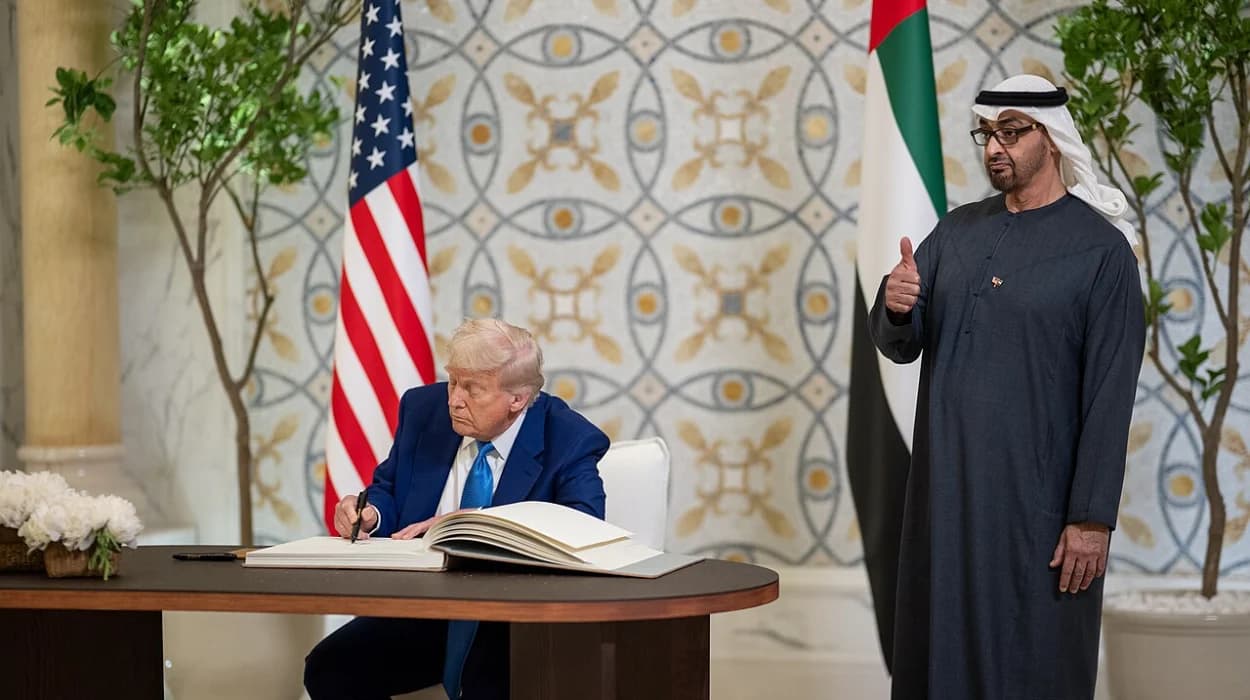
Donald Trump's visit to Saudi Arabia in May 2025, as the first major international trip of his second term presidency, was driven primarily by a focus on boosting economic partnerships, securing significant business deals, and addressing critical geopolitical issues in the Middle East. The visit centered on expanding Saudi investment in the United States, with Trump pushing for this figure to rise from $600 billion to $1 trillion, equating roughly to Saudi Arabia's annual GDP.
Economic Focus and Strategic Partnership
During the visit on May 13-14, 2025, Trump emphasized doubling Saudi Arabia's investments in the United States to $1 trillion, highlighting this as a key objective to stimulate the US economy and enhance bilateral ties. A landmark $142 billion letter of intent was signed, covering defense advancements and cooperation in energy sectors. Agreements included collaborations between the Saudi Space Agency and NASA, as well as establishing conservation projects such as a dedicated exhibit for the Arabian leopard, symbolizing broad-spectrum partnership. Business figures, including senior advisor Elon Musk, were part of the delegation, underscoring a business-driven approach with technology and innovation at the forefront, including projects to utilize Starlink for aviation and maritime communication.
Geopolitical Dimensions and Peace Efforts
Trump’s visit also addressed ongoing conflicts and tensions in the region. He announced the lifting of sanctions on Syria, a move perceived as vital for the country's post-conflict rebuilding and reintegration into the global community. Moreover, Trump encouraged Saudi Arabia to join the Abraham Accords, seeking to enhance peace and normalization in the Middle East, although this proposal was met with mixed reactions. The visit underscored efforts to balance relations with Iran, pressing for negotiations over its nuclear program while signaling a shift in US policy that avoided traditional “lectures” on governance, marking a new diplomatic tone aimed at fostering stability without direct confrontation.
Business and Investment Deals
Trump’s Saudi Arabia trip was part of a broader Gulf tour that included Qatar and the United Arab Emirates, with total announced deals in the region amounting to hundreds of billions of dollars. In Saudi Arabia, investments were targeted at sectors from technology and AI to infrastructure projects like airports and cultural parks. The visit was notable for the participation of major corporations such as Nvidia and AMD, linked to substantial technological collaborations. The White House framed these deals as mutually beneficial economic growth stimulators, reflecting a strategy to solidify US economic presence in the Middle East and counterbalance global competitors.
Broad Regional Impact
The 2025 visit was described as marking a significant shift in US foreign policy toward a Middle East where the US claimed to have no enemies, emphasizing investment and partnerships over military involvement. Trump’s stance, as reported, rejected decades of prior policy approaches in the region by focusing on pragmatic economic and diplomatic engagement. The trip also carried symbolic weight, demonstrated by the Saudi-U.S. Investment Forum and the absence of Israeli stops, reflecting nuanced regional diplomatic dynamics amid ongoing conflicts such as the Gaza war.
Donald Trump's 2025 Saudi Arabia visit was a multifaceted diplomatic and economic mission aiming to deepen bilateral relations through unprecedented investment commitments, redefine US engagement in the Middle East with a focus on peace initiatives, and position economic development as a cornerstone of regional stability. The visit reinforced strategic ties with Saudi Arabia while signaling evolving US priorities in the Gulf, highlighting a blend of business diplomacy, technology cooperation, and cautious geopolitical recalibration.