
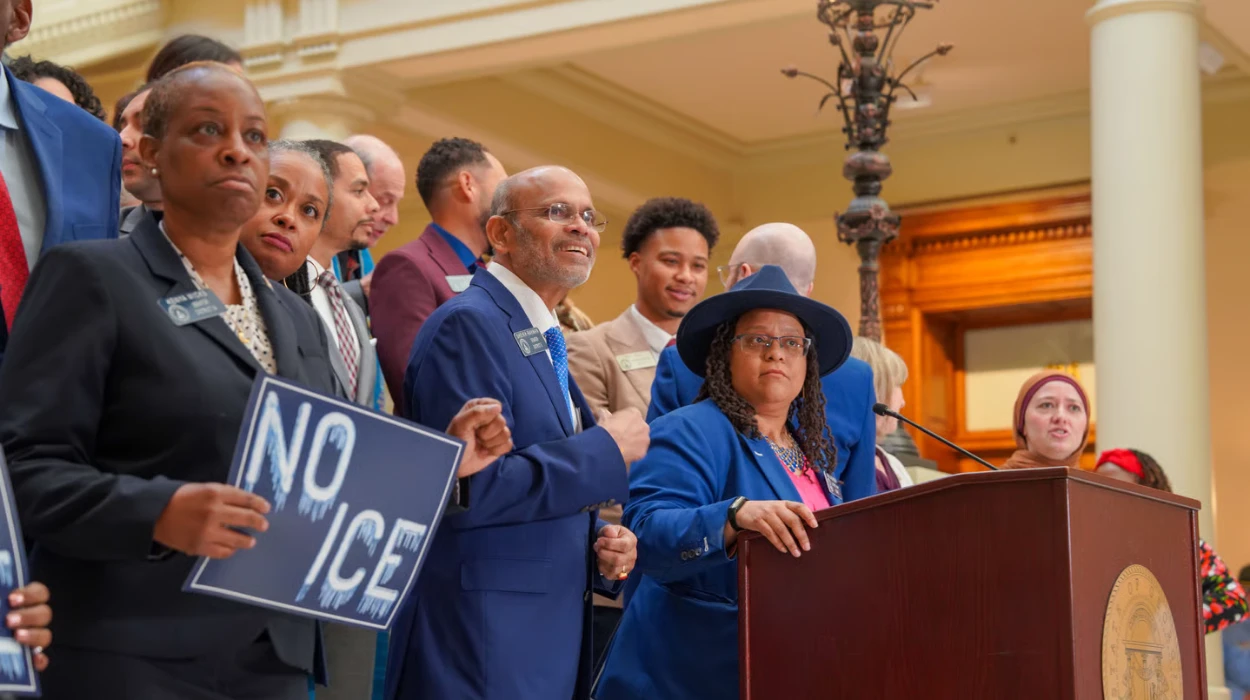

- Local Impacts: Federal immigration policies are straining Georgia’s families, businesses, and communities by increasing pressure on housing, schools, healthcare, and public services amid rising migrant arrivals.
- State Leader Concerns: Governor Brian Kemp and lawmakers like Reps. Buddy Carter and Drew Ferguson warn these measures undermine state resources, security, and economic stability without adequate federal support.
- Bipartisan Calls: Both Republicans and Democrats, including Sens. Jon Ossoff and Raphael Warnock, urge Congress to review and oppose policies risking local welfare and control.
- Economic Risks: Policies disrupt labor markets in agriculture and hospitality, where immigrants fill key roles, leading to higher costs, job instability, and supply chain issues.
- Action Needed: Congress must prioritize bipartisan reforms for border security, reimbursements, and humanitarian aid to protect Georgia without overburdening states.
Atlanta (Washington Insider Magazines) – Lawmakers and state officials in Georgia have raised growing concerns over federal immigration policies they say are negatively affecting local families, businesses, and communities. The criticism follows a series of immigration enforcement and border measures introduced by the federal government, which local authorities warn could strain state resources and social systems.
Federal Policy Changes Spark Concern Across Georgia
Credit: Joshua Roberts Reuters
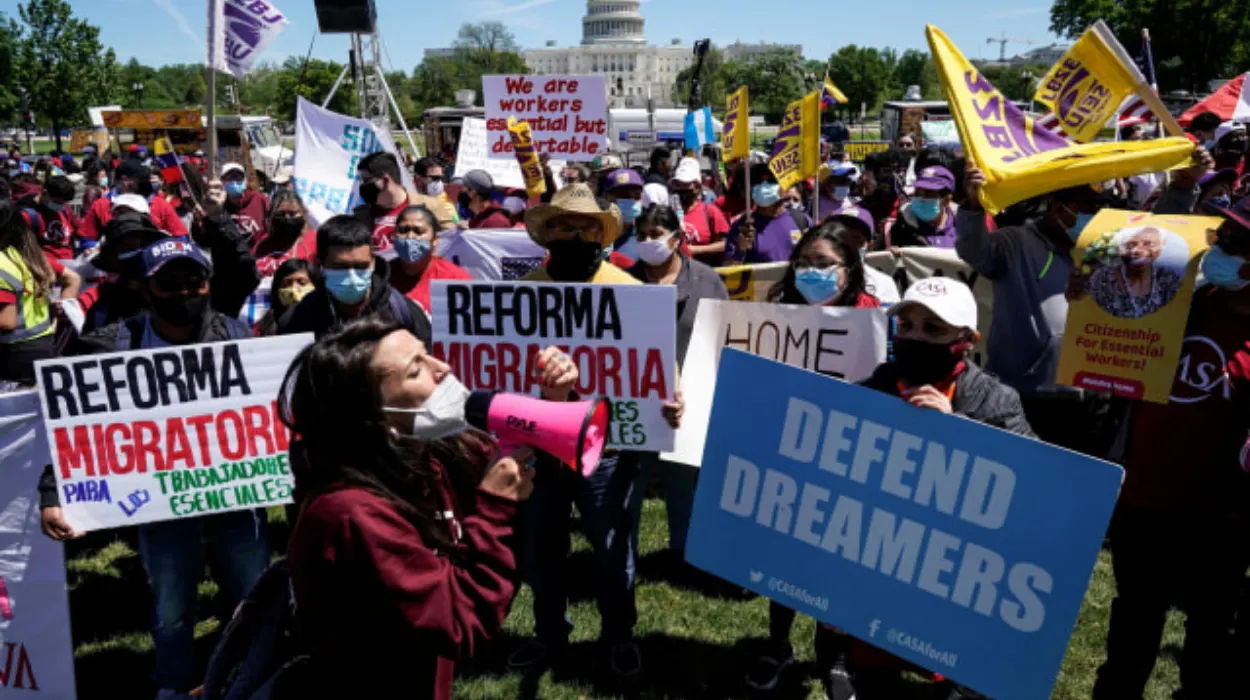
Georgia state officials and members of Congress have voiced apprehension about the potential socioeconomic effects of recent immigration directives implemented by the Biden administration. According to The Atlanta Journal-Constitution and Reuters, the policies—aimed at balancing border management and humanitarian priorities—have led to increased migrant arrivals in southern U.S. states, placing added pressure on housing and educational infrastructure.
Governor Brian Kemp and Georgia’s congressional delegation have called for a review of federal immigration enforcement practices, saying that the current framework risks undermining state-level control and public services. In a statement released in late December 2024, Kemp reiterated Georgia’s position, stating that the state “should not bear the costs” of federal immigration decisions that impact local security and welfare.
Republican members of Georgia’s congressional delegation, including Representative Buddy Carter and Senator Jon Ossoff, have expressed the need for bipartisan oversight of immigration policy impacts. While their approaches differ—Carter stressing stronger border enforcement and Ossoff calling for pragmatic reform—both legislators emphasised maintaining community safety and economic stability as central priorities.
Georgia Republicans said in X post,
“Georgia families are hurting from these misguided immigration policies. Congress members must stand up and oppose them to protect our communities and economy. #StopHarmfulImmigration”
Αρσεναλ – Σάντερλαντ: (X) 0-0 τελικό
— Pathfinder Sports (@pathfinderSport) February 21, 2009
Georgia Communities Report Resource Strains Amid Increased Migration
Local reports suggest that several Georgia counties have experienced growing challenges linked to new migrant arrivals. According to WXIA-TV (11Alive News) and Associated Press data from December 2024, metro Atlanta and surrounding areas have seen demands increase on temporary housing programs, schools, and healthcare facilities.
Officials from the Georgia Department of Human Services confirmed that the influx of migrant families has required expanded coordination among local agencies to ensure essential support is delivered without disruption to residents. In Muscogee and Fulton Counties, school districts reported enrolling higher numbers of non-English-speaking students in recent months, prompting calls for additional language and integration resources.
Clarkston Mayor Beverly Burks, speaking with NPR, said the city continues to welcome refugees and migrant populations but acknowledged budgetary challenges arising from the volume of new arrivals. “We’ve always supported families seeking safety and opportunity,” she stated, “but we need more consistent federal and state assistance to manage these needs effectively.”
State and Local Lawmakers Demand Federal Support and Oversight

Credit: Jim Franco, Times Union
Officials in several Georgia municipalities have urged Congress to expand federal assistance mechanisms to ease the pressure on state and local systems. Reports by The New York Times and CNN indicate that Georgia’s municipal leaders have requested clearer guidance on resource allocation, federal reimbursements, and policy frameworks for migrant processing at the state level.
Republican Representative Drew Ferguson stated in an official communication to the House Committee on Homeland Security that “states like Georgia must not be left to address a national challenge alone.” He urged Congress to pass legislation ensuring that state and county governments are equipped with the financial and administrative resources to manage migration-related responsibilities.
Democratic leaders, including Atlanta-area Representative Nikema Williams, echoed similar concerns about the need for balanced immigration solutions. Williams emphasised that humanitarian fairness and local sustainability “must coexist through carefully implemented federal policy, not unilateral enforcement shifts.”
Immigration Reform Coalition said in X post,
“New analysis shows immigration policies are devastating Georgia families—higher costs, job losses, and strained resources. Urge Congress to oppose and reform these harmful measures immediately.”
finally I’m done with all my queries I just need to put everything together and we are up an running
— Edgar (@fresaOno) November 3, 2008
Federal Administration Defends Current Immigration Approach

Credit: AP Photo/Julia Demaree Nikhinson
In response to criticism from Georgia leaders, federal officials have maintained that recent immigration measures are designed to meet legal requirements while modernising border security. The Department of Homeland Security (DHS) stated in December 2024 that its approach seeks to balance accountability with compassion, enhancing processing systems and targeting human smuggling networks.
A DHS spokesperson told Reuters that “the administration continues to coordinate with state governments to ensure effective management of migration and border enforcement.” The official added that humanitarian parole and temporary protection measures were essential for managing individuals fleeing violence or persecution, emphasising the federal commitment to maintaining law and order at the border.
President Joe Biden, speaking at a press conference earlier that month, affirmed that the White House remains engaged with Congress to find “comprehensive immigration solutions that protect U.S. communities and uphold American values.”
Economic Implications of Strained Immigration Infrastructure
Economists and policy researchers have warned that inconsistent immigration management could pose challenges for Georgia’s labour market and public services. The Brookings Institution and Georgia Public Broadcasting (GPB) reported in December that while migrant populations contribute significantly to the workforce—especially in agriculture, construction, and service industries—rapid policy shifts can create instability for employers reliant on legal immigration channels.
Data from the U.S. Chamber of Commerce indicates that Georgia’s economy depends on immigrant labour for more than 12 percent of its agricultural workforce and around 10 percent of its hospitality sector. Local business associations have cautioned that uncertainty in policy enforcement may disrupt seasonal work cycles, supply chains, and service delivery.
Georgia Poultry Federation President Mike Giles told GPB that the sector has been “navigating ongoing uncertainty related to worker eligibility and visa processing backlogs.” He called for federal clarity to stabilise hiring processes that affect hundreds of businesses statewide.
Meanwhile, advocacy groups such as the Georgia Budget and Policy Institute (GBPI) emphasised that long-term immigration planning must include sustained investment in education, job training, and healthcare infrastructure to prevent regional disparities.
Security and Enforcement Coordination Remains Ongoing
Law enforcement agencies in Georgia continue to coordinate with federal bodies on immigration enforcement and border-related issues. According to official releases by U.S. Immigration and Customs Enforcement (ICE), joint operations with local law enforcement have focused on addressing criminal activity linked to human trafficking and document fraud, rather than broad deportation campaigns.
Sheriff Frank Reynolds of Cherokee County, who oversees several local enforcement collaborations, said during a December media briefing reported by Fox 5 Atlanta that “communication between federal and local agencies has improved, but execution must match policy objectives.”
Both state and federal security officials affirmed that the primary goal remains safeguarding public safety while ensuring legal due process for all individuals affected by immigration proceedings.
Border Policy Debate Extends to State-Level Legislation
The Georgia General Assembly is expected to revisit several immigration-related bills in early 2025, influenced by the broader national debate over border management. Legislative summaries reviewed by The Atlanta Journal-Constitution show proposals focused on data sharing between state agencies and federal authorities, as well as measures enhancing oversight of schools and hospitals providing services to undocumented families.
Republican legislators have advocated for tighter verification protocols and penal measures targeting employers who violate immigration compliance requirements, while Democratic lawmakers have called for more humanitarian provisions to prevent family separation and ensure access to basic services regardless of immigration status.
The debate is likely to extend into upcoming election cycles, as both parties seek to align with voter concerns over safety, cost, and fairness in immigration enforcement.
Humanitarian Organisations Step Up Support for Migrant Families
Several humanitarian aid organisations operating in Georgia have expanded their outreach to meet rising needs among recently arrived migrant communities. The International Rescue Committee (IRC) and Catholic Charities of Atlanta confirmed increased program enrolment throughout 2024, citing higher demand for housing, job placement, and legal assistance.
IRC Director Justin Howell told GPB News that collaborative local responses are essential to “uphold both humanitarian commitments and community cohesion.” He acknowledged the funding shortages many state programmes face but praised community-driven support networks that help stabilise migrant families.
Federal data from the Department of Health and Human Services shows Georgia remains one of the top 10 U.S. states resettling refugees and migrants under federal humanitarian programmes.
National Policy Developments Continue Into Early 2025
As of January 2025, Congress continues deliberations on several key bills related to border funding, asylum system reform, and visa processing improvements. The Washington Post reported that bipartisan discussions have progressed on proposals linking additional border security measures with expanded legal pathways for migrants, though no final agreement has been reached.
Georgia representatives across party lines have publicly stated that their priority remains protecting local families and ensuring that national reforms consider state-level realities. Senator Raphael Warnock noted in a Senate hearing that “Georgia’s families, workers, and businesses deserve policies that reflect both compassion and accountability.”
Experts at the Migration Policy Institute added that comprehensive solutions would likely require multi-agency coordination and sustained federal-state dialogue—areas where Georgia legislators are pushing for a more active role.
Outlook
As federal and state discussions over immigration policy continue, Georgia remains a focal point in the broader national debate on migration and labour. State officials, lawmakers, and advocacy groups have all reiterated the need for durable and fair frameworks that address practical realities faced by families and communities.
For now, with legislative sessions approaching and further federal guidance expected, local leaders continue urging Congress to consider the socioeconomic implications that current and future immigration policies carry for Georgia’s residents and infrastructure.