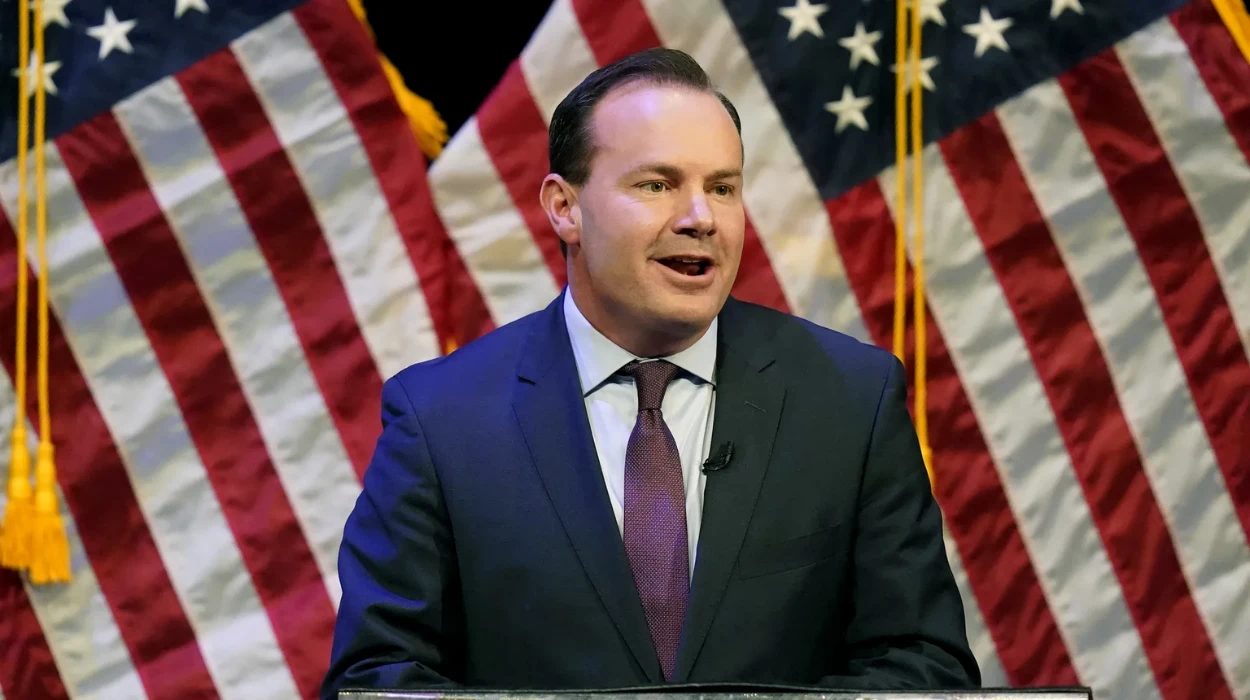

Mike Lee is a prominent American politician serving as the senior
United States senator from Utah. Since assuming office in 2011, Lee has become
known for his conservative principles, legal expertise, and influential role in
the Senate. His financial status is often a subject of curiosity, particularly
concerning how his public service career has shaped his net worth.
Mike Lee’s Background and Career Overview
Born Michael Shumway Lee on June 4, 1971, in Mesa, Arizona, Lee
comes from a family with strong legal and political ties. His father, Rex E.
Lee, was the Solicitor General of the United States under President Ronald
Reagan. Mike Lee graduated from Brigham Young University with a BA and a Juris
Doctor degree before embarking on a legal career. He clerked for influential
judges including Samuel Alito and served as an assistant U.S. attorney for
Utah. Transitioning to politics, Lee won the Republican nomination in 2010 and
has since been reelected twice, becoming Utah’s senior senator in 2019.
Estimating Mike Lee’s Net Worth
Various financial tracking sources estimate Mike Lee’s net worth
to be approximately $390,000 as of 2025, placing him in the median range among
members of the U.S. Congress. According to disclosures reported by Quiver
Quantitative, Lee raised about $506,400 in fundraising during early 2025.
During the same period, he spent around $451,800 on campaign and operational
expenses. At the end of that reporting period, Lee disclosed having nearly
$963,900 in cash on hand. Despite these figures, Lee reportedly holds minimal
to no investments in publicly traded stocks or other high-risk assets,
reflecting his conservative and cautious approach to managing personal
finances.
What Contributes to Mike Lee’s Wealth?
Unlike some politicians with diversified financial portfolios,
Lee’s wealth primarily stems from his Senate salary, savings, and limited
private income. His conservative approach to finance emphasizes minimal risk
and maintaining a modest lifestyle compared to many congressional peers.
Lee’s spouse, Sharon Burr, and three children reside in Alpine,
Utah, where the family enjoys a relatively grounded lifestyle. Lee’s financial
disclosures from recent years have also shown ownership of real estate holdings
in Utah, contributing to his overall assets.
Income Through Public Service: Senate Salary and Benefits
Senators in the U.S. earn a standardized salary set by law. As of
recent years, this salary is approximately $174,000 annually. Additional
compensation can come from leadership roles, committee chairmanships, and
allowances. Lee has served as Chair of the Senate Energy Committee and held
other influential committee positions, which might modestly increase his
official income.
Although the salary is substantial, it is modest relative to many
other sectors, and politicians like Lee often prioritize public duty over
wealth accumulation.
Financial Philosophy: Conservative and Transparent
Mike Lee is known for his principled stance, advocating for
smaller government and fiscal responsibility. This ethos extends into his
personal finances, where he reportedly avoids extravagant spending or
speculation. He opts for clear and open financial disclosures, adhering to
transparency requirements demanded of public officials.
Comparison with Other Senators
While some senators boast multi-million-dollar net worths due to
business interests or inheritance, Lee falls within the middle range. His net
worth is low compared to figures such as Senator Mitt Romney or Senator Mark
Warner but aligns with a broader segment of Congress that maintains moderate
financial portfolios.
This financial positioning reinforces his political messaging
around frugality, grounded living, and skepticism of concentrated wealth.
How does Mike Lee’s net worth compare to other
Utah politicians
Mike Lee’s net worth is relatively modest compared to other
notable Utah politicians. According to recent financial analyses, Lee’s
estimated net worth ranges between approximately $216,000 and $565,000, placing
him in the mid to lower tier among U.S. senators in terms of personal wealth.
In comparison, former Utah Senator Orrin Hatch had a net worth estimated
between $1.4 million and $4.2 million, significantly higher than Lee’s. Other
Utah representatives have varied financial standings: Rob Bishop’s net worth is
estimated between $16,000 and $65,000, placing him lower than Lee, while Chris
Stewart’s net worth is between $266,000 and $565,000, roughly comparable to
Lee. Retiring Congressman Jim Matheson was noted as the wealthiest among Utah’s
House delegation, with a net worth between $1 million and $2.5 million.
Overall, while a substantial number of U.S. Congress members are millionaires
with average net worths above $1 million, Mike Lee maintains a conservative
financial profile with a net worth below that level, reflecting his publicly known
cautious and modest approach to personal finances.
Summary of Financial Data and Public Records
|
Financial Aspect |
Estimated Value |
|
Net Worth (2025) |
~$390,000 |
|
Fundraising Q1 2025 |
$506,400 |
|
Campaign Spending Q1 2025 |
$451,800 |
|
Cash on Hand Q1 2025 |
$963,900 |
|
Stock/Public Investments |
Minimal to none |
|
Real Estate Holdings |
Yes, in Utah |
|
Senate Salary |
~$174,000 annually |
Personal Life Influence on Wealth
Lee’s family background and upbringing have instilled principles
of service and responsibility. His personal choices emphasize stability rather
than wealth accumulation, reflecting in his financial standing. Married since 1993,
Lee and Sharon Burr focus on family life outside the limelight, a factor
contributing to their financial conservatism.
Mike Lee Net Worth – A Reflection of Values and Career
Mike Lee’s net worth reflects his steady career in public service combined
with a prudent approach to finances. Unlike some political figures who
accumulate vast wealth, Lee embodies the image of a dedicated public servant
with moderate means. His financial situation is intertwined with his political
philosophy of conservatism, transparency, and public duty.
For those interested in understanding the financial side of
political figures, Mike Lee offers a notable example of balancing public
responsibility and personal fiscal restraint.