
Key Points
- · President
Donald Trump addressed nearly 800 U.S. military generals and admirals at
Quantico, Virginia, on 30 September 2025. - · The speech
lasted about 73 minutes and covered domestic threats, foreign policy, and
military readiness. - · Military
leaders listened mostly in silence, showing no enthusiastic applause as per
Pentagon guidance, maintaining military nonpartisanship. - · Trump urged
the military to engage more robustly in domestic operations against perceived
“internal threats” such as civil unrest and illegal immigration. - · He described
the situation in some Democratic-run cities as a “war from within” and
suggested using these cities as military training grounds. - · The president
criticized the Biden administration heavily, blaming it for worsening U.S.
safety and order. - · Defense
Secretary Pete Hegseth supported Trump’s stance, calling for a stronger warrior
ethos and criticism of senior military officers who dissent. - · Critics,
including former military officials and Democrats, warned that the
politicization of the military risks undermining national security and
democratic norms. - · Military
leaders were summoned unexpectedly from around the globe, indicating the
unusual nature of the event.
What happened at
Trump’s address to the top military leaders?
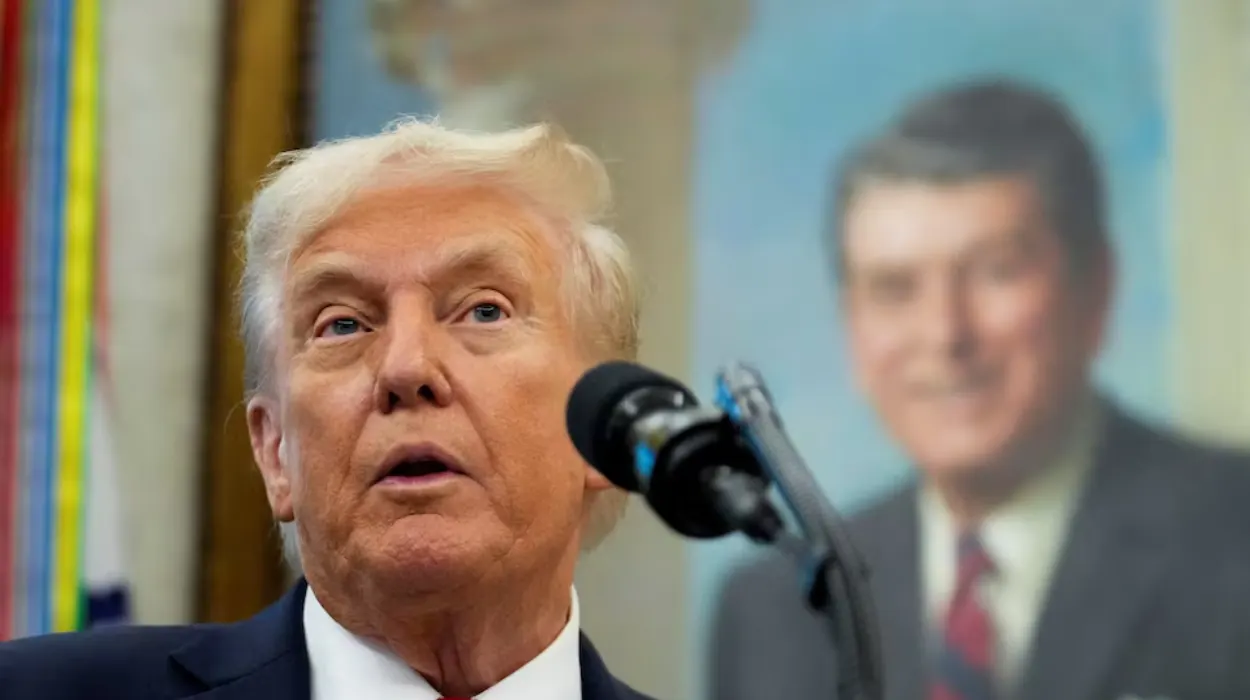
President Donald Trump convened
a rare and unprecedented assembly of nearly 800 U.S. military generals,
admirals, and senior enlisted personnel at the Marine Corps University in
Quantico, Virginia, on 30 September 2025. According to Al Jazeera’s report by
their correspondent, the event was called at short notice by Defense Secretary
Pete Hegseth and brought together senior military officers from around the
world. Trump delivered a lengthy, meandering speech lasting over 70 minutes,
touching on a broad range of topics, including U.S. foreign policy, military
preparedness, and internal security threats.
The atmosphere was notably
subdued. As the New York Times journalist noted, the assembled military leaders
mostly listened in silence, refraining from applause or vocal reaction in line
with Pentagon guidance to remain nonpartisan and neutral. Trump himself
acknowledged the quiet, stating, “I’ve never walked into a room so silent.” He
encouraged the officers to applaud or even leave the room if they disagreed
with him, humorously adding that leaving might cost them their rank or future.
What themes did
Trump emphasise in his speech to the military?
A dominant theme of President
Trump’s address was the framing of domestic civil unrest and immigration as an
internal security threat comparable to foreign enemies. He declared a “war from
within,” describing dangers posed by what he termed “radical left Democrats”
controlling cities like New York, Chicago, San Francisco, Los Angeles, and
others. As reported by ABC News, Trump explicitly stated that some of these
cities are in “bad shape” and that the U.S. military should be used more
aggressively domestically to “straighten them out, one by one”.
Trump shared that he had signed
an executive order to train rapid response teams within the military to manage
civil unrest within U.S. cities. He reflected on ongoing troop deployments to
cities such as Los Angeles, Washington DC, Memphis, and Portland, hinting these
deployments could expand. “This is a war too,” he said, “and it is a
significant undertaking for some of the people in this room”.
How did Trump criticise political
opponents and the Biden administration?
Throughout the speech, Trump
criticised his political rivals sharply. He accused President Joe Biden and
Democrats of worsening U.S. safety by allowing “invasion from within” through
uncontrolled immigration and criminal elements. He stated that Biden’s administration
allowed “people to come in from prisons, mental institutions, drug dealers,
murderers,” and labelled Democrats as disrespectful towards the military.
Trump emphasised his belief
that past administrations neglected the military’s role in maintaining domestic
order. He remarked, “Many of our leaders used the military to keep peace. Now
they like to say ‘Oh, you’re not allowed to use the military.’” He also
controversially suggested using “dangerous” Democratic-run cities as training
grounds for the military National Guard.
What was Defense Secretary Pete
Hegseth’s role and message?
Defense Secretary Pete Hegseth
convened the gathering and spoke in support of the administration’s vision.
According to reports from DefenseScoop and Time, Hegseth emphasised the need
for the military to adopt a stronger “warrior ethos” and warned against dissent
within the ranks. His messaging aligned with Trump’s vision of an active
military role in domestic issues, a stance that divides opinion within the military
and beyond.
What reactions did the speech prompt
from military experts and political leaders?
The event elicited mixed but
mostly critical reactions. Former military officials and defense policy
analysts described the summit and speech as a “performance” meant to suppress
military dissent, potentially weakening national security. Virginia Burger, a
former Marine Corps officer, called it “abhorrent” and warned about the risks
for the Armed Forces and taxpayers. Other former senior officials echoed
concerns about politicisation and its impact on military integrity.
Democrats strongly denounced
the address. The top Democrat on the Senate Armed Services Committee called
Trump’s actions “dereliction of leadership” and criticised the overt
politicisation of the military. They expressed concerns about deploying troops
without local consent, citing objections from city and state officials in
places where the military is active, such as Portland.
Why was the gathering considered
unusual or controversial?
Reuters reported that the
gathering was remarkable not only for its size—assembling top military leaders
from around the world on short notice—but also for its content and political
undertones. The U.S. military traditionally maintains strict nonpartisanship
and separation from civilian politics. The extent of Trump’s direct political
messaging and call for military involvement in domestic policing, coupled with
references to dissent suppression, marked a departure from conventional
military norms.
What is the legal context regarding
military use in domestic cities?
The Posse Comitatus Act of 1878
restricts the military from acting as law enforcement within U.S. borders
except under specific circumstances. Trump’s proposals to use the military in
city policing roles and rapid response units to control civil unrest risk
violating this law. Critics have raised alarm about the constitutional and
civil rights implications of militarising American cities in the manner Trump
suggested.