
Summary
- Trump
announced sending troops to Portland, Oregon. - Authorized
“full force” if necessary against “domestic
terrorists.” - Aimed
to protect ICE facilities under attack by Antifa.
Declaring on social media that he was ordering the
Department of Defense to “provide all necessary Troops to protect War
ravaged Portland,” he made the announcement. The U.S. Immigration and
Customs Enforcement facilities are “under siege from attack by Antifa, and
other domestic terrorists,” according to Trump, who said the action was
required to protect them.
A request for information about Trump’s announcement,
including the troops that would be participating and a schedule for deployment,
was not immediately answered by the White House.
Portland’s mayor, Democrat Keith Wilson, said there was no
need for troops in his city.
“Our nation has a long memory of acts of
oppression, and the president will not find lawlessness or violence here unless
he plans to perpetrate it,”
he said.
Trump has not yet carried on his earlier threat to send the
National Guard into Chicago. Only 150 troops are anticipated to be deployed to
Memphis, Tennessee, which is significantly fewer than the number of troops
dispatched to Los Angeles in reaction to anti-immigration protests that
descended into violence when the troops arrived, or to the District of Columbia
for Trump’s crackdown on crime. Additionally, Trump dispatched Marines to Los
Angeles.
When questioned
about Trump’s Truth Social post, a U.S. defense spokesman stated that the
Pentagon will give details and updates as soon as they become available. The
department did not immediately respond when asked if Trump was referring to
active-duty forces or a deployment of National Guard troops from Oregon or
elsewhere.
“There is no national security threat in Portland. Our
communities are safe and calm,”
said Gov. Tina Kotek, a Democrat.
After George Floyd was killed by Minneapolis police in 2020,
racial justice demonstrations in Portland, which has a population of 636,000,
lasted for a long period and occasionally turned violent. To prevent damage of
the federal courthouse and other government property, the Trump administration
dispatched hundreds of agents, including members of the U.S. Border Patrol.
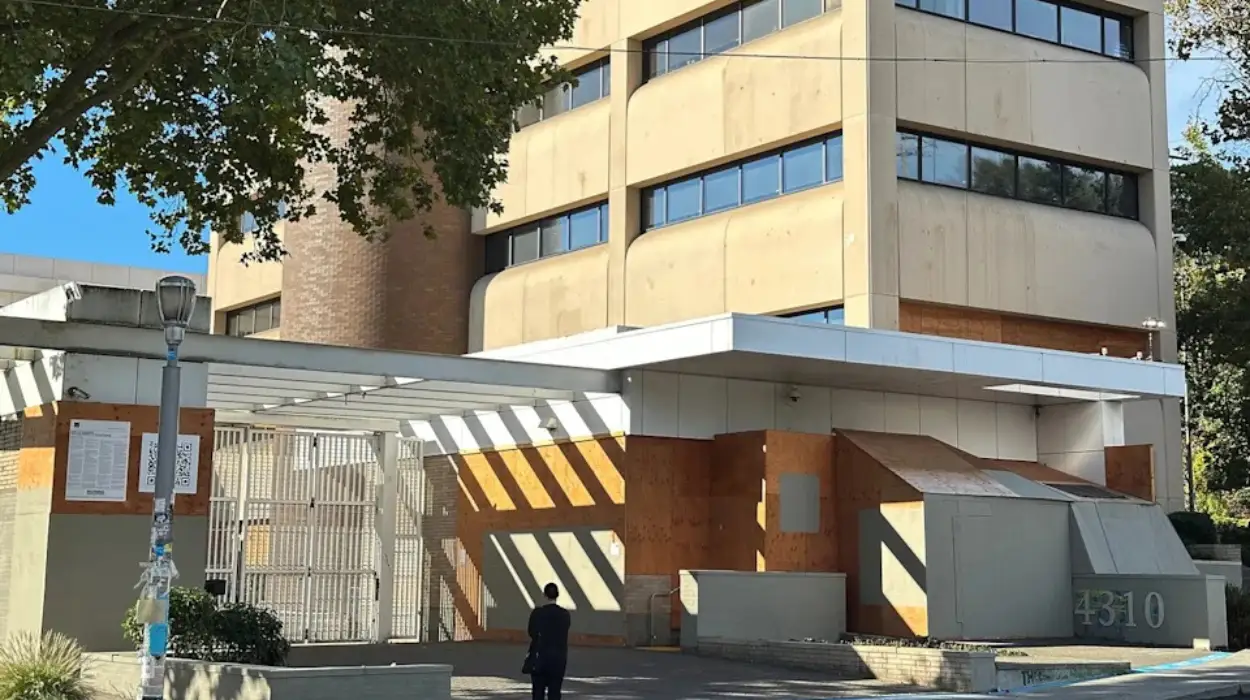
The region surrounding the ICE facility, which is outside of
the city’s downtown and served as the focal point of the 2020 protests, has
been the focus of far more subdued recent demonstrations. Graffiti has been applied
to the ground floor windows and the building’s main entrance.
According to a recent assessment by the Major Cities Chiefs
Association, Portland’s overall violent crime rate from January to June dropped
by 17% from 2024 to this summer, which was apparently the busiest for
pedestrian traffic since before the coronavirus outbreak. The homeless
encampments that characterized the years immediately following the pandemic
have diminished in the downtown area.
Trump has intensified his efforts to target the
“radical left,” which he claims is to blame for the nation’s issues
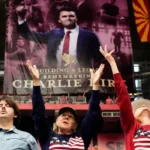
with political violence, since the killing of conservative activist Charlie
Kirk on September 10.
“We’re going to get out there and we’re going to do a pretty
big number on those people in Portland,”
he said, describing them as
“professional agitators and anarchists.”
What legal authority allows federal troops in a U.S. city?
According to the PCA (18 U.S.C. § 1385), the use of federal
military forces (such as the Army, Navy, Air Force, or Marines) for
“domestic civilian law enforcement” is generally prohibited unless
there is executive or congressional authorization under the Constitution. The
purpose of the PCA is to restrict the military’s role in civilian law
enforcement contexts to prevent intrusion on civil liberties.
The PCA does not apply to the National Guard when it is
under the authority of a state and the governor; however, once the National
Guard is federalized, the PCA would apply.
The President can “federalize” the National Guard,
which subjects the National Guard to federal control and then authorizes its
use for federal purposes, including assistance to law