
Summary
- Trump
said he will not allow Israel to annex the West Bank. - Rejected
far-right Israeli calls for extending sovereignty. - Warned
“enough is enough,” annexation “not going to happen.”
The remarks were made by Trump on Friday as Benjamin
Netanyahu was traveling to New York to give a speech to the United Nations.
“I will not allow Israel to annex the West Bank. Nope, I
will not allow it. It’s not going to happen,”
Trump told reporters in the Oval
Office, adding
“There’s been enough. It’s time to stop now.”
The way Netanyahu plans to respond to the UK, Australia,
France, Canada, and Portugal recognizing Palestine as a state earlier this week
has been the subject of intense conjecture in Israel and worldwide.
Jerusalem officials have stated that Trump will have to
approve anything Netanyahu undertakes first. The closure of British, French,
and other consulates in East Jerusalem or the complete annexation of the West
Bank or of smaller areas, like a strip of land along the Jordanian border, are
among the options.
British diplomats expressed their concern earlier this week
that Trump might acknowledge Israeli authority over illegal settlements on the
West Bank.
Leaders from the Arab and European worlds were actively pressing
him to prevent him from recognizing settlements in the West Bank.
Far-right elements in Netanyahu’s ruling coalition have put
a lot of pressure on him to annex the West Bank, which has alarmed Arab
leaders, some of whom met with Trump on Tuesday while attending the UN General
Assembly.
According to Saudi Arabia’s foreign minister Prince Faisal
bin Farhan Al-Saud, Trump “understands very well” the warnings from
Arab and Muslim nations about the serious repercussions of any annexation of
the West Bank.
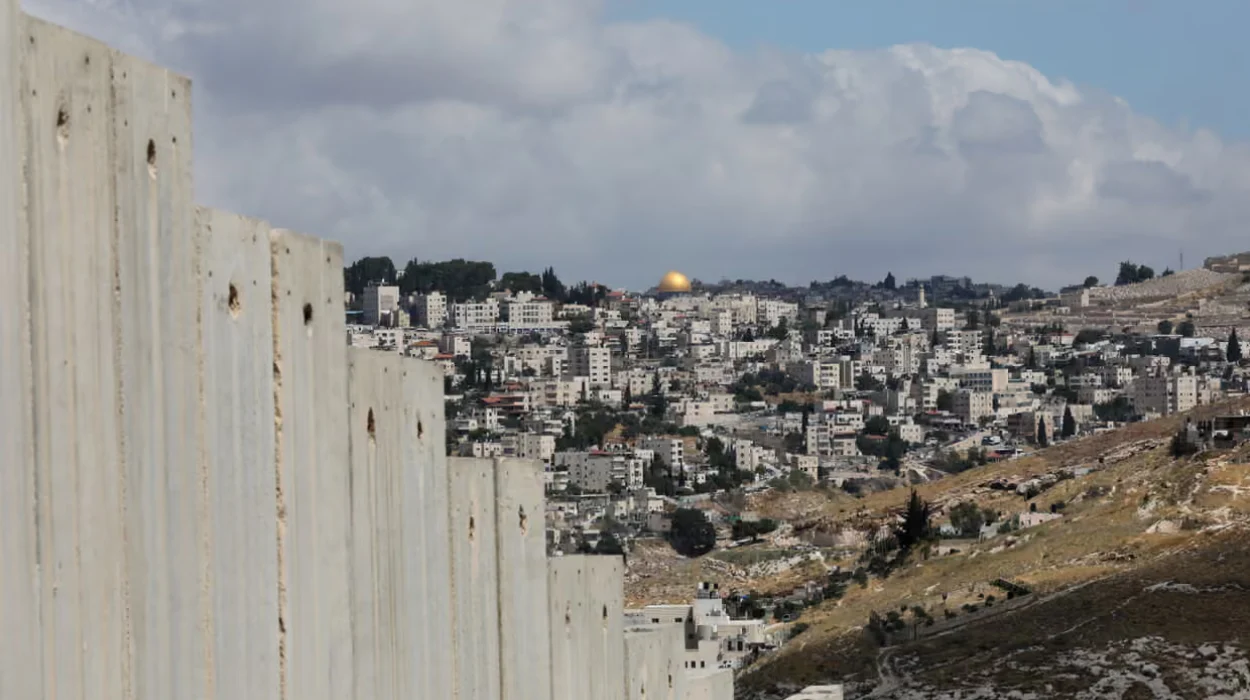
Since Israel seized the West Bank from Jordan during the
1967 war and subsequently enforced a military occupation, the number and size
of Israeli settlements have increased. They further divide the land by
extending further into the area with an Israeli-controlled road and other
infrastructure network. In August, final approval was given to the E1 project,
a highly denounced Israeli settlement proposal that would virtually divide the
occupied West Bank in half and shut it off from East Jerusalem. It will span
the territory that the Palestinians want to establish a state on.
The West Bank and East Jerusalem, which Israel annexed in a
move that most nations do not recognize, are home to about 700,000 Israeli
settlers and 2.7 million Palestinians.
The majority of the world community believes that Israeli
settlements in the West Bank violate international law. Israel contests this,
arguing that the settlements offer strategic depth and security and pointing to
biblical and historical connections to the region.
In an attempt to put an end to the nearly two-year-old
conflict in Gaza, the United States unveiled a 21-point Middle East peace plan
as world leaders gathered at the United Nations in New York.
Trump, who continues to be Israel’s most steadfast ally on
the international scene, stated that he had a conversation with Netanyahu and
officials of Middle Eastern countries on Thursday and that an agreement on Gaza
might be reached soon.
“We want the hostages back, we want the bodies back and we
want to have peace in that region. So we had some very good talks,”
he said.
Israel’s war in Gaza, which was sparked by a 2023 Hamas
assault into Israel that claimed 1,200 lives, primarily civilians, has received
international censure. More than 65,000 Palestinians, primarily civilians, have
been murdered throughout the conflict, which has also caused significant
destruction. According to a UN-backed hunger monitor, famine is occurring in
several areas of the region.
What actions can the US take to stop an annexation of the
West Bank?
The United States can deploy high-level engagement using
diplomatic communication and the threat of diplomatic consequences to persuade
Israeli leadership to cease annexation efforts. Engagement could include public
statements, private communications, and private written statements in which
Allies condemn annexation.
The US can use the threat of or impose sanctions or
reductions in economic/military funding and cooperation if annexation takes
place, using the carrot and stick of funding to coerce the decisions of the
Israeli government.
Using international partners and organizations like the
United Nations, the European Union, and Arab Nation States in a cooperative
effort to oppose and demonstrate a united position on annexation will intensify
both political and economic pressure on Israel.