
- Trump-appointed
prosecutor targets Powell for charges. - Republicans
push back against the investigation. - Trump
seeks lower rates before midterms.
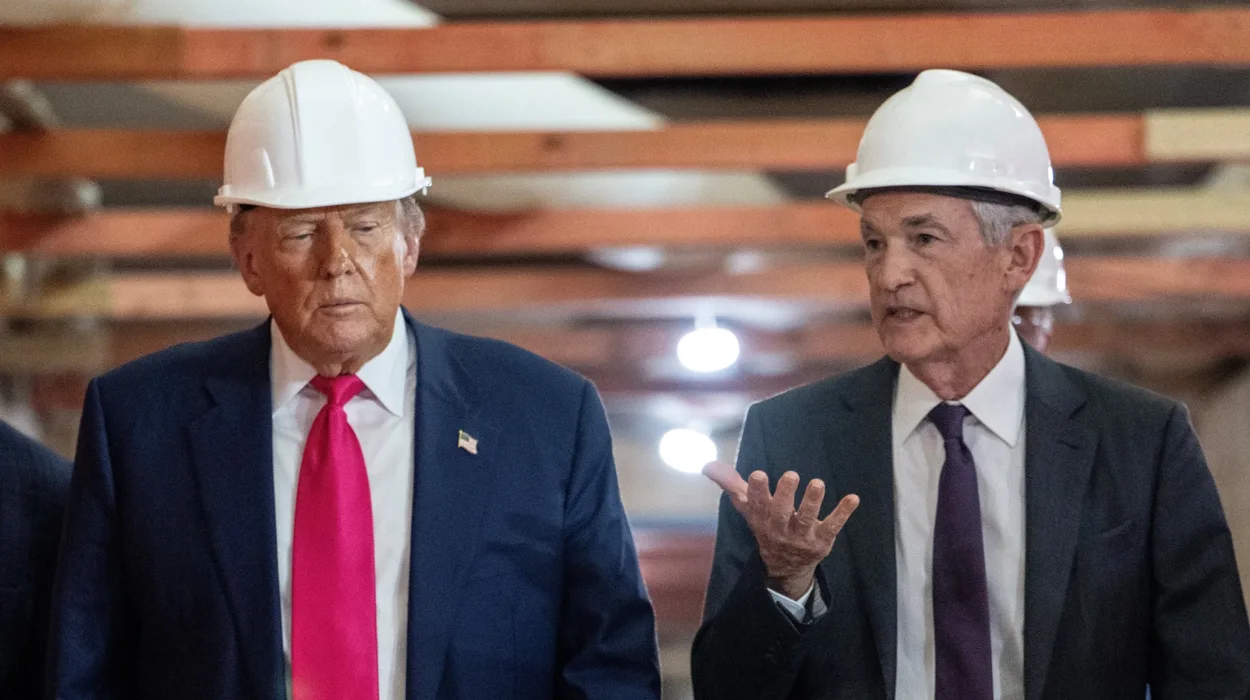
In a Monday X post, Alaska Senator Lisa Murkowski criticized
the Department of Justice investigation, claiming to have spoken with Powell
about the news that the Department of Justice had sent subpoenas to the central
bank, indicating that prosecutors are looking into the board chair’s testimony
regarding a long-running renovation project that Trump and his allies claim was
mishandled under his direction.
The senator stated that she felt it was “clear”
that the investigation “is nothing more than an attempt at coercion”
after speaking with Powell.
“If the Department of Justice believes an investigation
into Chair Powell is warranted based on project cost overruns—which are not
unusual—then Congress needs to investigate the Department of Justice,”
Murkowski said.
“The stakes are too high to look the other way: if the
Federal Reserve loses its independence, the stability of our markets and the
broader economy will suffer.”
Less than a day after her GOP colleague, Senator Thom Tillis
of North Carolina, released a scathing speech criticizing the Trump
administration, the senator from Alaska denounced the stunning investigation
into Powell.
“It is now the independence and credibility of the
Department of Justice that are in question,”
Tillis added.
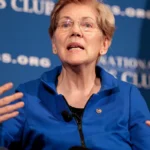
Senator Elizabeth Warren of Massachusetts, the ranking
Democrat on the Banking committee, also denounced the Powell investigation as
an instance of Trump “weaponizing the Department of Justice right out in
plain view” in order to “take over the Fed as quickly as possible so
that he can make political decisions that he thinks will help him rolling into
the 2026 election.”
After prosecutors served the central bank with grand jury
subpoenas requesting Powell’s testimony from last June before the Senate
Banking Committee regarding the Fed headquarters renovation, the DOJ
investigation which is overseen by Trump ally and former Fox News host Jeanine
Pirro came to light over the weekend.
Trump informed reporters on Air Force Speaking to reporters
in July, he called the $60 million in cost overruns “really
disgraceful” and claimed to have been uninformed of the probe until being
questioned about it late on Sunday. He has seized upon the building product as
a possible justification for Powell’s termination. The Fed has blamed inflation
and the necessity for costly asbestos abatement work that was not anticipated
for the additional costs on what has grown to be a $2.5 billion project.
Kevin Hassett of the National Economic Council, one of
Trump’s closest allies and a front-runner to succeed Powell as Fed chair, told
CNBC on Monday that the investigation was entirely typical and similar to the
work done by watchdogs.
“It’s part of government to have people look at you …and
check that what you’re doing is completely on the up and up. And I think that
it’s part of government here and at the Fed as well,”
he said.
The announcement of the Powell investigation is only the
most recent in a year-long attempt by Trump to intimidate and browbeat the
central bank’s board into boosting the U.S. economy by sharply lowering the
interest rates that were raised over several years during the Biden
administration in an effort to curb uncontrollably high post-pandemic
inflation.
Trump has vocally attacked Powell for months, calling him
“too late” and worse, and he has often threatened to fire him due to
the disastrous headquarters refurbishment.
Another Fed board member, Lisa Cook, a Biden appointment,
was allegedly fired by Trump on the grounds that Federal Housing Finance
Administration head Bill Pulte had accused her of mortgage fraud.
In the end, Nixon benefited in the short term from his
historic 1972 landslide victory over Democratic nominee George McGovern in 49
of 50 states. However, by the end of the decade, the artificial stimulation he
had supported caused crushing “stagflation,” a combination of low
growth and high inflation, which would only be subdued in the mid-1980s after
then-chair Paul Volckler caused the central bank to raise rates to 20 percent.
Economists, who have pointed out that political meddling in
central banks always results in catastrophe, are frightened by Trump’s
imitation attempt to subjugate the Fed and his attacks on Powell decades later.
Additionally, they stated that Trump’s goal of giving the
president authority over interest rates has “no place in the United States
whose greatest strength is the rule of law, which is at the foundation of our
economic success.”
Trump’s fight against the Fed’s independence is
“pointlessly destructive,” “a bad path to walk down,” and
“not going to lead to anything useful either for the American people or for
President Trump’s agenda,” according to Justin Wolfers, a professor of
economics at the University of Michigan and an outside adviser to former
president Joe Biden’s 2020 campaign.
Wolfers cited Turkey as an example, pointing out that
previous “populist strongmen” who have taken over their nations’
monetary policies have seen similarly catastrophic outcomes.
“Well, he tried that policy. and what happened was
inflation in Turkey went from very normal rates up to over 80%. and it’s now
back down to something around the mid 30s. It’s a terrible, terrible outcome,”
he said.
What legal protections keep the Fed independent from the
president?
The Federal Reserve maintains independence from presidential
control primarily through the Federal Reserve Act of 1913, which structures the
central bank with legal safeguards against direct superintendent
hindrance.
Fed governors, including Chair Jerome Powell, serve 14- time
terms and can only be removed by the chairman” for cause” interpreted
as inefficiency, neglect of duty, or misbehavior in office, not policy
dissension. The Supreme Court’s 1935 Humphrey’s Executor ruling upheld
Congress’s authority to limit presidential junking power for independent
agencies, distinguishing the Fed from Cabinet officers serving at- will.
The Fed finances operations through interest on securities
rather than congressional appropriations, separating it from budget influence.
Congress assigns a statutory binary accreditation outside employment and stable
prices( 2 affectation target) with biannual oversight evidence needed but no
directive authority over rate opinions.