Trump Launches ‘Board of Peace’ Initiative with High-Profile Signing Ceremony in Davos

- Launch
Event: US President Donald Trump signed the executive order establishing
the ‘Board of Peace’ during a formal ceremony at the World Economic Forum
in Davos, Switzerland, on 21 January 2026. - Purpose
and Focus: The board coordinates US-led diplomatic efforts to resolve
global conflicts, with an initial emphasis on Middle East tensions
involving Israel, Palestine, Iran, and Yemen. - Key
Attendees: Senior US officials including Vice President JD Vance joined
international figures like Israeli Prime Minister Benjamin Netanyahu, UN
representatives, and EU leaders. - Structure
and Funding: Comprises 12 members such as retired General James Mattis;
allocated $500 million from State Department budgets for operations, with
headquarters in Washington, DC. - Next
Steps: Quarterly reports to Congress mandated, inaugural virtual session
held, and annual summits planned in Davos, Riyadh, and Washington.
Davos (Brussels Morning Newspaper) – 22 January 2026,
US President Donald Trump launched the ‘Board of Peace’ initiative during a
signing ceremony at the World Economic Forum in Davos, Switzerland. The board
aims to address global conflicts, with initial focus on Middle East tensions.
Senior administration officials and international leaders attended the event, marking
a key diplomatic development early in Trump’s second term.
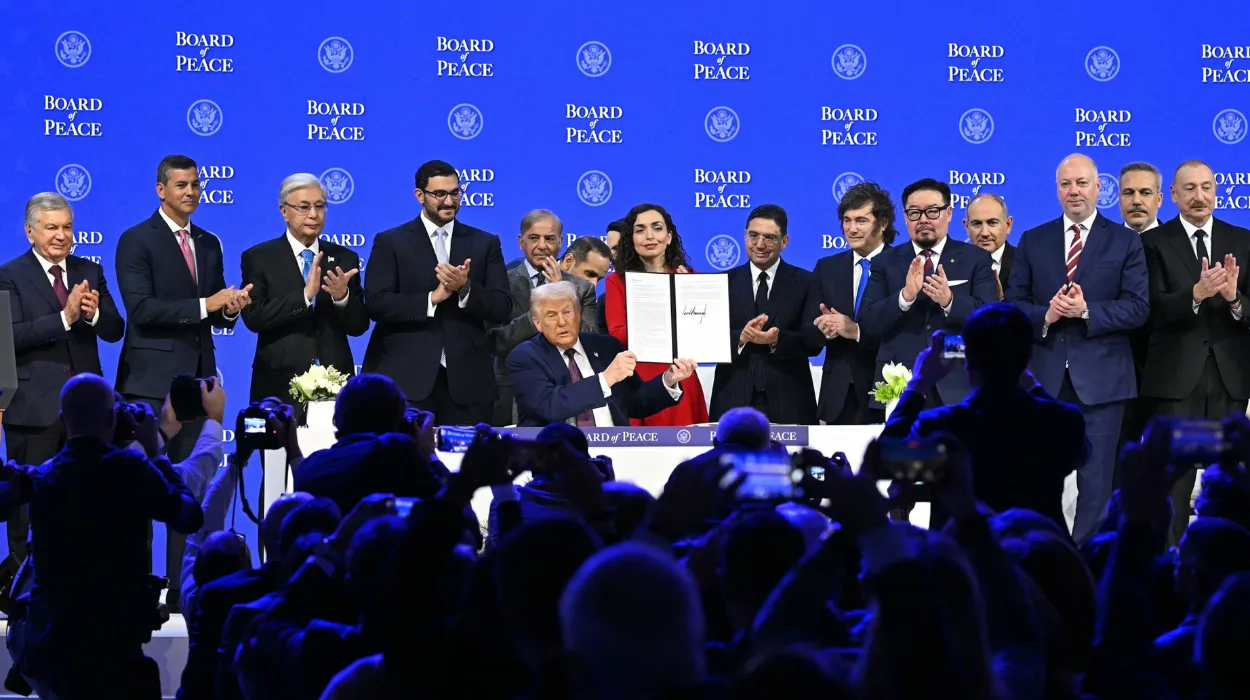
US President Donald Trump presided over the official signing
ceremony for the newly established ‘Board of Peace’ on the sidelines of the
World Economic Forum annual meeting. The ceremony took place on 21 January 2026
in Davos, Switzerland, drawing high-level participants from government,
business, and diplomacy. Trump signed the executive order creating the board,
which is tasked with coordinating US-led efforts to mediate ongoing international
disputes.
The event occurred amid heightened global attention on peace
processes, particularly in regions like the Middle East where conflicts
persist. Witnesses reported a formal atmosphere, with Trump delivering brief
remarks emphasising the board’s role in fostering dialogue. The signing
followed preparatory discussions held during the forum’s opening sessions.
Ceremony Details and Key Participants
 Credit: Evan Vucci / POOL / AFP
The signing ceremony unfolded in a secured conference venue
within the Davos Congress Centre. President Trump arrived at approximately 2:00
PM local time, accompanied by Vice President JD Vance and Secretary of State
nominees. Israeli Prime Minister Benjamin Netanyahu attended as a guest of
honour, having recently met Trump at Mar-a-Lago events.
Other notable attendees included representatives from the
United Nations, European Union foreign policy chief, and leaders from Gulf
states. The ceremony lasted 45 minutes, featuring the presentation of the
executive order document followed by Trump’s signature using a commemorative
pen. Official photographs were released showing Trump, Vance, and Netanyahu
reviewing the document.
White House press secretary provided a pool report stating
the board would comprise 12 members, including former diplomats, military
advisors, and private sector experts. Initial appointees named during the event
include retired General James Mattis and UN special envoy Nicholas Haysom. The
board’s headquarters will be established in Washington, DC, with field offices
planned for Geneva and Jerusalem.
Executive Order Provisions
The executive order signed by Trump outlines the ‘Board of
Peace’ mandate to develop strategies for de-escalation in active conflict
zones. Provisions specify quarterly reports to Congress on progress in
negotiations involving Israel, Palestine, Iran, and Yemen. Funding allocation
of $500 million from existing State Department budgets supports the board’s
operations for the first year.
The document mandates collaboration with NATO allies and
regional partners, including Saudi Arabia and the United Arab Emirates. It also
calls for annual summits hosted rotationally in Davos, Riyadh, and Washington.
Trump stated during the signing,
“This board will bring real peace, not endless
talks,”
according to verbatim transcripts released by the White
House.
Supporting details in the order reference recent US actions,
such as the withdrawal of National Guard from certain urban areas to redirect
resources towards international priorities. No new military commitments were
announced, focusing instead on diplomatic tracks.
Context within World Economic Forum
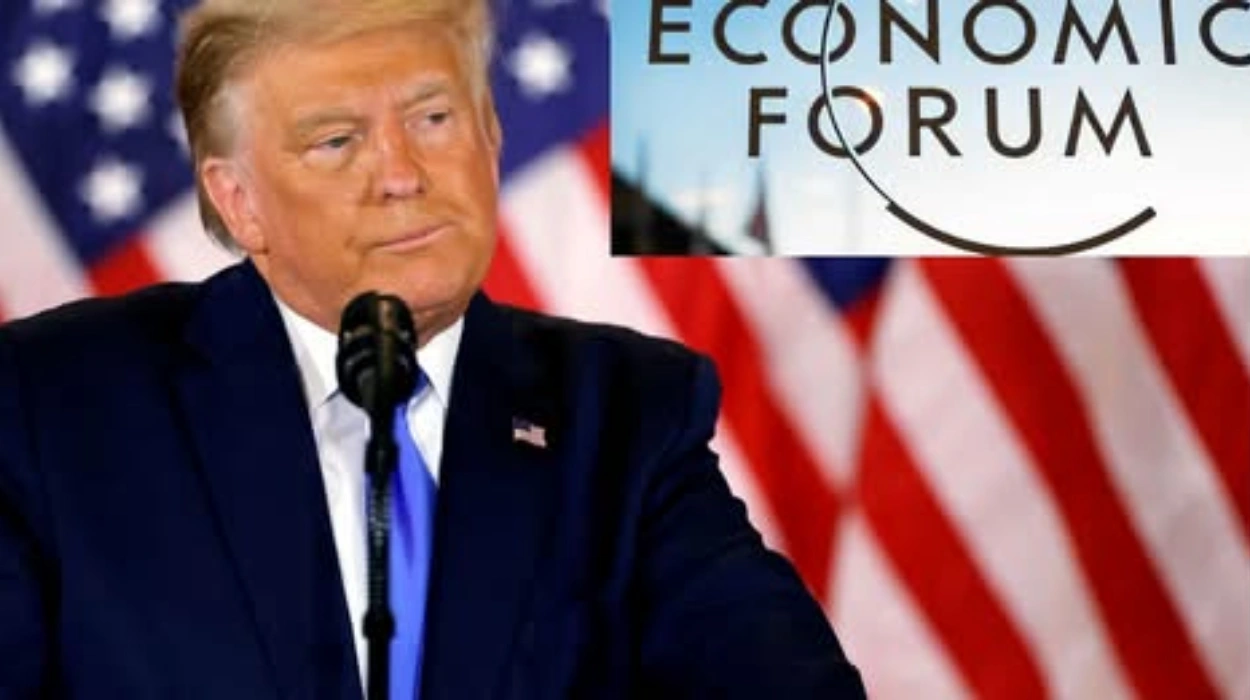 Credit: fb/NewsX
The Davos signing aligned with the 2026 World Economic Forum
theme of “Collaboration for the Intelligent Age.” Forum organisers
described the event as a highlight, integrating geopolitical panels with the
ceremony. Earlier sessions featured discussions on Middle East stability, where
Trump participated virtually before arriving in person.
Global media outlets reported live from the venue, with
Reuters and BBC correspondents noting the symbolic timing post-inauguration.
The forum’s attendance exceeded 2,500 leaders, providing a platform for
immediate follow-up meetings. EU Commission President Ursula von der Leyen
extended formal congratulations via statement, affirming Europe’s readiness to engage.
Security measures were elevated, with Swiss authorities
deploying additional forces around the Congress Centre. No incidents were
reported, ensuring smooth proceedings.
International Reactions and Statements
Immediate responses from world leaders underscored the
board’s potential impact. Netanyahu hailed the initiative as
“a bold step towards lasting security,”
per his office’s readout. Iran’s foreign ministry issued a
cautious statement via state media, noting ongoing protests but offering no
direct comment on the board.
UN Secretary-General António Guterres welcomed the effort,
urging inclusive participation from all conflict parties. China’s foreign
ministry spokesperson remarked during a Beijing briefing that Beijing would
monitor developments closely. UK Prime Minister Keir Starmer’s office confirmed
London’s support for multilateral peace mechanisms.
Regional outlets in the Gulf reported positively, with Al
Arabiya airing extended coverage. Palestinian Authority spokesperson Nabil Abu
Rudeineh called for verification of commitments on settlement expansions.
Background on Trump Administration Priorities
Trump’s second term, inaugurated on 20 January 2025,
prioritises foreign policy resets following 2024 election pledges. Pre-Davos
announcements included freezes on certain domestic funds to bolster
international initiatives. The ‘Board of Peace’ builds on campaign promises for
Middle East resolution without new wars.
Prior engagements, such as the Mar-a-Lago New Year’s event
with Netanyahu, set the stage for Davos. Administration officials had previewed
the board in December 2025 briefings, linking it to broader deterrence
strategies against Iran. No timelines for first negotiations were specified
beyond the order’s quarterly cadence.
The initiative emerges against ongoing Gaza humanitarian
reports and West Bank incidents, though the board’s scope extends to Europe and
Asia-Pacific tensions. Davos provided the neutral venue for launch, leveraging
the forum’s diplomatic infrastructure.
Operational Framework and Next Steps
Following the signing, the board convened
its inaugural virtual session overnight. Terms of reference include
data-sharing protocols with intelligence agencies and NGO partners. Public
website launch is scheduled within 30 days, hosting reports and member
biographies.
Trump departed Davos post-ceremony for Washington, with
Vance remaining for follow-on talks. Press briefings confirmed outreach to
Russia and Ukraine mediators. The board’s structure avoids statutory authority,
positioning it as advisory to the National Security Council.
This development marks a structured US approach to
peacemaking, with Davos cementing its role as a global convening hub. Further
details on membership and agendas await official releases.