
Summary
- Trump
falsely claimed no U.S. president solved one war. - Made
the statement ahead of Zelenskyy White House meeting. - Zelenskyy
seeking increased military support, including missiles.
In light of Russia’s assault in Ukraine, Zelensky visited
the White House on Friday to talk about bolstering American assistance to Kyiv.
Additionally, Trump declared on Thursday that he would travel to Budapest,
Hungary, to meet with Russian President Vladimir Putin.
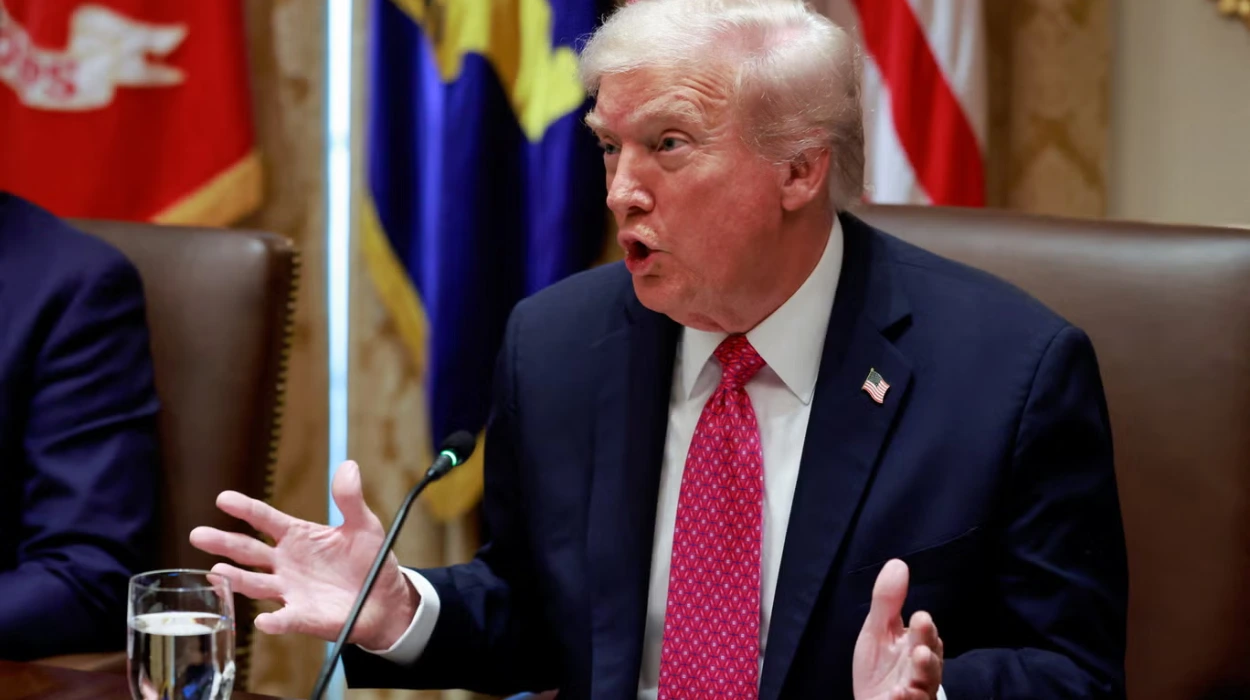
Shortly before he began negotiations with the Ukrainian
leader, Trump made the untrue assertion about his predecessors in the White
House Cabinet Room.
“Every time I solve one, they said, ‘Sir, if you solve one
more, you’re going to be known as a peacekeeper,’”
Trump said.
“To the best of
my knowledge, we’ve never had a president that solved one war, not one war.
Bush started a war. A lot of them start wars, but they don’t solve the wars.”
The administrations of a number of US presidents have been
instrumental in bringing an end to hostilities. Among the items in this list,
but not exclusively, are:
- President
Theodore Roosevelt, who mediated a settlement in the Russo-Japanese War
and was awarded the Nobel Peace Prize in 1906. - The
goal of President Dwight D. Eisenhower was to bring the Korean War to a
close. Seven months after his appointment, in July 1953, an armistice was
signed. - On
April 9, 1865, Confederate General Robert E. Lee turned himself in to
Union General Ulysses S. Grant, with President Abraham Lincoln serving as
commander-in-chief. The conflict’s most important surrender was this one.
In 1866, the war was officially declared over by President Andrew Johnson,
Lincoln’s successor. Grant was president from 1869 to 1877 as well. - During
World War II, President Harry S. Truman collaborated with China and Great
Britain to produce the Potsdam Declaration, which called for Japan’s
unconditional surrender. Truman approved the use of the atomic bomb after
Japan refused to accept it. After the United States attacked Japan twice,
the country submitted, bringing World War II to a close.
Before making this claim about former U.S. presidents, Trump
boasted that he had ended “eight wars” and complained he did not win a Nobel
Peace Prize for any of them.
“Look at all of the wars that we solve, and every time I
solve one, they say, ‘If you solve the next one, you’re going to get the Nobel
Prize,’”
he said.
“I didn’t get a Nobel Prize.”
When Trump announced the first phase of a ceasefire agreement
between Israel and Hamas earlier this month, he and his supporters ran a
campaign to earn him a Nobel Peace Prize. White House Communications Director
Steven Cheung charged the Nobel committee with prioritizing “politics over
peace” after the esteemed prize was given to Maria Corina Machado, the
head of the Venezuelan opposition.
“President Trump will continue making peace deals, ending
wars, and saving lives,”
he wrote on X.
“He has the heart of a humanitarian,
and there will never be anyone like him who can move mountains with the sheer
force of his will.”
Machado went on to dedicate her award to Trump.
What historical peace efforts are attributed to past U.S.
presidents?
Roosevelt was recognized for interceding in the
Russo-Japanese War, an action that helped to keep the conflict from escalating,
as well as for promoting international arbitration as a means of peace. He was
both the first American and first serving U.S. president who received this
recognition.
Wilson was honored for ending World War I and for his
invitation to build the League of Nations, to create an enduring international
framework of peace, to avoid future wars.
Carter was honored, not during his presidency, but decades
later after being recognized for his lifetime of work promoting human rights,
democracy, and resolutions to international conflicts. Carter created The
Carter Center to continue this work.