
Summary
- The
Trump administration fired CDC Director Susan Monarez amid turmoil. - Monarez
resisted political vaccine policy changes and refused resignation. - Dozens
of CDC staff, including senior officials, resigned in protest. - White
House supports Health Secretary Robert F. Kennedy Jr.’s decision.
Just a month ago, Susan Monarez was confirmed as the
director of the Centers for Disease Control and Prevention. According to the
White House, she was sacked because she was “not aligned with the
president’s agenda,” but she has refused to go. According to the
official’s attorneys, only Donald Trump has the authority to remove her because
she is a Senate-confirmed appointee.
According to reports, US Health Secretary Robert F. Kennedy
Jr. fired Monarez for refusing to remove agency personnel and for pledging to
limit proven vaccines.
Kennedy, who formerly started an anti-vaccine organization,
has long disseminated false information about vaccines and last week imposed
additional limitations on who is eligible to receive the Covid vaccine.
Four senior agency leaders resigned
as a result of this position, as well as worries about budget cuts and
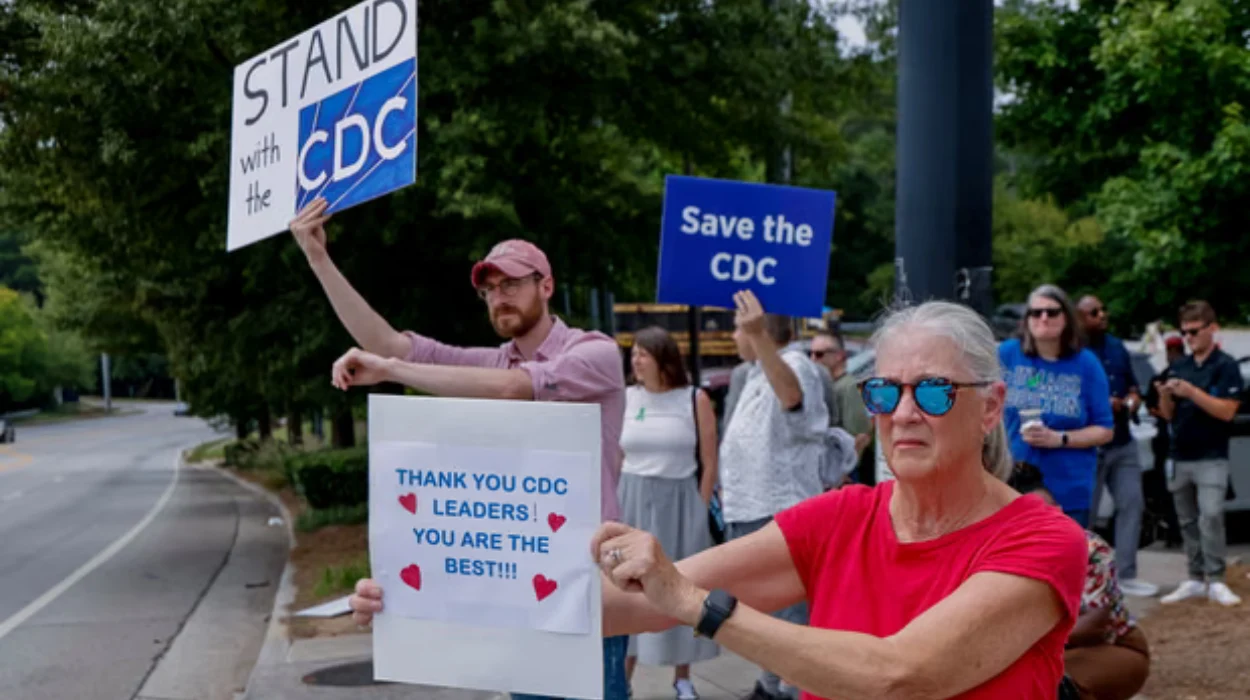
political meddling in CDC’s operations. Dozens of CDC employees left their
Atlanta offices on Thursday to show solidarity for Monarez and the other
officials who have passed away.
Bipartisan worry in Congress has been sparked by the CDC’s
extreme upheaval, and the Trump administration has received a rare rebuke from
typically obedient Republicans.
“She’s been on the job for only three weeks and I am very
concerned and alarmed by this removal,”
Susan Collins, the Republican senator
from Maine, said of Monarez. Collins said there was “no basis” to remove the
CDC director.
Bill Cassidy, another Republican senator who chairs the
senate health committee, said that an upcoming meeting of the Department of
Health and Human Services committee that advises on vaccine use should be
postponed due to the attacks upon the CDC.
“If the meeting proceeds, any recommendations made should be
rejected as lacking legitimacy given the seriousness of the allegations and the
current turmoil in CDC leadership,” Cassidy said, adding that “serious
allegations”
have been made about the lack of scientific process in vaccine
recommendations.
The attempt to limit access to vaccines, which he referred
to as “one of the greatest public health achievements of the 20th
century,” should frighten people of all political stripes, according to
independent Senator Bernie Sanders.
The administration is allegedly using the CDC to
“create policies and materials that do not reflect scientific reality and
are intended to harm rather than to improve the public’s health,”
according to the official, Demetre Daskalakis, who resigned his post as
director of the National Center for Immunization and Respiratory Diseases at
the CDC on Wednesday.
Daskalakis addressed Leavitt’s comments during an interview.
“I find it outrageous that this administration is trying to
erase transgender people,”
he said.
“I very specifically used the term pregnant people, and very
specifically added my pronouns at the end of my resignation letter to make the
point that I am defying this terrible strategy at trying to erase people and
not allowing them to express their identities.
So I accept the note from the press secretary and I counter
that with: I don’t care.”
How could Kennedy’s reshaped vaccine advisory committee change
CDC vaccine guidance?
Kennedy dismissed all 17 existing members of ACIP and
replaced them with new members, many of whom have expressed skepticism or
opposition toward vaccines, including questioning vaccine safety and necessity.
This raises concerns about the scientific integrity of future recommendations.
The committee plans to review childhood and adolescent
immunization schedules and the use of older vaccines, potentially leading to
changes or rollbacks in routine vaccine recommendations.
Since ACIP recommendations influence what vaccines doctors
administer, what insurance covers without cost-sharing, and vaccination
requirements in schools, changes could reduce vaccine accessibility for many,
especially children under programs like Vaccines for Children.