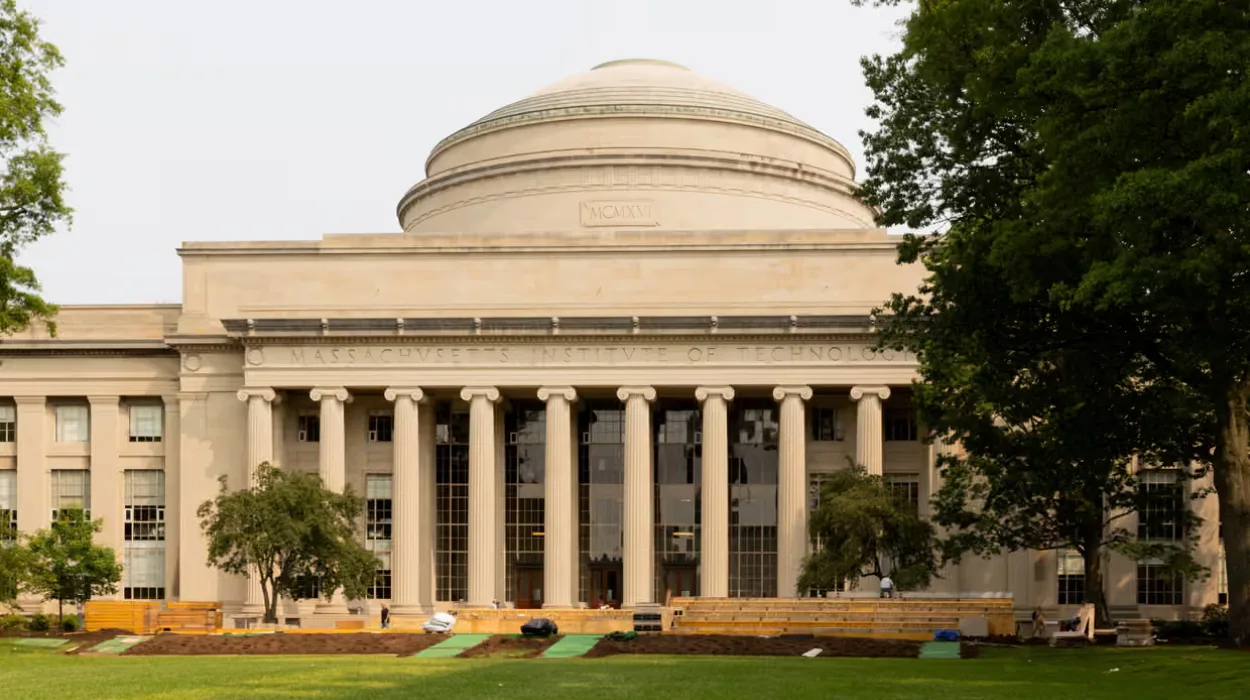
The Massachusetts Institute of Technology rejects White House preferential funding plan

Summary
- MIT
first university to reject Trump administration funding deal. - Proposal
offered preferential federal funding for policy changes. - MIT
opposes restrictions on free speech, autonomy, and finances.
In a letter to the campus
community on Friday, Sally Kornbluth, the president of MIT, announced the
decision and included her written response to US Education Secretary Linda
McMahon.
Universities would have to impose
a number of restrictions under the proposed Compact for Academic Excellence in
Higher Education, which was sent to nine US universities, including MIT, Brown
University, Dartmouth College, the University of Arizona, the University of
Pennsylvania, the University of Southern California, the University of Texas at
Austin, Vanderbilt University, and the University of Virginia.
These include stringent gender
definitions, a five-year tuition freeze, a cap on the number of international
students, and a ban on anything that could “denigrate” conservative
opinions.
The plan has drawn
harsh criticism from academics and leaders in higher education, who see it as a
political ploy to curtail university autonomy. Many argue that the
administration is pressuring prestigious universities to comply by threatening
to cut research funding, which might total hundreds of millions of dollars.
“These values and other MIT
practices meet or exceed many standards outlined in the document you sent. We
freely choose these values because they’re right, and we live by them because
they support our mission – work of immense value to the prosperity,
competitiveness, health and security of the United States. And of course, MIT
abides by the law,”
she wrote.
“MIT already upholds many of
the principles outlined in the proposal, but strongly objects to others that
would compromise academic freedom and institutional independence,”
Kornbluth wrote in her letter to McMahon.
If the university agreed to the
provisions of the plan, Kornbluth stressed, it
“would restrict freedom of
expression and our independence as an institution.”
She added:
“Fundamentally, the premise of the document is inconsistent with our core
belief that scientific funding should be based on scientific merit alone.”
What legal or political challenges
could arise from the compact?
Legal academics warn that the
compact may violate First Amendment rights as the restrictions could chill free
speech and academic freedom. Its ambiguous and sweeping restrictions and
terminology about acceptable speech and ideological conformity may invite
lawsuit-related challenges and allegations of censorship and infringements on
academic autonomy.
The administration links
preferential access to federal funds – student visas and research grants, or
tax benefits.
It is unknown whether there is a
statutory basis for the compact; it is at least questionable whether the
administration lawfully can impose, or condition, federal funds in this manner
without congressional approval.