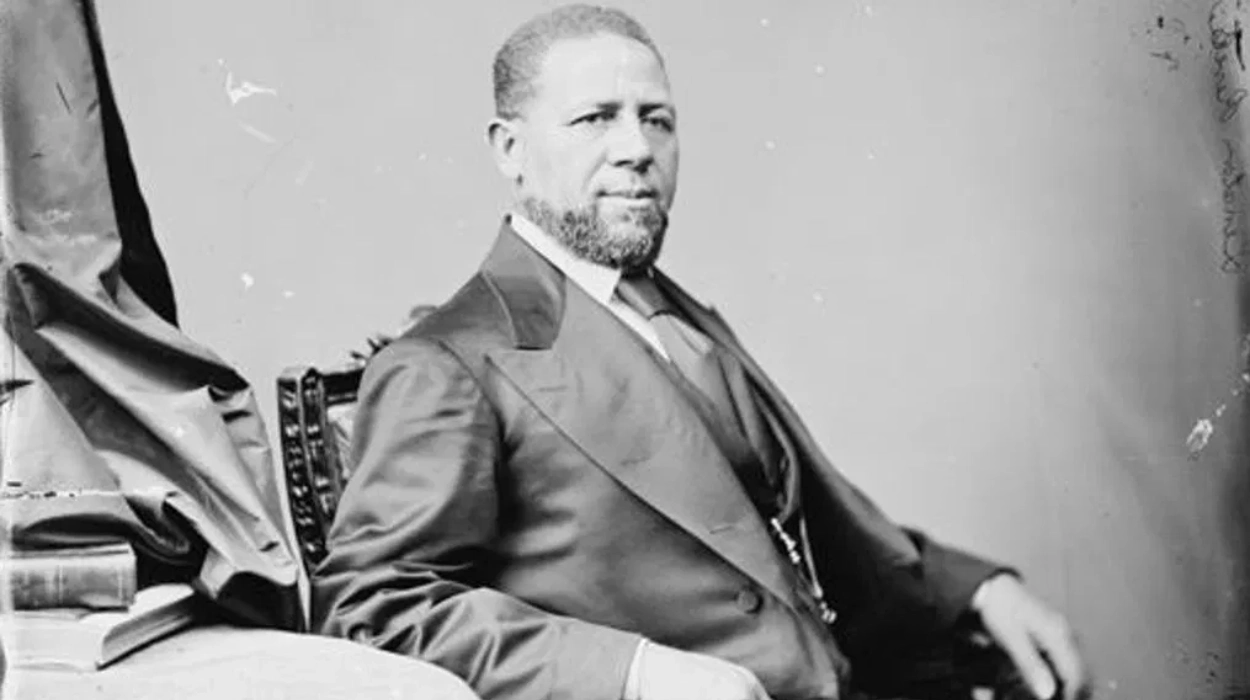

The election of
Hiram Rhodes Revels as the first African American to serve in the United States Senate represents a landmark moment in American history. This event during the
Reconstruction Era heralded a new chapter in the nation’s pursuit of equality
and justice following the Civil War. Revels’s journey from his early life as a
free man of color in North Carolina, through his dedicated ministry, military
service, and political career, culminated in his groundbreaking role as a senator
from Mississippi.
Early Life and
Education: Roots of a Trailblazer
Hiram Rhodes Revels was born free in Fayetteville, North Carolina,
in 1827, into a family with mixed African, European, and Native American
ancestry. His heritage placed him within a community of free people of color
with roots that predated the American Revolution. Raised by a Baptist preacher
father, Revels’s early education was informal, guided initially by a local
black woman before he moved to live with his older brother, Elias, in Lincolnton,
North Carolina. There, he apprenticed as a barber, a respected profession that
allowed him to interact with people across racial lines at a time when African
Americans faced severe societal restrictions.
Revels pursued formal education at reputable institutions such as
the Beech Grove Quaker Seminary and the Union Literary Institute in Indiana,
embodying the quest for learning and advancement. His theological studies
continued at Knox College in Illinois, equipping him for a prominent career in
ministry. Ordained in the African Methodist Episcopal Church at age 18, Revels
served congregations across the Midwest and South, facing opposition yet
maintaining a steadfast commitment to his calling.
Military
Service: Championing Freedom During the Civil War
With the outbreak of the American Civil War, Revels took an active
role in supporting the Union cause and African American participation in the
military. He helped organize two regiments of the United States Colored Troops
in Maryland and Missouri, serving as a chaplain. His presence at key battles,
including the Battle of Vicksburg, underscored his dedication to emancipation
and the preservation of the Union.
Revels’s service went beyond the battlefield; he inspired African
American soldiers and civilians alike, asserting the capabilities and
patriotism of black Americans during a tumultuous time. His contributions
helped lay groundwork for the broader reconstruction of American society to
include fair representation and rights for formerly enslaved people.
Political
Career: From Local Leadership to State Senate
After the Civil War, Revels transitioned from ministry to public
service. Settling in Natchez, Mississippi, he continued his religious work
while actively engaging in education and community leadership. He founded
schools for black children and was elected as an alderman in Natchez in 1868,
reflecting growing African American influence in local governance during
Reconstruction.
In 1869, Revels advanced to the Mississippi State Senate,
representing Adams County. His legislative career focused on promoting racial
equality, education, and rebuilding the war-torn state. Known for his
eloquence, moral integrity, and pragmatic approach, Revels earned respect from
African Americans and some white colleagues, even as racial tensions remained
intense in the region.
Election to
the U.S. Senate: Breaking Barriers in 1870
The most historic milestone of Revels’s life came in 1870 when the
Mississippi legislature elected him to fill a vacant U.S. Senate seat. This
moment marked the first time an African American was seated in Congress, a
monumental achievement amid fierce opposition. Notably, senators from Southern
states resisted Revels’s admission, citing outdated Supreme Court rulings that
denied citizenship to black individuals before the 14th Amendment’s
ratification.
Supporters of Revels argued that those rulings had been nullified
by the Civil War and subsequent constitutional amendments, affirming his
citizenship and eligibility. Revels’s mixed heritage also factored into
debates, with some claiming his primarily European ancestry qualified him
legally. Ultimately, on February 25, 1870, the Senate confirmed him by a
largely party-line vote, with Republicans in favor and Democrats opposed.
Revels was sworn in before a gallery packed with spectators,
signifying a profound shift in American politics and race relations. His
presence challenged entrenched social norms and symbolized the possibilities of
Reconstruction efforts.
Service in the
Senate: Advocating for Unity and Equality
During his tenure, which lasted just over one year, Revels
championed moderation and reconciliation, urging fellow senators to extend
amnesty to former Confederates who pledged loyalty to the United States. He
stood firmly for racial equality and integration, opposing segregationist
policies such as maintaining separate schools in Washington, D.C.
Revels worked on key committees, including the Committee of
Education and Labor and the Committee on the District of Columbia, where he
advocated for black workers and fought discriminatory practices at institutions
like the Washington Navy Yard. His maiden speech called for reinstating black
legislators unjustly expelled from the Georgia General Assembly, affirming his
commitment to justice.
Though his time in the Senate was brief and met with resistance,
Revels’s dignified conduct and articulate advocacy garnered widespread respect,
even among some opponents. Northern press frequently praised his oratorical
skills and integrity, elevating his stature as a pioneer for civil rights in
legislative chambers.
Educational
Leadership: Presidency at Alcorn Agricultural and Mechanical College
After leaving the Senate, Revels continued his public service as
the first president of Alcorn Agricultural and Mechanical College in
Mississippi, a historically black institution founded to educate freedmen and
their descendants. His tenure oversaw academic development and expanded
opportunities for African American students, reflecting his lifelong commitment
to education.
Revels briefly served as Mississippi’s secretary of state and
remained active in political and religious circles. Despite political upheavals,
including conflicts with carpetbaggers exploiting black voters, he maintained a
focus on improving the lives of African Americans through education and moral
leadership.
Legacy and
Enduring Impact
Hiram Revels’s legacy extends beyond his historic Senate seat. His
family continued a tradition of public service and advocacy; for instance, his
daughter Susie Revels Cayton became a noted editor and social activist.
Descendants like Horace R. Cayton Jr. contributed significantly to African
American scholarship and labor rights.
Scholars and historians recognize Revels as a key figure in the
Reconstruction era, embodying the possibilities and challenges of African
American political empowerment in a post-slavery society. His election presaged
future generations of black senators and lawmakers who continue to shape
American governance and civil rights.
In recognition of his contributions, Revels is celebrated among
the 100 Greatest African Americans, with his life symbolizing resilience,
progress, and the ongoing quest for equality.
A Symbol of
Progress and Perseverance
Hiram Rhodes Revels’s election as the first black U.S. senator signaled a transformative moment in United States history. His
distinguished career as a minister, soldier, legislator, and educator broke
barriers during a period of profound change. Revels’s efforts advanced racial
equality, challenged discriminatory institutions, and inspired future leaders.
This story remains essential not only as a historical milestone
but also as a testament to the enduring struggle for justice and representation
in America. Revels’s life encapsulates the broader narrative of Reconstruction—the hopes,
the resistance, and the persistent drive towards a more inclusive democratic
society.