
Summary
- South
Korea’s stock market has experienced a massive rally, but faces
uncertainty due to government tax plan announcements. - The
tax proposals involve increased capital gains taxes that could impact
investor sentiment significantly. - Corporate
earnings remain strong, fueling optimism in the market. - Investor
confidence is fragile amid ongoing debate about the fiscal impact of the
new tax measures. - Market
analysts warn of possible volatility depending on final tax policy details
and government implementation. - The
government aims to balance economic growth with equitable tax reform,
complicating investor outlook. - South
Korea’s economic environment remains a focus amid global market trends and
domestic policy shifts.
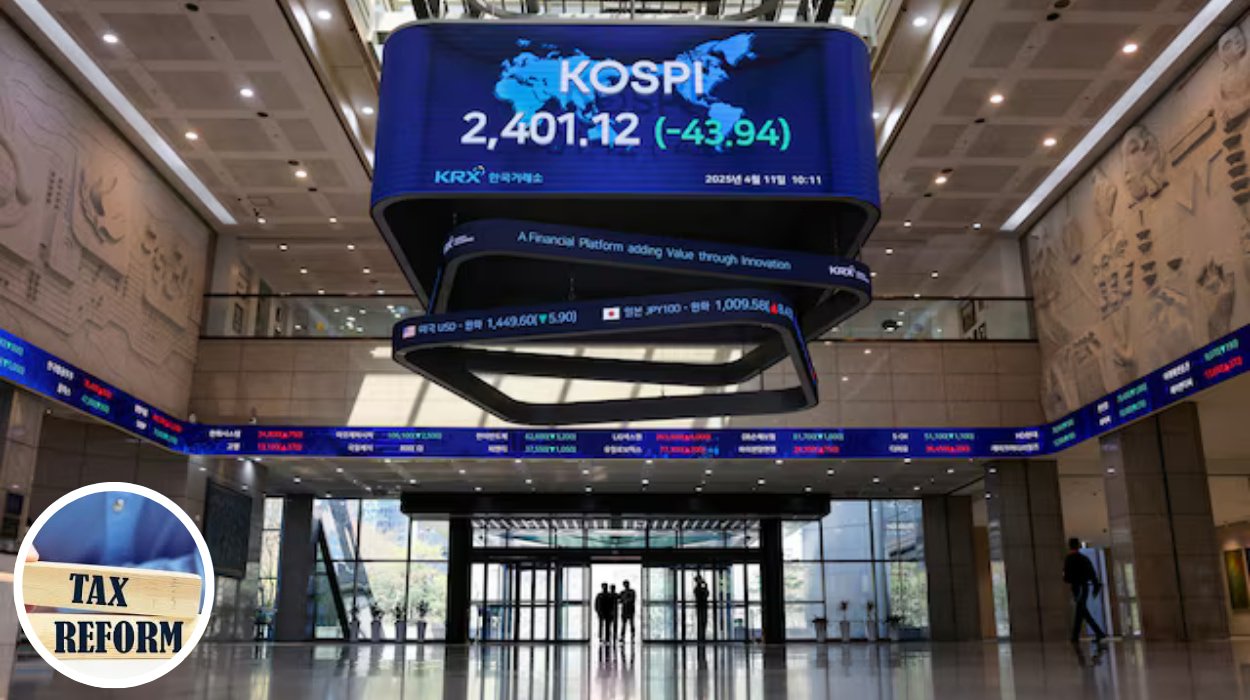
South Korea’s recent stock market rally, driven by strong corporate earnings and positive economic indicators, now faces significant uncertainty due to proposed government tax reforms. The planned increase in capital gains taxes aims to address fiscal deficits and promote social equity but risks dampening investor enthusiasm and triggering market volatility. While some investors remain optimistic, hoping for a balanced approach, others are cautious as the potential for higher taxes could lead to portfolio adjustments and reduced market liquidity. The government emphasizes the reforms’ necessity for long-term stability and continues stakeholder engagement to navigate this delicate economic crossroads.
What is fueling the recent rally in South Korea’s stock
market despite looming tax concerns?
South Korea‘s stock market has seen a significant surge
recently, fueled primarily by strong corporate earnings and optimistic economic
indicators. Market participants have been encouraged by the resilience of South
Korean companies amid global economic uncertainties. However, this rally is now
on precarious footing as the government has introduced new tax proposals that
could alter the investment landscape substantially.
According to Reuters in their article titled “Blowout
South Korea stock rally on a knife-edge over tax plans” (2025-08-06), the
surge in stock prices has been described as a blowout rally, yet it is hanging
by a thread due to looming tax reforms that may impose heavier capital gains
taxes on investors. The proposal is part of a broader government initiative to
increase tax revenue and address social inequality but risks unsettling
investors who have benefited from the prevailing favorable tax environment.
What are the key features of the government’s tax plan
impacting the stock market?
The government’s tax plan centers on increasing capital
gains taxes, potentially affecting both individual and institutional investors
holding significant equity assets. Reuters outlines that these tax hikes are
intended to improve fiscal balances and fund social welfare programs but come
at the cost of dampening market enthusiasm. The proposals include higher rates
applied to stock holdings exceeding a certain threshold, raising concerns about
reduced liquidity and selling pressure in the equity markets.
Analysts highlighted in Reuters express caution, noting that
while corporate fundamentals remain strong, the uncertainty regarding the final
shape of the tax reform is causing hesitation. The market’s direction now
depends heavily on policymaker decisions and clear guidelines on implementation
timelines.
How are investors reacting to the tax proposals amid strong
corporate earnings?
Investor reaction has been mixed but cautious. Many
investors remain hopeful due to robust earnings reports from major South Korean
companies, which underpin current valuations. However, the specter of increased
taxation has injected an element of caution. Market volatility has increased as
investors weigh the potential costs of higher taxes against corporate
profitability.
Reuters conveys that some investors are shifting portfolios
or deferring aggressive stock purchases pending clarity on tax details. The
rally’s momentum faces risk if the tax plan is perceived as excessively
burdensome.
What are experts saying about the potential market impact of
the tax reforms?
Market experts and analysts interviewed by Reuters emphasize
the delicate balance the South Korean government must strike between raising
public revenues and maintaining economic vitality. The tax proposals have
sparked debate about potential unintended consequences such as decreased market
participation or capital flight.
As per Reuters, some analysts warn that if the government’s
measures are too stringent, they could trigger profit-taking and a sell-off,
undermining recent gains. Others believe that gradual and well-communicated
reforms could be absorbed by the market without significant disruption if
economic growth remains stable.
Why is the government pursuing these tax changes despite
market concerns?
The South Korean government’s motivation stems from a need
to address fiscal deficits and growing calls for fairer wealth distribution.
The increased capital gains taxes are part of a suite of fiscal reforms aimed
at enhancing social welfare systems and improving income equality.
Reuters sources indicate that policymakers face pressure to
modernize tax codes in response to widening income gaps but must manage market
reactions carefully to avoid undermining investor confidence and economic
growth prospects.
How does this situation fit within the broader global
economic context?
South Korea’s situation is reflective of a global trend
where governments are reconsidering tax policies in the wake of
pandemic-induced fiscal strain. Many countries are balancing economic recovery
with fiscal responsibility, often triggering investor nervousness around tax
reforms.
Reuters highlights that South Korea’s market dynamics must
also be viewed alongside international economic pressures, including inflation
concerns, geopolitical tensions, and changing trade relations, which compound
uncertainty.
What could be the possible outcomes for South Korea’s stock
market going forward?
The path forward remains uncertain. Reuters analysis suggests three primary scenarios:
- Market
Stability: If the government moderates tax proposals and communicates
effectively, the market rally may continue with minimal disruption. - Volatility: Ambiguity
and perceived harshness of tax reforms could lead to increased market
swings and cautious investor behavior. - Correction: An
aggressive tax policy could prompt a notable market correction or
sell-off, especially if coupled with external shocks.
Investors and analysts alike are closely monitoring
government statements and market data, as the final decisions in the coming
weeks will determine the sustainability of the gains recently recorded.
What is the government’s response to market concerns over
the tax plan?
Government officials acknowledge
the market’s sensitivity but stress the necessity of the reforms to ensure
long-term economic stability and social equity. They have reiterated their
intention to implement the tax measures thoughtfully to avoid undue harm to
investors and the economy.
Authorities continue to engage with stakeholders to address
concerns and refine policies, aiming for a balanced approach that supports
growth while meeting fiscal and social goals.
This complex interplay between strong corporate performance
and fiscal reform initiatives sets South Korea’s stock market on a knife-edge,
highlighting the challenges governments face in managing economic growth and
public finances in an interconnected global environment.
The situation remains fluid, with coming days likely to
reveal the market’s and government’s next moves in this critical juncture.