
Palestine (Washington Insider) – Dozens returned to Nur
Shams refugee camp in Palestine ahead of Israeli demolition of 25 buildings
affecting 100 families. Over 32,000 remain displaced, UNRWA’s Roland Friedrich
calls it the West Bank’s worst crisis since 1967.
As Alarabiya English News reported, Dozens of residents
returned to the Nur Shams refugee camp in the northern West Bank on Wednesday,
Dec 17, 2025, to collect their belongings. The visit came ahead of the Israeli military’s
plan to demolish 25 residential buildings.
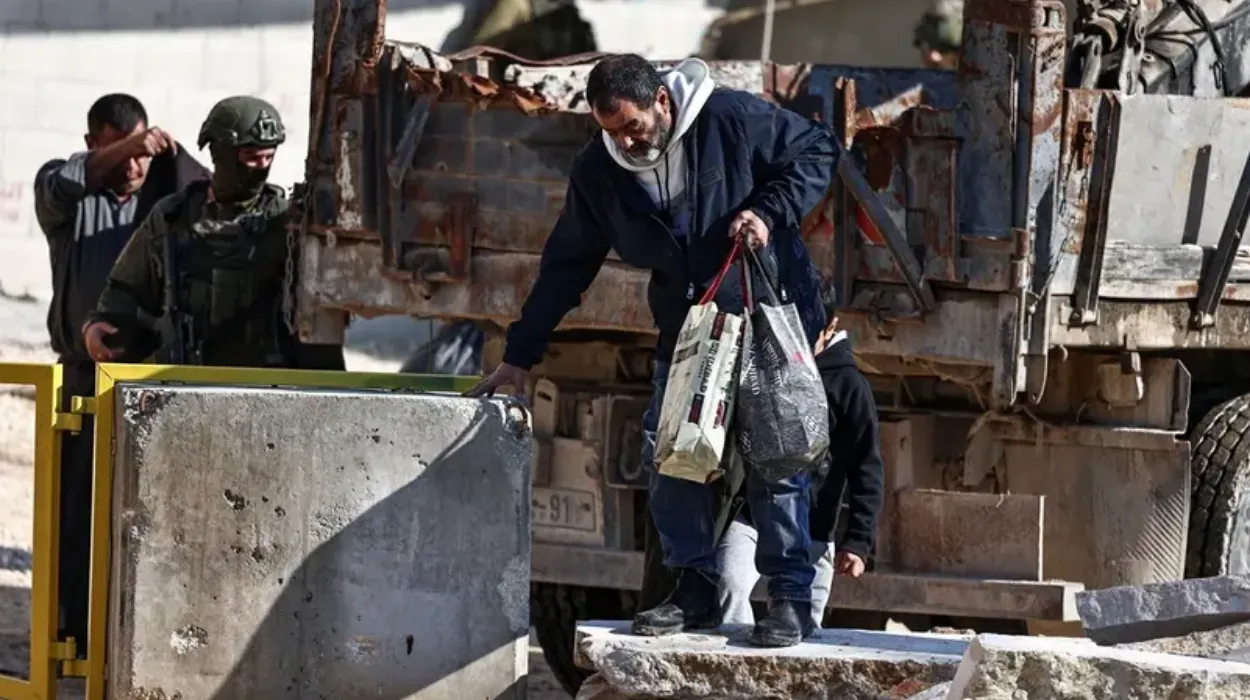
On Wednesday, Dec 17, 2025, families worked quickly to
recover furniture, mattresses, children’s toys, family photos, and even large
items such as water tanks and window frames. Soldiers carried out ID checks and
physical searches. Only residents whose houses were marked for demolition were
allowed inside.
What’s behind the
demolitions and displacement in Nur Shams refugee camp?
Mahmud Abdallah, a displaced resident, said he saw the
destruction in his neighbourhood for the first time since leaving. According to
the United Nations Relief and Works Agency, more than 32,000 people remain
displaced from the northern West Bank camps. Israeli troops continue to occupy
key areas, and many homes are now empty or destroyed.
“I was surprised to find that there were no
habitable houses; maybe two or three, but they were not suitable for
living,”
Mahmud Abdallah said.
“The camp is destroyed.”
The Israeli military has said it will demolish 25
residential buildings in the Nur Shams refugee camp on Thursday, 18, 2025. The
demolitions are expected to affect up to 100 families. Many of these families
have already been displaced during earlier phases of the operation.
Israeli authorities said the demolitions are part of a plan
to allow military vehicles to move more easily through the crowded streets of
the northern West Bank camps.
Israel has occupied the West Bank since 1967. Camp residents
have
expressed concern over the demolitions. Ahmed al-Masri, whose home is
included in the planned demolitions, told AFP that he was denied permission to
enter the camp to collect his belongings.
“When I asked why, I was told: ‘Your name is not in
the liaison office records,”
Ahmed al-Masri said.
Roland Friedrich, director of the United Nations Relief and
Works Agency (UNRWA) for the West Bank and East Jerusalem, said around 1,600
homes have been fully or partially destroyed during the ongoing military
operation. He described it as
“the most severe displacement crisis that the West Bank
has seen since 1967.”
“We ask God to compensate us with palaces in
paradise,”
said Ibtisam al-Ajouz, a displaced camp resident whose house
was also set to be destroyed.
“We are determined to return, and God willing, we
will rebuild. Even if the houses are demolished, we will not be afraid – our
morale is high.”
Earlier this year, Israel launched a large-scale operation
targeting Palestinian armed groups in Nur Shams, Tulkarem, and Jenin. The
campaign emptied entire neighbourhoods and forced thousands of people from
their homes.
The Palestinian people were displaced from their homes due
to the establishment of the State of Israel in 1948 and have resided in
numerous refugee camps in the Historic West Bank and the Gaza Strip, as well as
several neighbouring countries. Today, as in the past generations, these camps
remain overcrowded.