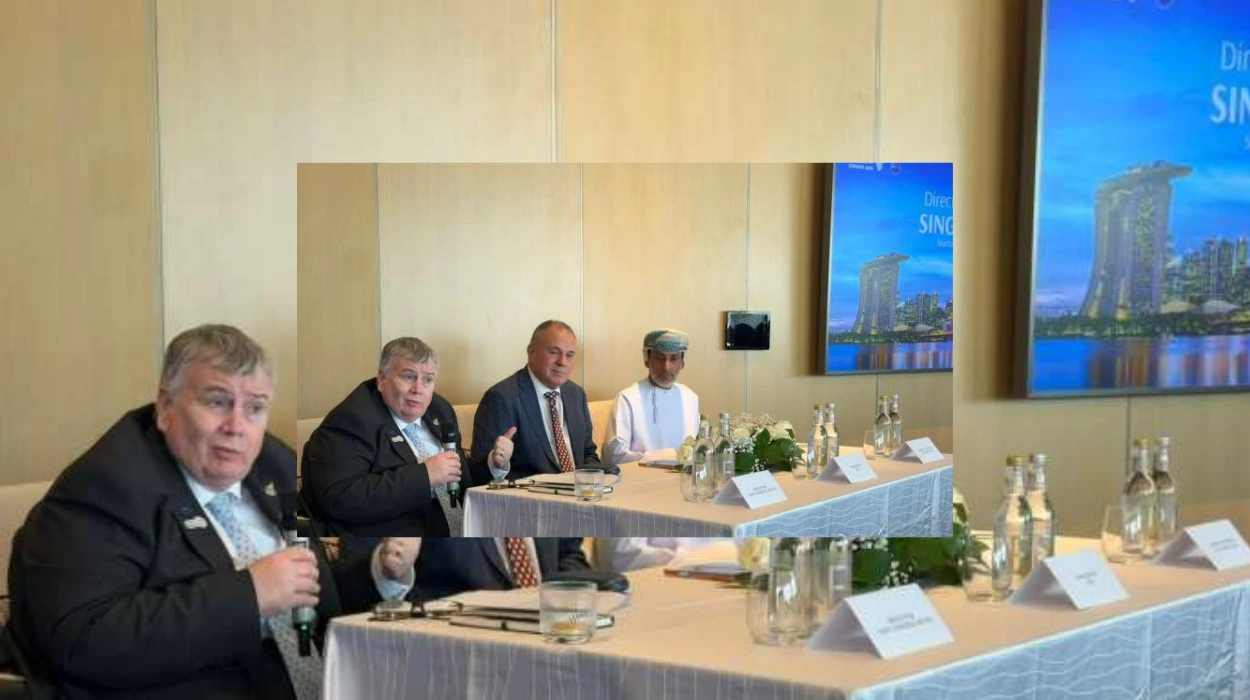

Oman (Washington Insider) – Oman Air will launch 4 weekly
Muscat–Singapore flights from July 2, 2026, boosting tourism, trade (OR
500M+), and connectivity. CEO Con Korfiatis and diplomat Syed Noureddin
highlighted strategic and cultural benefits.
As Times of Oman reported, Oman Air is set to launch 4
non-stop flights each week between Muscat and Singapore starting on July 2,
2026. They mentioned that the new route marks a major step in the relationship
between the 2 countries as they celebrate 40 years of diplomatic ties.
Officials describe the service as transformational for tourism, trade, and
investment.
In his exclusive remarks to Times of Oman, he said:
“This is a very exciting and meaningful development,
coming in the 40th anniversary year of Singapore-Omani diplomatic
relations.”
“For the first time, we have true point-to-point
connectivity between our two countries, and that fundamentally changes the
possibilities for travel, business and people-to-people exchanges.”
What impact will Oman
Air’s Muscat–Singapore flights have on trade and tourism?
Syed Noureddin bin Syed Hassim, Charge d’Affaires and
Minister-Counsellor at the Singapore Embassy, said Oman remains a “hidden gem”
for Singaporeans and other Southeast Asian travellers.
“Once visitors experience Oman, they are genuinely
taken by what the country has to offer,”
he said.
“With direct flights, even short leisure breaks
become possible, and that is something Singaporean travellers are already very
accustomed to.”
He highlighted the country’s growing reputation as a
premium, experience-focused destination. Beyond tourism, the new link is
expected to strengthen economic engagement. Bilateral trade currently tops OR
500 million each year, with petrochemicals forming a large part of the exchange.
“At over half a billion rials, trade between
Singapore and Oman already has a strong base, but there is clear scope for
growth,”
Syed Noureddin said.
“Greater awareness, easier access and more frequent
business travel will naturally lead to deeper commercial ties.”
Officials also pointed to emerging opportunities in
logistics, digital services, fintech, renewable energy, and advanced
manufacturing. Oman and Singapore are strategically positioned at opposite ends
of the Indian Ocean.
“Oman and Singapore can function as complementary
hubs – Oman serving the GCC, East Africa and Europe, and Singapore connecting
into Southeast Asia, Northeast Asia and the wider Asia-Pacific,’’
he said.
“This is where the real strategic value lies.”
The Muscat–Singapore flights take on added importance
following Oman Air’s entry into the oneworld alliance. Passengers will now have
seamless connections to major destinations, including Australia, Japan, and
Hong Kong.
“With Oman’s solar and wind potential and
Singapore’s energy transition needs, there is significant scope for cooperation
in renewables and green technologies,”
he said.
Oman Air CEO Con Korfiatis said the service will allow the
airline to tap into high-demand Asia-Pacific routes while strengthening
Muscat’s role as a bridge between East and West. Singapore’s Changi Airport, a
leading international aviation hub with a strong oneworld presence, will serve
as a key gateway to Southeast Asia and the Pacific.
“These links are not new – they go back centuries
through maritime trade across the Indian Ocean,”
Syed Noureddin said.
“What we are doing now is modernising and
institutionalising those connections for the next phase of growth.”
The airline plans to increase the service to daily flights
as demand grows.
“Singapore and Oman share common sensibilities as
maritime nations that value openness, international law and cooperation,”
he said.
“This direct air link reflects that shared outlook
and our mutual respect.”
For Oman, Muscat will serve as a key stopover hub connecting
Asia-Pacific, the Middle East, and Europe. For Singapore, the new route
provides direct access to one of the Gulf’s fastest-growing tourism and
investment markets. The service will use Boeing 737 MAX aircraft.
As Korfiatis summed up:
“With demand growing for distinctive destinations
and high-quality travel experiences, this service expands choice for both
leisure and business travellers. It also reinforces Muscat’s role as an
important hub between East and West, enabling efficient connectivity between
Asia-Pacific markets and Europe, complemented by our oneworld partners.”
Lim Ching Kiat, Executive Vice President, Air Hub &
Cargo Development of Changi Airport Group, added,
“Oman Air’s new direct service to Muscat will
introduce an exciting city link to Changi Airport’s wide connectivity network,
while creating new travel opportunities between the two markets.”
Oman Air is also in advanced talks with India’s IndiGo
Airlines to create a codeshare partnership. Mike Rutter, Chief Commercial
Officer of Oman Air, said the deal will let the airline access IndiGo’s
domestic and regional network. This will improve
connections between India, Oman, and onward destinations via Muscat. CEO Con
Korfiatis said the airline is looking at 4 to 5 new destinations for 2026 under
a 5-year network plan following Oman Air’s entry into the oneworld
alliance.
With the recent increase in size of Oman Air’s fleet, there
is also significant growth potential for the airline. Today, Oman Air has 9 of
the Boeing 787 large-body commercial jet aircraft in service, with an additional
aircraft scheduled to arrive shortly to make a total of 10.
6 additional Boeing 787’s are also expected to be delivered
following January 2027. The fleet of Boeing 737’s will be expanded similarly,
with deliveries beginning in January 2026 and additional aircraft planned for
use on regional and medium-haul routes.
Oman and Singapore established diplomatic relations in 1986.
Today, trade between Oman and Singapore consists of more than OR 500 million of
trade each year, primarily focused on petrochemicals, but increasingly other
growing sectors of logistics, fintech and renewable energy.
Founded in 1958, Oman Air has continually grown its global
reach via its network, which now includes connections with all 5 continents
through its membership of the oneworld Alliance; moreover, Singapore’s Changi
International Airport, which opened in the year 1981, serves as a significant
international gateway connecting Southeast Asia and the Middle East.