
Summary
- Israeli
Prime Minister Benjamin Netanyahu clarifies Israel’s objective is to
liberate Gaza from Hamas control, not to occupy the territory. - Netanyahu’s
statement comes amid ongoing tensions and conflict in the Gaza Strip. - The
goal is described as weakening Hamas to prevent future threats to Israel’s
security. - Israel
continues its military campaign targeting Hamas infrastructure. - The
situation remains volatile with numerous international reactions calling
for ceasefire and humanitarian considerations. - Netanyahu
emphasizes Israel’s intention to restore peace and security to the region.
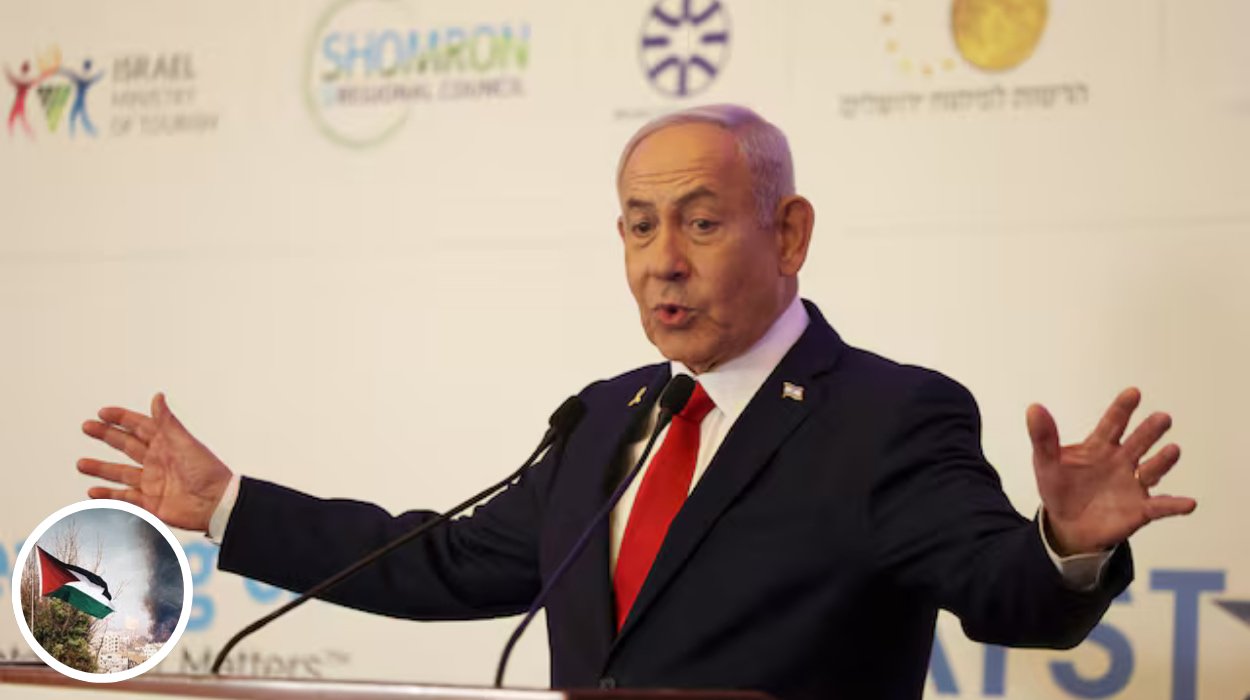
Israeli Prime Minister Benjamin Netanyahu recently clarified that Israel‘s goal in Gaza is not to occupy the territory but to liberate it from Hamas control. He emphasized that the ongoing military operations are aimed at dismantling Hamas’s capacity to launch attacks against Israel, thereby enhancing regional security. While Israel continues its campaign targeting Hamas infrastructure, international voices call for humanitarian considerations and ceasefire negotiations. Netanyahu envisions a future Gaza free of Hamas’s militant influence, where peace and security can be restored for all residents.
What did Netanyahu say about Israel’s goal regarding Gaza?
As reported by Benjamin Netanyahu himself in a recent
address, Israel’s goal in Gaza is not to take over or occupy
the territory but to “free Gaza from Hamas control.” Netanyahu
articulated clearly that the military operations are focused on dismantling
Hamas’s capability to threaten Israel rather than administering governance over
Gaza.
Why does Israel want to “free” Gaza from Hamas?
Netanyahu explained that Hamas has been a persistent and
dangerous militant organization responsible for launching attacks against
Israeli civilians and military targets. The Prime Minister stressed that Israel
aims to significantly weaken Hamas, thereby reducing its ability to orchestrate
violence and ensuring that Gaza no longer serves as a base for such operations.
His remarks underscore the view that Hamas’ presence in Gaza
constitutes a direct security threat to Israel and the wider regional
stability.
How is Israel conducting its campaign in Gaza?
According to various news coverage, including statements
captured by major news outlets, Israel has intensified military strikes
targeting Hamas’s infrastructure throughout Gaza. These actions include
airstrikes and other military operations designed to dismantle Hamas’ command
centers, weapons manufacturing facilities, and tunnels used for smuggling and
attacks.
The Israeli government maintains that these operations are
defensive and necessary steps to protect its citizens and maintain sovereign
security.
What is the international community saying?
International responses vary widely; many countries and
humanitarian organizations have expressed concern over civilian casualties and
the humanitarian situation in Gaza. Calls for ceasefire negotiations and the
facilitation of humanitarian aid have been prominently voiced in diplomatic
forums and media.
Meanwhile, Netanyahu’s administration reiterates that the
military effort will continue until Hamas is effectively neutralized and no
longer poses a threat.
What is the historical context of the Gaza situation?
Gaza has long been a focal point of Israeli-Palestinian
conflict. Since Hamas took control of Gaza in 2007 after winning elections and
ousting rival factions, Israel and Hamas have engaged in multiple conflicts.
Gaza remains under blockade by Israel and Egypt, with periodic escalations in
violence.
Netanyahu’s statement aligns with Israel’s strategic posture
of non-occupation but sustained military pressure aimed at isolating and
defeating Hamas.
What does Netanyahu envision for Gaza’s future?
Netanyahu indicated a vision for Gaza free from Hamas
control, suggesting a future where the territory is peaceful and its residents
can live securely without the repression and conflict that Hamas’ rule has
brought. He did not provide specific plans for Gaza’s governance post-Hamas,
but the emphasis is on security restoration and preventing Gaza from again
becoming a launchpad for attacks against Israel.
This comprehensive assessment is based on the latest
official statements and media reports covering Netanyahu’s recent comments and
ongoing developments in Gaza. The situation remains dynamic, with evolving
political and security implications regionally and globally.