
Summary
- The
redistricting plan passed 21-11 after heated debate. - Breaks
up Missouri’s 5th Congressional District held by Cleaver. - The
plan aims to make the district more conservative. - GOP
seeks additional U.S. House seat in Missouri.
Three distinct districts would make up Kansas City.
After returning from Washington to attend the hearings on
Thursday, Cleaver expressed his frustration with the proposal and reaffirmed
his intention to fight for reelection in spite of the modifications.
“There’s a lot that goes into that decision,”
he said
Thursday.
“But as of right now, I do plan on running.”
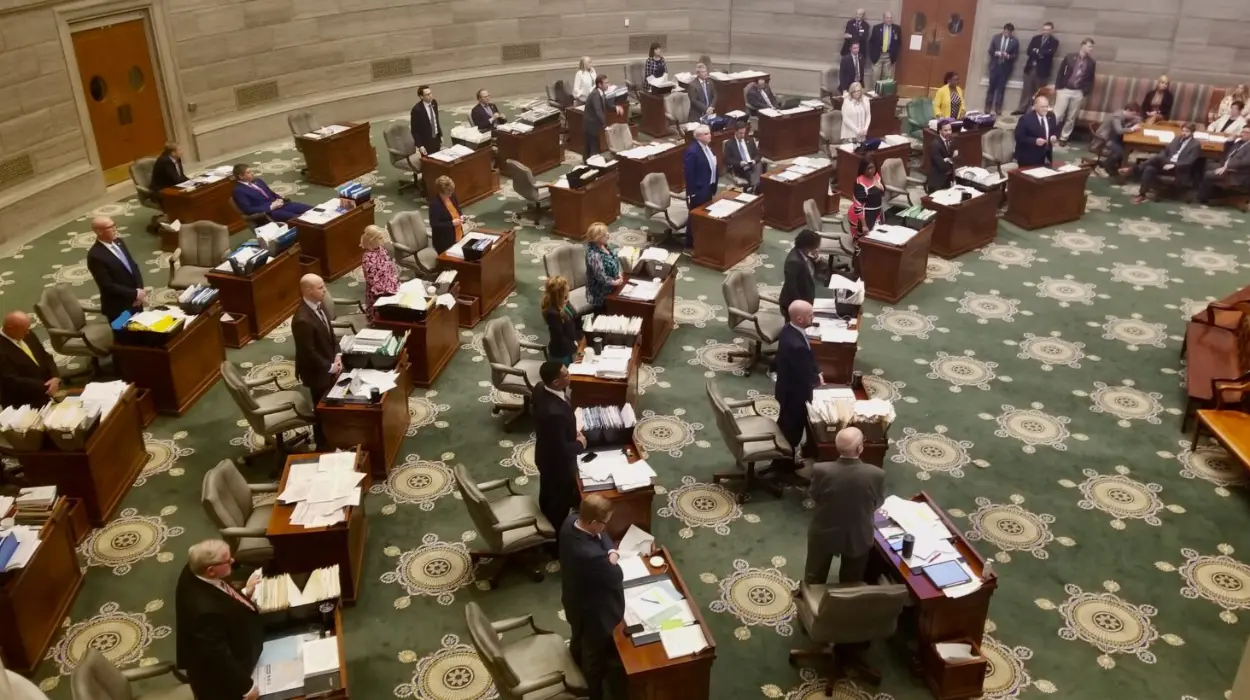
Democrats contended that the law was unpopular throughout
the state during Thursday’s committee debate.
The initiative is unpopular with her people, according to
Sen. Maggie Nurrenbern, a Democrat from Kansas City.
“Thousands of people flooded the steps of the Capitol to
make their voices heard,”
she said.
“This is incredibly unpopular. I’ve heard
from Republicans, I’ve heard from Democrats, I’ve heard from independents. They
know this is wrong.”
Sen. Rusty Black, R-Chillicothe, who chairs the committee, stated
that the opinions expressed in Jefferson City were not representative of all
Missourians.
“I’ve had people talk to me on both sides of the issue, both
for and against, in the area that I represent,”
Black said Thursday.
“So who
shows up on any given time on any given issues … is a representation but not
always a true representation.”
Senate President Pro Tem Cindy O’Laughlin, R-Shelbina, said
the new map will make sure all Missourians are fairly represented.
“Missouri voters have already chosen a conservative majority
and now their representation in Congress will finally reflect it,”
O’Laughlin
said in a news release Friday after the vote.
“This map is legal,
constitutional and respectful of every community. It strengthens Missouri’s
conservative voice and ensures every Missourian is fairly represented in
Washington.”
The Senate passed legislation restricting the initiative
petition process in addition to the redistricting law, raising the bar for how
constitutional amendments can be put on the ballot.
A bill could be blocked by as few as 5% to 7% of votes in
any of the state’s eight congressional districts, rather than a statewide
majority.
Governor Mike Kehoe, who called for the special session to
address both issues, will now review both proposals.
“The Missouri FIRST Map has officially passed the Missouri
Senate and is now headed to my desk, where we will review the legislation and
sign it into law soon,”
Kehoe said.
“The legislature also passed critically
needed IP reform, giving Missouri voters the chance to protect our Constitution
at the ballot box.
I want to thank the bill sponsors and handlers in the House
and Senate, Republican leadership, and every member of the legislature for
their work this week.”
How does the new map change partisan composition statewide?
The proposal decreases Sec. 5 Democratic congressional
districts from two to one, while also fracturing and diluting the Democratic
Fifth Congressional district of Emanuel Cleaver.
According to the proposed map, Missouri’s congressional
representation will be primarily Republican, considering forecasts indicate
seven Republicans and one Democrat all with a higher per-capita vote. This will
magnify the GOP’s advantage over Democrats.
Redistricting creates opportunities to distribute Democratic
voters into Republican-controlled districts, as the new map purposely draws a
tightened line around competitive districts towards regions with fewer
Democratic voters.
In the context of the mid-decade Republican maneuver, the
projection to gain narrow majorities in Congress continues through map drawing
across selected swinging states.