
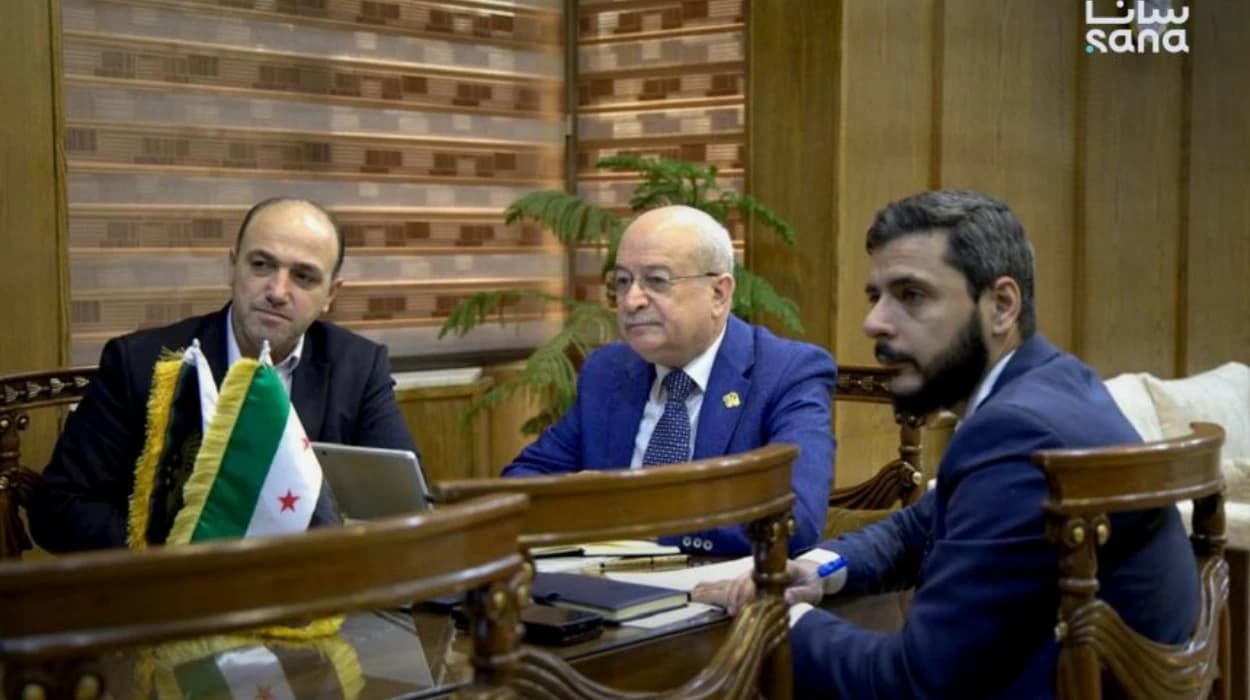
- Bilateral Discussions: Syria and World Bank held meetings in Damascus focused on cooperation for railway rehabilitation projects.
- Infrastructure Focus: Talks target restoration of war-damaged rail network, including Hedjaz Railway and Damascus-Aleppo mainline.
- Funding Mechanisms: World Bank proposes $1.2 billion concessional loans, grants, and private investment with anti-corruption safeguards.
- Technical Assessments: Feasibility studies prioritise 1,200 km reconstruction, bridge rebuilding, and electrification of freight corridors.
- Timeline and Partners: Phase one (Damascus-Homs) targets 2027 completion with China, Russia, EU, and Gulf states contributing expertise and finance.
Damascus (Washington Insider Magazine) February 6, 2026 – Syria and the World Bank held discussions on cooperation for railway rehabilitation projects.The meetings focused on restoring the country's war-damaged rail infrastructure. Officials addressed funding mechanisms and technical assessments for key rail lines.
Syrian Transport Minister Ammar Mirza met World Bank representatives in Damascus on 5 February 2026 to discuss rehabilitation of the national railway network. The talks covered pre-war rail connections linking Damascus, Aleppo, and Deir ez-Zor. Reuters reported the World Bank committed to conducting feasibility studies for priority corridors.
The World Bank delegation, led by Regional Director Ferid Belhaj, reviewed damage assessments from 2011-2024 conflict. Syrian state media SANA confirmed agreements on technical assistance for the Hedjaz Railway restoration. Discussions included $200 million in potential concessional loans pending board approval.
The New York Times noted Syria's 2,050 kilometre rail network sustained 70% destruction, with 15 major bridges collapsed. World Bank engineers presented satellite imagery documenting track deformations near Homs.
What Specific Railway Lines Targeted for Rehabilitation?
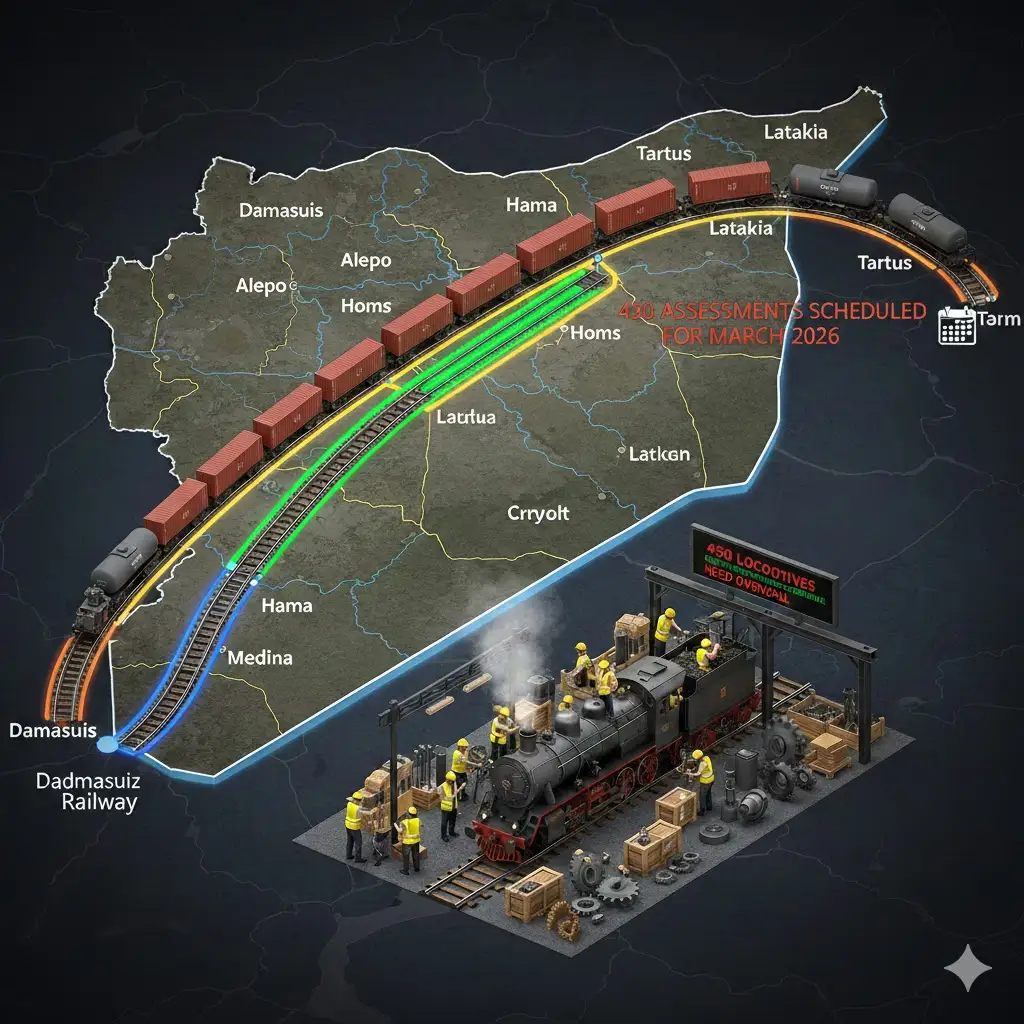
The Hedjaz Railway emerged as priority one, connecting Damascus to Medina pre-1916. SANA reported plans to rebuild 350 kilometres through Deraa and Mafraq. Aleppo-Damascus mainline rehabilitation ranked second, serving freight to Tartus port.
Reuters detailed World Bank's proposal for 150 kilometres of double-tracking between Hama and Homs. Deir ez-Zor line restoration aims to reconnect eastern oil fields. Latakia-Aleppo coastal route assessments scheduled for March 2026.
Syrian Railways General Company identified 450 locomotives needing overhaul. World Bank pledged spare parts procurement from European suppliers.
Which Funding Models Proposed During Damascus Talks?
World Bank outlined blended finance combining grants, loans, and private investment. Concessional terms offer 1% interest over 25 years grace period. Damascus seeks $1.2 billion total package phased over five years.
The Financial Times reported Islamic Development Bank co-financing $300 million for Sunni-majority rail segments. EU neighbourhood policy allocates €150 million for technical assistance. Japan International Cooperation Agency committed ¥20 billion for signalling systems.
Syria offered land concessions for logistics parks adjacent to restored lines. World Bank required anti-corruption safeguards including independent audits.
What Technical Assessments Conducted Prior to Discussions?
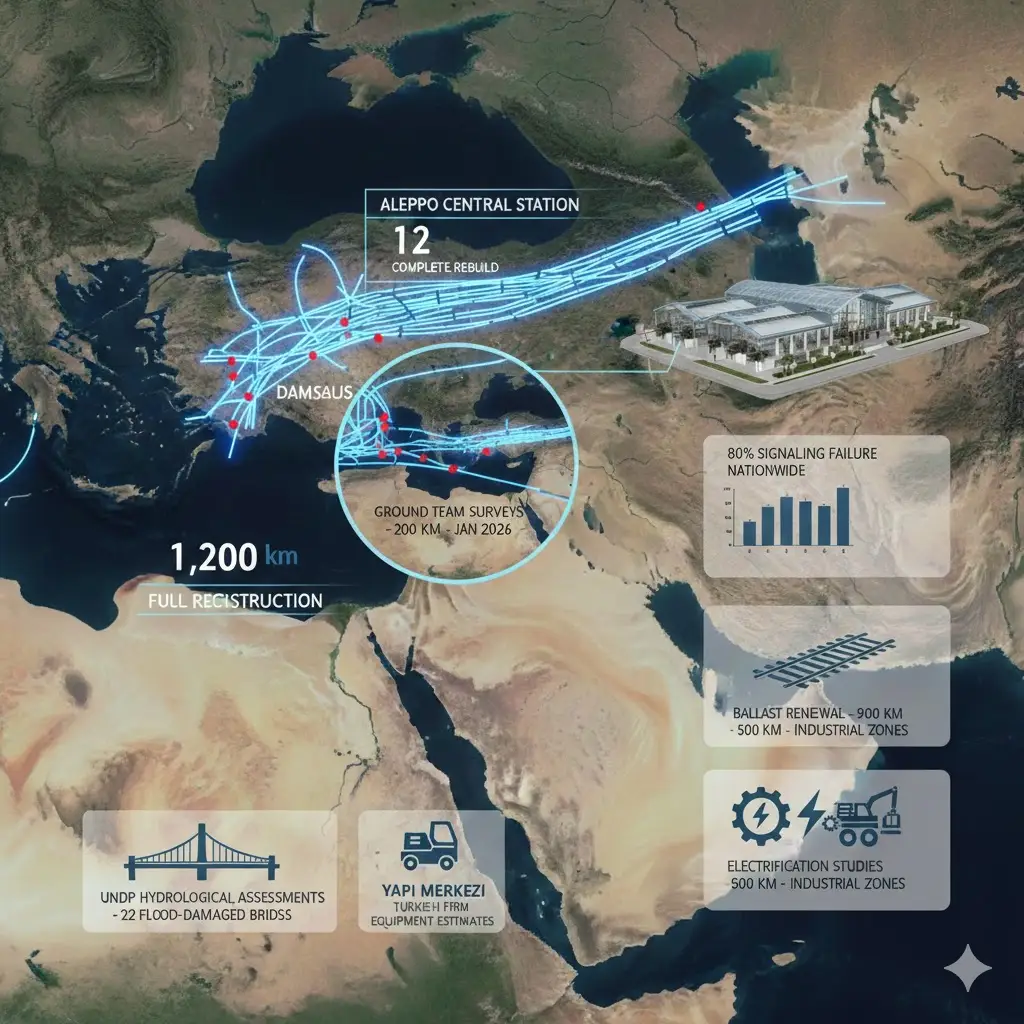
World Bank satellite analysis identified 1,200 kilometres needing full reconstruction. Ground teams surveyed 200 kilometres around Damascus in January 2026. Aleppo station requires complete rebuild housing 12 platforms.
Engineering reports detailed 80% signalling failure nationwide. Ballast renewal needed on 900 kilometres per Syrian Railways data. Electrification studies cover 500 kilometres connecting industrial zones.
UNDP contributed hydrological assessments for 22 flood-damaged bridges. Turkish firm Yapı Merkezi provided track-laying equipment estimates.
Who Key Figures Participated in the Railway Talks?
Transport Minister Ammar Mirza led Syrian delegation including Railways Director General Ghassan al-Khouli. World Bank's Ferid Belhaj headed MENA infrastructure team. UN Special Envoy Geir Pedersen observed sessions.
World Bank transport specialist Maria Gonzalez presented digital twin modelling. Syrian Planning Minister Mohammad Barhaj addressed macroeconomic linkages. Chinese embassy counsellor Li Wei noted Belt and Road synergies.
Omani mediation facilitated Gulf state participation commitments.
What Pre-Conflict Railway Capacity Compared to Current State?
Pre-2011 network carried 15 million passengers and 12 million tonnes freight annually. Current capacity reduced to 8% operational tracks. Passenger services limited to Damascus-Homs shuttle.
Aleppo central station served 50 trains daily; now operates two local services. Freight tonnage dropped from 1.2 million to 90,000 tonnes yearly. Hedjaz line dormant since 2008 derailment.
World Bank projections estimate $800 million economic return from full restoration.
How Conflict Damage Affected Specific Infrastructure Elements?
Homs rail bridge destroyed 2014 airstrike; requires 1.2 kilometre replacement. Raqqa workshops looted 2017; 200 machine tools missing. Deir ez-Zor turntable collapsed under artillery fire.
900 kilometres of catenary stolen for scrap metal. 450 freight wagons cannibalised for parts. Damascus marshalling yard lost 60% sorting capacity.
Restoration prioritises 350 kilovolt traction power substations.
Which International Partners Support Syrian Rail Efforts?
China Railway Construction Corporation bid €400 million Hama-Homs contract. Russian Railways offered 50 LM68 locomotives. Indian global tender covers 300 passenger coaches.
European Investment Bank studies Tartus-Aleppo electrification feasibility. UAE pledged $250 million Damascus International Airport rail link. Saudi Fund for Development finances Deraa-Amman connection.
Qatari Diar real estate arm invests in Aleppo rail-adjacent developments.
What Economic Impacts Expected from Rail Rehabilitation?
World Bank modelling projects 2.5% GDP growth from restored connectivity. Freight cost reduction 40% between industrial cities. Aleppo textile exports increase 25% with port access.
Agricultural transport from Deir ez-Zor cuts spoilage by 30%. Passenger fares drop 35% generating 4 million trips yearly. Logistics hubs create 15,000 construction jobs.
Tourism ministry links Hedjaz restoration to pilgrimage routes revival.
How Environmental Standards Incorporated in Projects?
World Bank mandates EIA for all contracts exceeding $10 million. Electrified lines reduce CO2 emissions 180,000 tonnes annually. Noise barriers required adjacent to 22 residential zones.
Ballastless track systems prevent soil contamination. LED station lighting cuts energy 60%. Waste rail steel recycling targets 85% recovery rate.
Green procurement policies favour low-emission concrete mixes.
What Timeline Established for Priority Rehabilitation Phases?
Phase one completes Damascus-Homs 2027 budget $450 million. Aleppo reconnection targets 2028. Hedjaz operational 2030 pending Saudi coordination.
Deir ez-Zor freight service resumes 2029. Full network restoration projected 2035. Annual progress audited by independent monitors.
Damascus Metro integration studies commence Q3 2026.
Which Technical Standards Adopted for Reconstruction?
UIC Gauge 1435mm confirmed for all mainlines. Continuous welded rail mandated 250 km/h design speed. ETCS Level 2 signalling across network.
AXLE load 22.5 tonnes freight corridors. Platform heights standardised 760mm. Stations accessible per EU TSI PRM requirements.
Digital Automatic Train Control replaces 1970s Soviet systems.
What Role Played by Regional Connectivity Initiatives?
Arab Railway Union endorsed Syrian membership restoration. Gulf Cooperation Council studies Jeddah-Damascus passenger service. Iraqi Railways signed MOU joint workshops.
Iranian line extension proposals reach Deir ez-Zor. Turkish Republic Railways offers Konya-Aleppo gauge conversion expertise. Egyptian consultants design Tartus container terminal rail connections.
How Labour Market Impacts Anticipated from Projects?
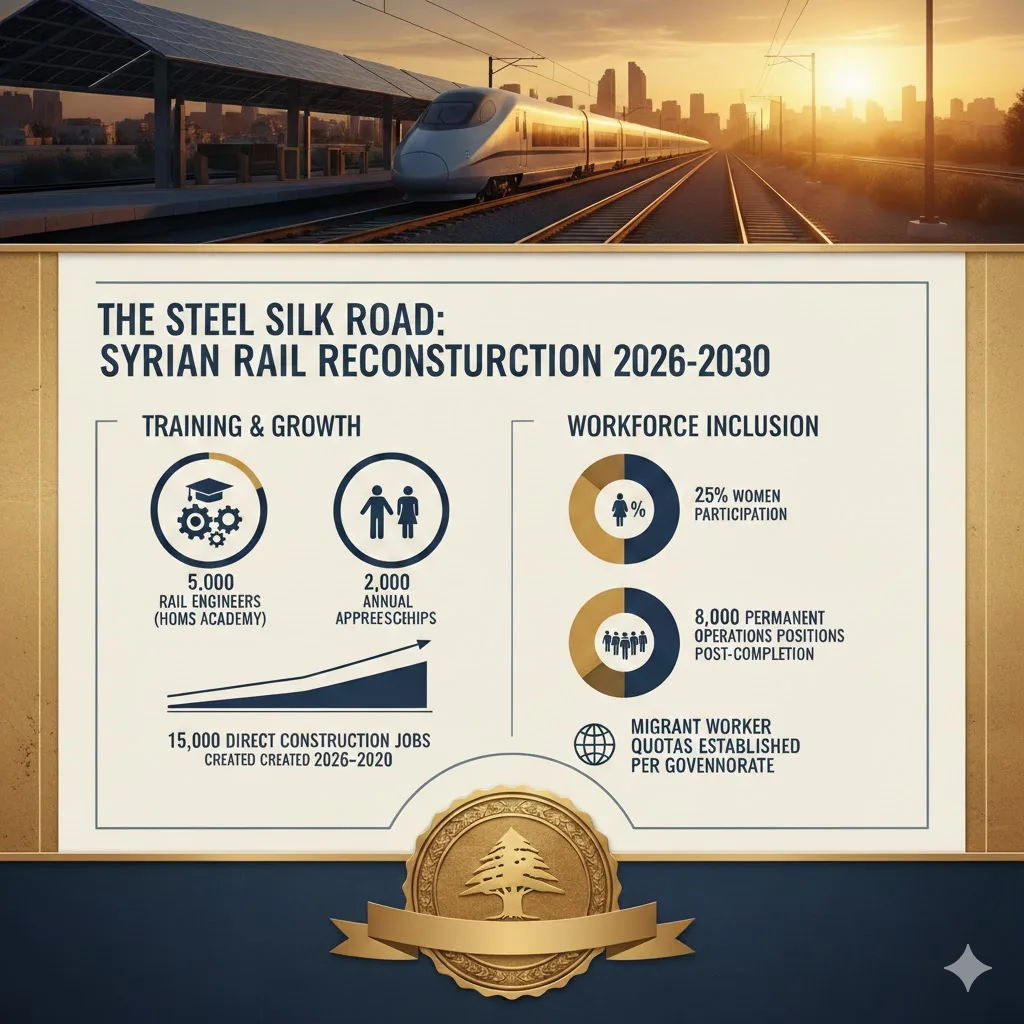
15,000 direct construction jobs created 2026-2030. Vocational training 5,000 rail engineers at Homs academy. 8,000 permanent operations positions post-completion.
Women targeted 25% workforce participation. Youth apprenticeships 2,000 annually. Migrant worker quotas established per governorate.
Local content requirements 60% Syrian materials labour.
What Risk Mitigation Strategies World Bank Implemented?
Political risk insurance underwritten by MIGA $500 million. Force majeure clauses cover conflict recurrence. Phased disbursements tied quarterly benchmarks.
Independent verification agents audit 20% expenditures. Anti-fraud hotlines operational all governorates. Third-party claims commission for land acquisitions.
Macroeconomic triggers pause funding if inflation exceeds 15%.