
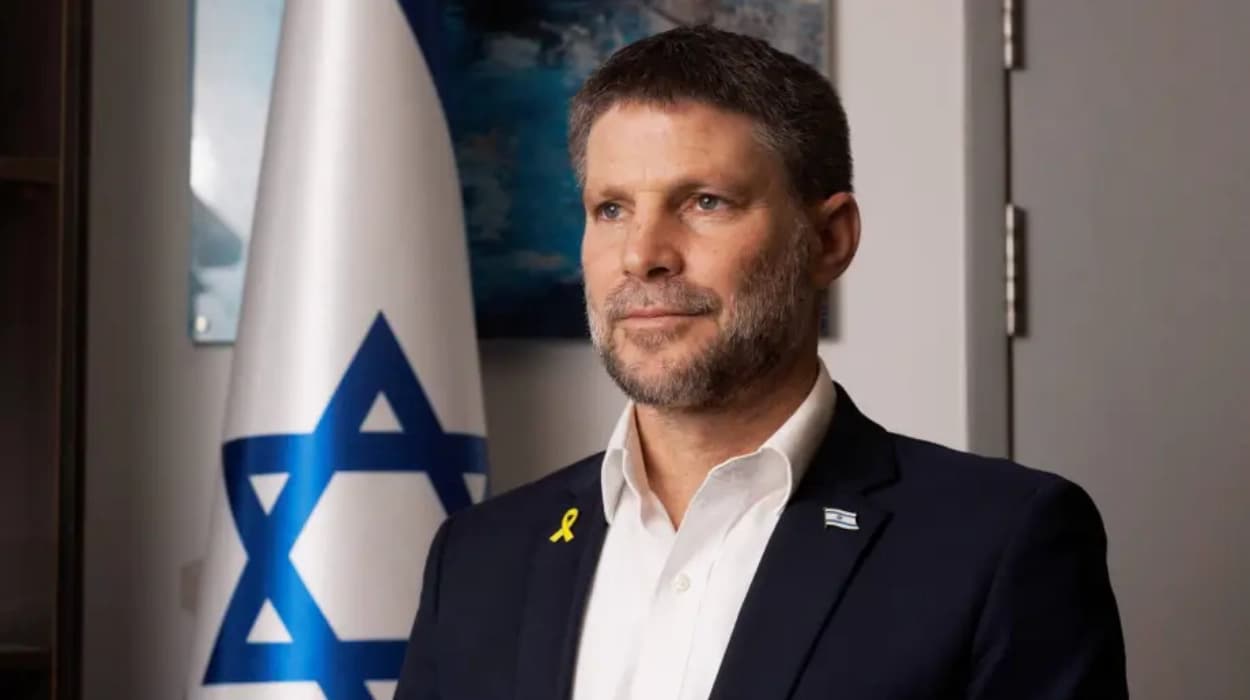
Palestine (Washington Insider) - Israel’s finance minister Bezalel Smotrich threatened to withhold Palestinian tax revenues over West Bank waste burning, announcing an emergency plan with military orders, heavy fines, and costs charged to the PA.
As Middle East Monitor reported, Israel’s far-right finance minister, Bezalel Smotrich, has said Israel may withhold further Palestinian tax revenues over waste burning in the occupied West Bank. In a statement released on Thursday, Dec 18, 2025, Smotrich said he held an emergency meeting with Defence Minister Yisrael Katz to discuss what he called a growing environmental threat.
He said the burning of waste was more widespread than previously reported and warned it was harming the environment, public health, and daily life. Smotrich said the pollution from open fires posed a danger to residents across the region.
What is Israel planning by withholding Palestinian tax revenues over waste?
Smotrich said the government is preparing a national emergency plan to deal with the issue. He said the plan would include tougher enforcement, the removal of waste sites, and heavy fines. He added that the costs would be charged to the Palestinian Authority and linked the issue to Israel’s control over Palestinian tax revenues collected on its behalf.
Israel’s far-right finance minister, Bezalel Smotrich, has said the government is preparing an “immediate and long-term” emergency plan to deal with waste burning in the occupied West Bank. He said the issue would be defined as a national security threat and handled through administrative steps based on military orders.
Smotrich said these steps would allow Israeli authorities to act directly in Palestinian areas. He said the measures would include the confiscation and permanent seizure of Palestinian waste collection trucks to stop dumping and open burning.
Smotrich said the plan would be supported by what he described as unlimited funding. He said private contractors would be brought in and heavy machinery would be used to put out fires and remove waste. He said the cost of these operations would be deducted directly from Palestinian Authority funds.
The announcement comes after years of obstacles to Palestinian waste projects. In earlier years, Israeli authorities blocked a landfill project near Ramallah that was funded by Germany. The project was stopped after Israel demanded that nearby settlements also be allowed to use the landfill, a demand that Germany rejected.
Smotrich also referred to clearance revenues, which are a key source of income for the Palestinian Authority. These revenues include taxes and customs duties on goods entering the Palestinian territories through Israel or via border crossings under Israeli control.
Israel collects the money on behalf of the Palestinian Authority under existing agreements. The funds have been withheld or reduced several times in the past as part of political disputes. Such actions have placed added financial pressure on the Palestinian Authority and affected its ability to cover basic costs.
This conflict exists in conjunction with established long-running agreements that allow Israel to control the major economic resources and infrastructure of the Palestinian territories. Through the Paris Protocol signed in 1994 at the time of signing of the Oslo Accords, the state of Israel collects and administers tax and customs revenue on all imported goods into the Palestinian territories and remits this revenue to the Palestinian Authority.
As previously mentioned, Israeli authorities have a history of delaying or withholding these funds from the PA due to political volatility. This was evident in 2019 in connection with payment related to the Palestinian prisoners and ongoing into 2023 and on into 2024 relative to the Gaza War.
Additionally, waste management has continued to be a very controversial issue in light of the Oslo II Accord of 1995, whereby Israel retained the right to have control over a large percentage of land in the West Bank, thus restricting Palestinian capabilities to undertake substantial development projects.