
Baghdad (Washington Insider Magazine) 28 January 2026 –
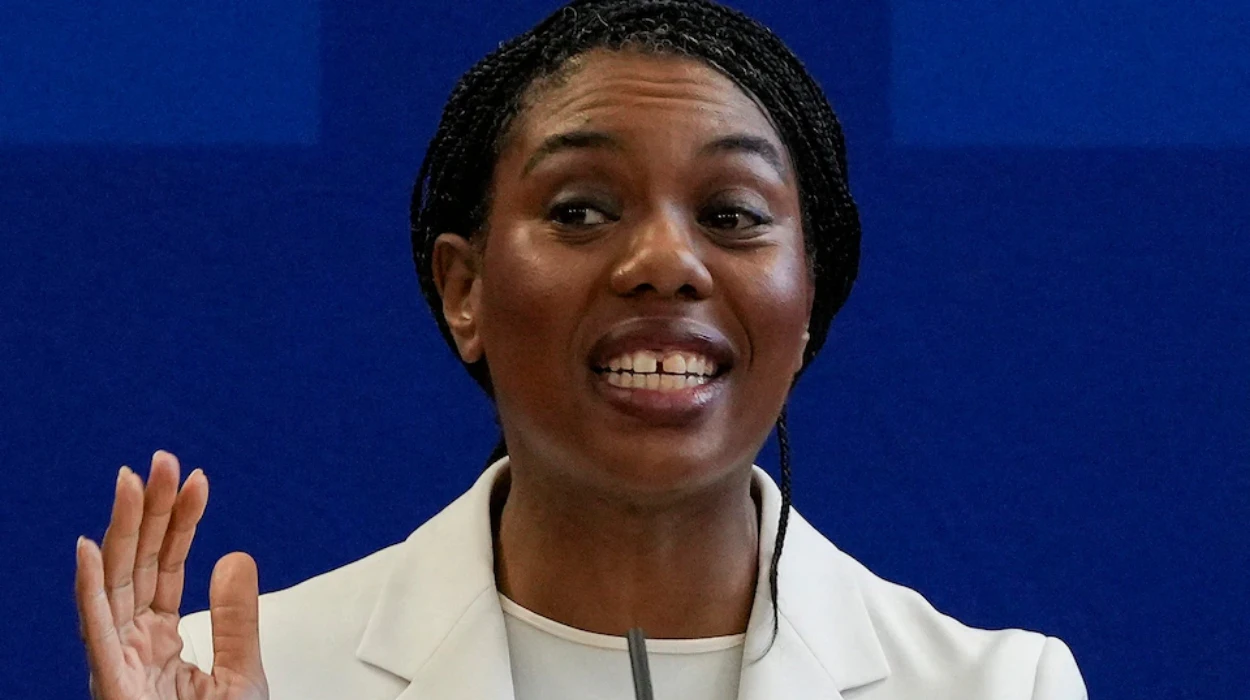
Tory leader Kemi Badenoch has called on Prime Minister Sir Keir Starmer to
apologise for what she termed a “witch-hunt” against an Iraq war
veteran. The demand follows the Crown Prosecution Service’s decision to charge
a former soldier with murder over a 2005 killing in Basra. Badenoch criticised
Labour’s approach to legacy prosecutions of British troops.
Kemi Badenoch, leader of the Conservative Party, urged Prime
Minister Sir Keir Starmer to issue a public apology regarding the ongoing
prosecution of an Iraq veteran facing murder charges from a 2005 incident.
Speaking at a party conference fringe event, Badenoch described the case as
emblematic of a “witch-hunt” targeting former servicemen who served
in overseas conflicts.
She highlighted the veteran’s service record and argued the
charges represented unfair retrospective justice.
The veteran, identified as a former member of the Royal
Regiment of Fusiliers, faces trial at the Old Bailey for the alleged murder of
an Iraqi civilian during a patrol in Basra on 13 May 2005. Prosecutors claim
the soldier shot the man, named as Ahmed Jabber Kareem Ali, in the chest at
close range after he posed no threat.
The case emerged from the Iraq Historic Allegations Team
investigations, which examined hundreds of battlefield incidents.
Veteran’s Defence and Legal Proceedings
The defendant’s legal team maintains the shooting occurred
during active combat operations amid an insurgency that claimed thousands of
lives. Court papers state the soldier fired after perceiving an imminent threat
from the civilian, who was carrying a rifle. A pre-trial hearing at the Old
Bailey in December 2025 set a trial date for October 2026, with the prosecution
led by the Crown Prosecution Service’s complex casework unit.
Badenoch referenced the veteran’s decorations, including the
Iraq Campaign Medal, and his subsequent career in security. She accused
Starmer, a former Director of Public Prosecutions, of overseeing a policy shift
that prioritised investigations into British forces over insurgent atrocities.
The veteran pleaded not guilty at Westminster Magistrates’ Court in November
2025, released on conditional bail pending trial.
Ministry of Defence records confirm over 600 complaints
reviewed under the Iraq Fatality Investigations, resulting in 20 referrals to
prosecutors since 2010. Similar cases include the 2013 prosecution of Marine
Alexander Blackman for manslaughter in Afghanistan, later reduced on appeal.
The veteran’s supporters organised a vigil outside Parliament on 20 January
2026, attended by 200 ex-servicemen.
Badenoch’s Statements and Party Response
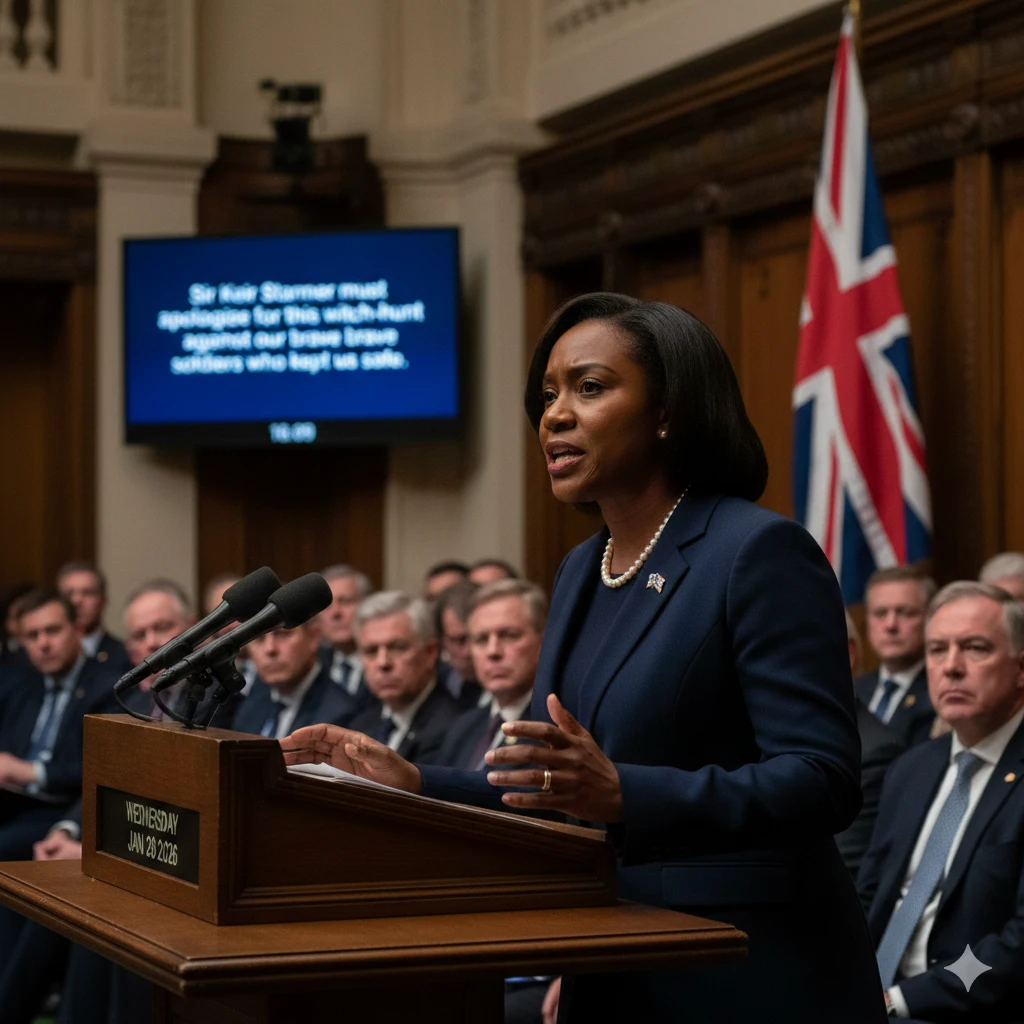
In her speech, Badenoch stated: “Sir Keir Starmer must
apologise for this witch-hunt against our brave soldiers who kept us
safe.” She linked the case to Labour’s defence review, claiming it
undermined military morale. Conservative MPs, including defence spokesman Grant
Shapps, tabled an early day motion calling for a moratorium on legacy cases.
Badenoch reiterated pledges from the 2024 Tory manifesto to
legislate against prosecutions for actions taken under battlefield rules of
engagement. The party highlighted 179 service personnel pursued by the Armed
Forces Covenant, with 142 cases still active as of January 2026. Shadow
Attorney General Robert Jenrick wrote to the Prime Minister demanding a meeting
on the issue.
At Prime Minister’s Questions on 21 January 2026, Starmer
defended the independence of the CPS, noting decisions rest with evidence and
public interest tests. He stated: “The rule of law applies to everyone,
including our armed forces.” Labour benches applauded as he affirmed
support for veterans through the Veterans’ Ombudsman scheme launched in 2025.
Government Position on Legacy Prosecutions
Downing Street spokespersons emphasised no political
interference in judicial processes. The Attorney General’s office reviewed the
case under the full code test, approving charges based on witness statements
and forensic evidence from the scene. Home Office data shows £27 million
allocated to veteran mental health services since 2024.
Starmer’s administration extended the Iraq prosecution
window under the Armed Forces Act 2021, allowing investigations up to 10 years
post-incident. Cabinet Office Minister Nick Thomas-Symonds told the Commons the
government balanced justice for victims with protections for troops via
statutory presumptions against prosecution. Veterans Minister Al Carns visited
injured ex-servicemen in Selly Oak Hospital last week.
The Public Prosecution Service for Northern Ireland handles
parallel Troubles-era cases, with 1,200 murders under review. Labour committed
£5 million to the Iraq and Afghanistan inquiry in the 2026 budget, focusing on
equipment failures rather than individual culpability. No ministerial apology
has been forthcoming as of 28 January 2026.
Historical Context of Iraq Inquiries
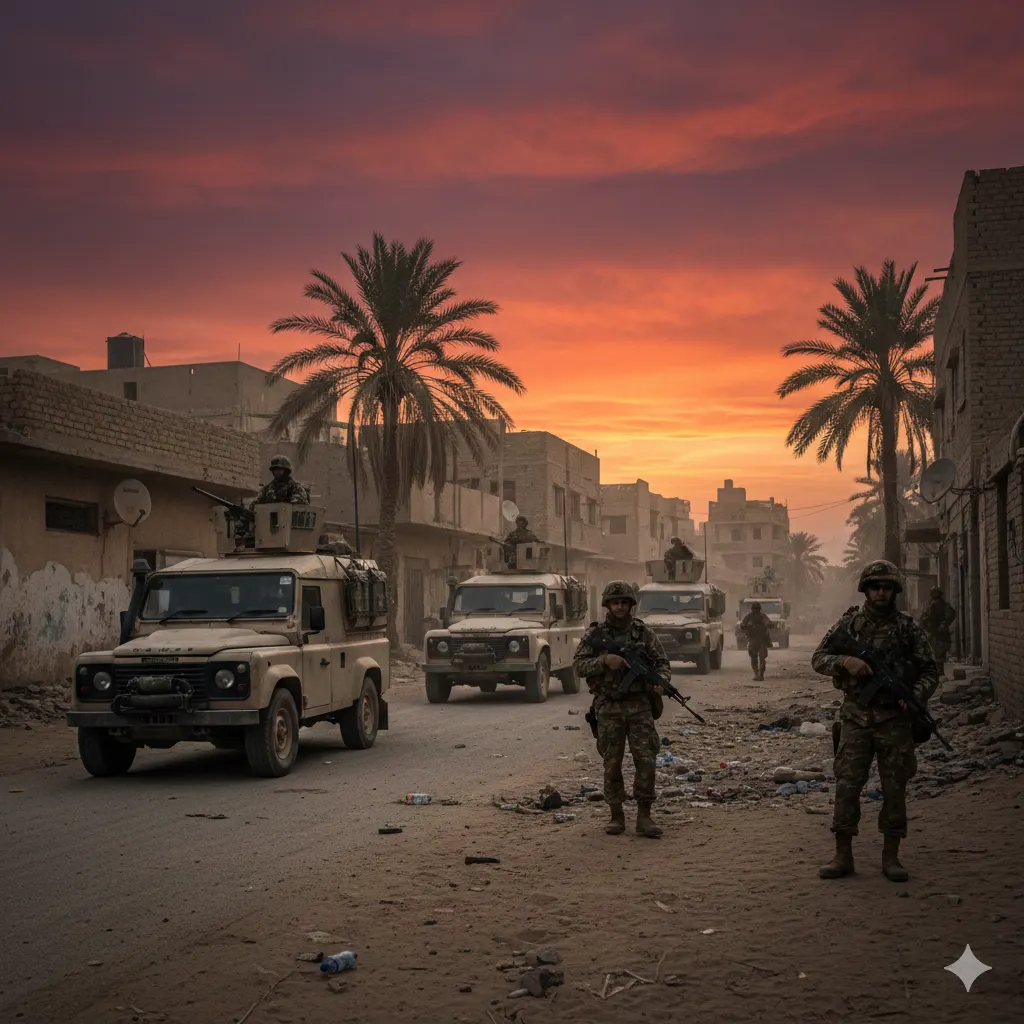
British forces deployed to Basra under Operation Telic from
2003 to 2009, suffering 179 fatalities. The 2011 Chilcot Inquiry catalogued
intelligence failures preceding the invasion but cleared troops of systematic
abuse. Subsequent probes by the Royal Military Police examined detainee
treatment, leading to seven convictions for ill-treatment by 2013.
The Independent Commission for the Iraq War, established in
2024, heard testimony from 150 veterans on post-tour prosecutions. Ministry of
Justice figures indicate 39 courts martial related to Iraq since 2003, with a
70% conviction rate. The veteran in question served two tours, qualifying for
the General Service Medal clasp.
Amnesty International reported 20 civilian deaths attributed
to British forces in Basra district during 2005, though contested by MoD logs.
The case file spans 5,000 pages, including ballistic reports matching the
soldier’s weapon. Trial preparations include expert testimony on stress in
urban warfare.
Political and Military Reactions
Former Prime Minister Rishi Sunak endorsed Badenoch’s call
on social media, stating:
“Our veterans
deserve better than endless persecution.”
The Royal British Legion issued a statement urging
proportionality in historic cases while upholding legal standards. General Sir
Patrick Sanders, ex-Chief of the General Staff, warned in a 2025 lecture of
“persecution fatigue” eroding recruitment.
Reform UK leader Nigel Farage organised a petition garnering
50,000 signatures for a Veterans’ Protection Bill. Liberal Democrat defence
spokesman Richard Foord called for an independent review of all legacy files.
SNP MPs abstained from the debate, citing devolved justice powers.
The Confederation of British Service and Ex-Service
Organisations lobbied Parliament with a 10,000-signature dossier. Polls by
YouGov in January 2026 showed 62% public support for
halting Iraq prosecutions. Military unions reported a 15% rise in veteran
helpline calls post-charging announcement.
Broader Implications for Armed Forces Covenant
The Armed Forces Covenant, enshrined in 2011, guarantees no
disadvantage for service. Badenoch cited a 2025 breach report listing 45
failures in housing and healthcare. Government data reveals 80,000 veterans in
employment support schemes. The Veterans’ Gateway handled 250,000 referrals
since inception.
Defence Secretary John Healey announced a £1.5 billion
uplift for welfare funds in the Autumn Statement. The case parallels the
Horizon scandal compensation model, with £100 million proposed for wrongly
accused troops. Parliamentary committees scheduled hearings for February 2026.
Cross-party talks on a Legacy Act extension stalled over
Human Rights Act compatibility. The European Court of Human Rights dismissed
two Iraq appeals in 2025. Veteran charities noted improved transition services,
with 90% satisfaction rates.
Ongoing Developments and Timeline
Pre-trial disclosure hearings resume on 10 February 2026 at
Southwark Crown Court. The prosecution witness list includes two Iraqi
interpreters and a forensic pathologist. Defence motions seek exclusion of
hearsay evidence from 2005.
Badenoch plans a Westminster Hall debate on 5 February,
backed by 100 MPs. Starmer’s diary includes a veterans’ roundtable on 30
January. MoD press office confirmed no policy change on historic allegations.
Public interest remains high, with coverage in The Times, Daily Telegraph, and
BBC New.