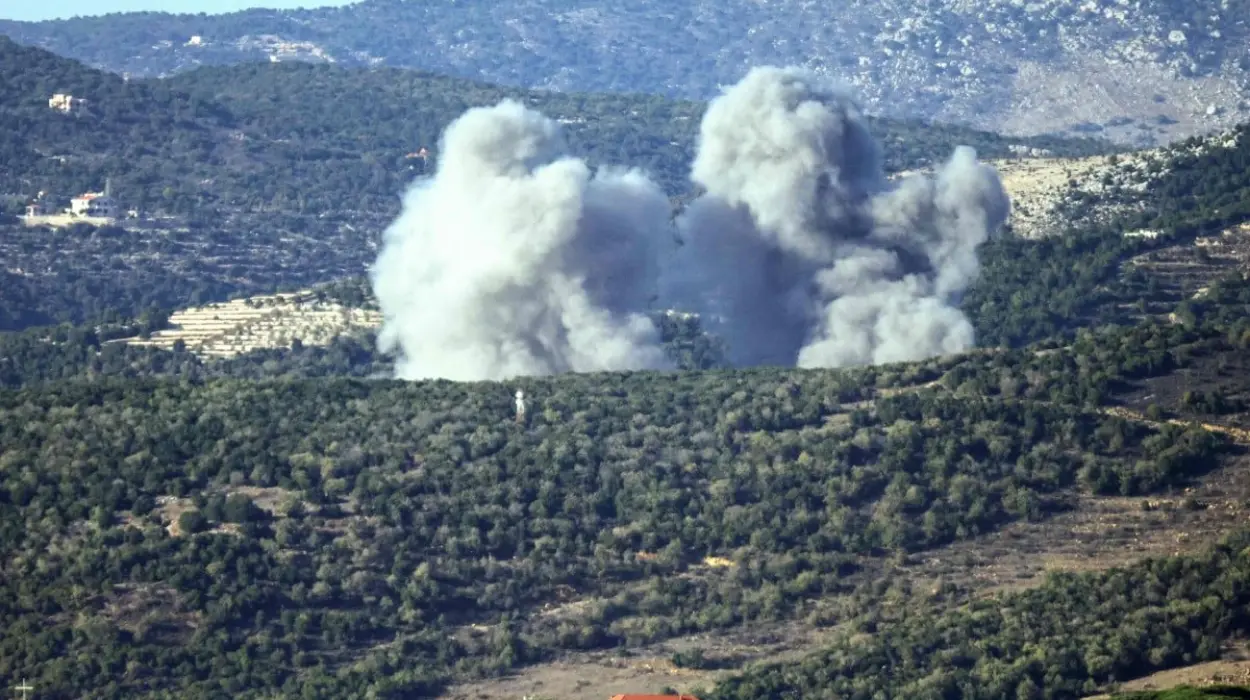

Israel (Washington Insider) – Israel carried out
airstrikes on southern and northeastern Lebanon targeting Hezbollah weapons
sites on Thursday, Dec 18, 2025. Gen. Rodolph Haikal will meet U.S., French,
and Saudi officials as tensions persist along the border.
As Bassem Mroue reported in The Washington Post, Israel
carried out a series of airstrikes on southern and northeastern Lebanon on
Thursday, Dec 18, 2025. The attacks targeted locations that Israel said were
used by Hezbollah to store weapons and military equipment.
The strikes came a day before a meeting of the committee
that monitors the U.S.-brokered ceasefire, which ended the latest fighting
between Israel and Hezbollah a year ago. This will be the 2nd meeting since
Israel and Lebanon appointed civilian members to a committee that was
previously military-only.
The committee also includes representatives from the United
States, France, and the United Nations Interim Force in Lebanon, which monitors
the border.
What are the
implications of Israel’s airstrikes and Hezbollah tensions on Lebanon’s border?
At the same time, Lebanon’s army commander, Gen. Rodolph
Haikal, is scheduled to meet in Paris with U.S., French, and Saudi officials.
They will discuss ways to strengthen the army’s presence along the border. The
Lebanese government has said that by the end of the year, the army should have
cleared the area south of the Litani River of Hezbollah’s armed presence.
The Israeli military said its airstrikes targeted Hezbollah
infrastructure and launching sites, including a military compound used
to train fighters. The army said it hit several structures where weapons were
stored and from which members had recently operated.
Lebanon’s state-run National News Agency reported that the
strikes stretched from Mount Rihan in the south to the northeastern Hermel
region along the Syrian border. Shortly afterwards, a drone strike hit a car
near the southern town of Taybeh, causing casualties, the agency said.
The recent violence comes after a year of fighting between
Hezbollah and Israel. The fighting between them began on October 8, 2023, after
Hamas attacked southern Israel on October 7, 2023, with the help of rockets
fired by Hezbollah. Israel retaliated by carrying out a sustained aerial
barrage against Lebanon in September 2023, which damaged Hezbollah’s
capabilities. This was followed by a ground invasion by Israel.
Israel has conducted airstrikes against Hezbollah fighters
nearly every day since then. There have also been civilian casualties.
According to the UN High Commissioner for Human Rights, 127 civilians have died
as a result of these attacks. The most recent armed confrontation began in October of 2024
and lasted for three weeks until the United States facilitated a ceasefire
agreement on November 2, 2024. Several aspects were included in the agreement,
such as provisions to supervise Hezbollah’s weapons and military actions.
Although progress towards an end to hostilities has been
slow thus far, subsequent flare-ups between Hezbollah and Israeli forces
occurred within days of the ceasefire. As a result of Iranian support, Hezbollah remains in
possession of a substantial stockpile of missiles and other military hardware;
Israel believes this stockpile poses a significant threat to the security of
its northern communal areas. Since the conclusion of hostilities in late 2024,
there have been numerous minor skirmishes in addition to cross-border
engagement; they have raised tension levels throughout the region.