
Every state in the United States has a voice in the federal
government through its elected officials, including two senators representing
it in the United States Senate. Oklahoma is no exception to this rule, having
its own two senators serving in the upper chamber of Congress.
Oklahoma’s Senate Representation: The Basics
The U.S. Constitution guarantees that each state is represented by
two senators regardless of population size or geographic area. This principle
was designed to balance representation between populous and smaller states in
the federal legislative system.
Accordingly, Oklahoma, having joined the Union on November 16,
1907, elects two senators to represent its interests at the national level.
These senators serve staggered six-year terms, belonging to what are known as
different “classes” of Senate terms, to ensure continuity within the
legislative body.
Current Senators from Oklahoma
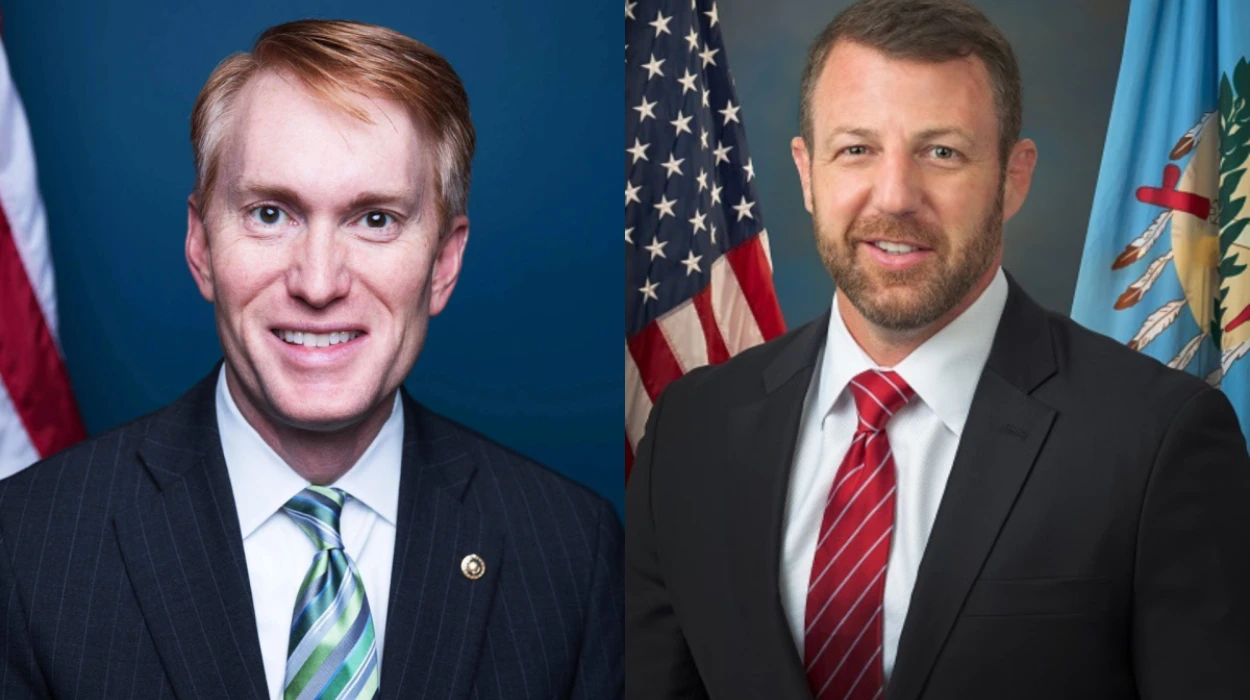
As of 2025, Oklahoma’s two U.S. senators are Republican James
Lankford and Republican Markwayne Mullin.
- James Lankford has served since 2015, winning consecutive federal
elections. Known for his conservative stance and focus on fiscal
responsibility, Lankford has taken on various committee assignments that
influence national policies. - Markwayne Mullin
assumed office in 2023 following a special election to complete the late
Senator Jim Inhofe’s term. Mullin is noted for his background as a
businessman and former U.S. Representative prior to joining the Senate.
Both senators belong to different Senate classes: Lankford’s seat
is part of Class 2, and Mullin’s seat belongs to Class 3, with term expirations
and election cycles that differ accordingly.
Understanding Senate Classes and Election Cycles
The U.S. Senate is divided into three classes to stagger
elections, ensuring approximately one-third of the 100 seats are contested
every two years. Oklahoma’s senators belong to two specific classes:
- Class 2 Senator: This seat was contested in elections including 2008,
2014, 2020, and a 2022 special election, with the next scheduled election
in 2026. - Class 3 Senator:
This seat was up for election in 2010, 2014 (special election), 2016, and
2022, with the next election set for 2028.
This staggered approach prevents complete turnover of the Senate
in a single election, providing stability and continuity in governance.
Historical Overview of Senators from Oklahoma
Since Oklahoma’s admission to the Union, it has been represented
by a range of senators from both major parties, though Republican dominance has
characterized recent decades.
Among the longest-serving was Jim Inhofe, who served from
1994 until his retirement in 2023. Noted for his conservative policies and
leadership on defense and environmental issues, Inhofe was a prominent voice
from Oklahoma on national matters.
Prior to Inhofe, figures such as Robert S. Kerr and David
Boren played significant roles in shaping the state’s and nation’s
policies. The state has had senators who were influential in agriculture,
energy, university leadership, and public service.
The Role and Importance of Oklahoma’s Senators
Oklahoma’s two senators serve as the state’s representatives in
the U.S. Senate, where they have responsibilities including:
- Crafting and voting on federal
legislation that impacts national and state interests. - Serving on Senate committees that oversee various
policy domains such as agriculture, energy, defense, and commerce. - Advocating for Oklahoma’s federal budget priorities,
infrastructure projects, and community needs. - Offering advice and consent on federal appointments and
treaties, playing a key advisory role to the executive branch.
Their work ensures that Oklahoma’s voice is heard in the federal
legislative process and that the state’s interests are defended in Washington,
D.C.
How Senators Are Elected in Oklahoma
Senators from Oklahoma, like all U.S. senators, are elected by
popular vote during federal election cycles. Each senator’s term lasts six
years, with no term limits imposed. Elections often coincide with midterm or
presidential election years depending on the Senate class.
Special elections can be held to fill vacancies caused by death,
resignation, or retirement, as was the case when Markwayne Mullin was elected
following Jim Inhofe’s retirement.
Impact of Oklahoma’s Senators on National Policy
Oklahoma’s senators have historically aligned with the political
and economic interests of the state, emphasizing energy independence, agricultural
development, defense, and conservative fiscal policies.
Jim Inhofe famously championed energy policies that supported oil
and gas industries and was known for his environmental skepticism. James
Lankford has focused on budgetary restraint, religious freedoms, and small
government initiatives. Markwayne Mullin emphasizes rural development,
healthcare, and veterans’ affairs.
Through their committee assignments and legislative activity,
Oklahoma’s senators influence key areas that affect both their constituents and
the nation as a whole.
The Significance of Bipartisan and Local Representation
Though both current senators are Republicans, Oklahoma’s Senate
history includes Democratic representation and mixed political dynamics
reflecting shifts over time. Effective senatorial representation requires not
only partisan advocacy but also attention to local constituent needs, economic
realities, and cross-party cooperation on pressing national issues.
Residents of Oklahoma benefit from senators who balance state
interests with national concerns, securing funding, regulatory support, and
policy frameworks that aid state prosperity.
Oklahoma has two senators in the United States Senate, consistent with
constitutional provisions for equal state representation. These senators serve
staggered six-year terms as part of different Senate classes, currently held by
James Lankford and Markwayne Mullin. Over the years, Oklahoma’s senators have
played important roles locally and nationally, advocating for state interests
and participating actively in governance.
Their work underscores the fundamental role of the Senate in ensuring
that each state, regardless of size, has equal representation in federal
lawmaking. Understanding how many senators Oklahoma has, and the history and
responsibilities of these positions, provides clarity on the state’s essential
participation in the United States political system.