- Reform-led council plans max tax rise.
- Highest council tax increase proposed.
- Aims to boost local funding.
After projecting a £38 million budget deficit due to overspending in both adult and children's social care, Derbyshire County Council acknowledged the increase.
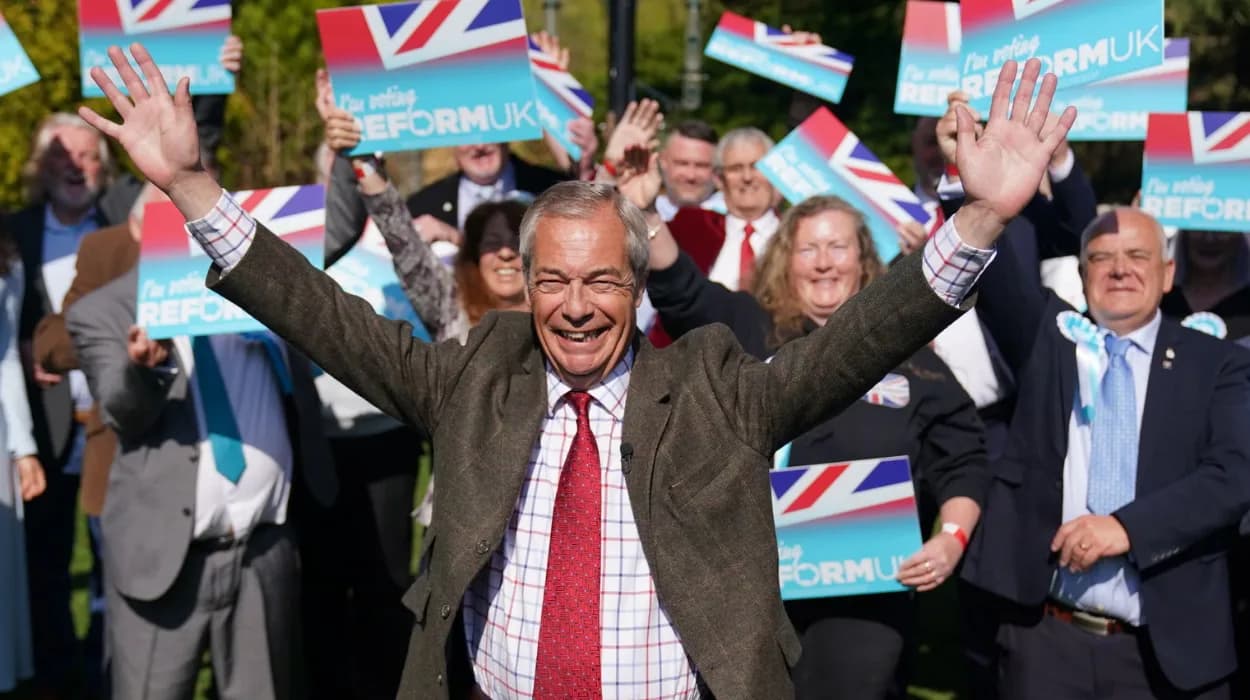
According to recent announcements, it is currently one of four local authorities where Reform UK is either the largest party or has a majority and has proposed 5% increases in council tax.
This comprises the county councils of Leicestershire, West Northamptonshire, and North Northamptonshire.
Furthermore, leaders at the Reform-led county councils in Warwickshire, Lancashire, and Kent have not ruled out a 5% increase in council taxes.
Council tax plans must be approved by local authorities by the end of February or the beginning of March. When the government released its financial projections for authorities in December, it was believed that most would increase council tax by the maximum amount.
According to its budget-saving proposals, Derbyshire's council tax hike is anticipated to generate approximately £29 million this fiscal year and will be accompanied by a fresh round of cuts totaling £22 million.
Although Alan Graves, the leader of the council, promised to reduce employment after asserting that the local government was 20% overstaffed, the savings do not seem to involve major job cutbacks.
The government's new local government financing formula, growing demand, and inflation are all blamed in the budget proposals report for contributing to fiscal constraints.
It claims that the council "has suffered as a result of the reforms because it is a rural shire county" and that "increases in council tax at the maximum permitted level will be required to maintain funding levels."
Reform UK stated that any promises to lower taxes were related to national policy and that it never made any promises to freeze or lower council tax during the election campaign.
Other Reform-led councils have also received similar critiques.
Dan Harrison, the county council leader of Leicestershire, stated that following the May local elections, the party would be able to "cut council tax." Six months later, Harrison acknowledged that while "a council tax freeze is our aspiration... conditions are unlikely to allow this for next year."
Nigel Farage, the party's leader, pledged to address "wasteful" spending, scrap net zero, and diversity and inclusion measures. In May, Reform gained control of ten local authorities and emerged as the largest party in three more.
To guarantee a balanced budget, councils are mandated by law. Derbyshire Council's proposed budget of £838 million for the next year is roughly £38 million less than what the body stated it requires.
Reform admits that this is "not financially sustainable" and will have to rely on a portion of the authority's reserves to maintain "ongoing budget pressures," just like the previous Conservative administration.
The council is anticipated to review the ideas in the upcoming weeks.
In response, Derbyshire County Council's cabinet member for council efficiency (Doge), John Lawson, stated that the council tax hike for the next year was still being reviewed.
“There is still work to do as we look at the numbers across the board. No decisions have been made as yet, and a final proposal will be put to cabinet to discuss at its meeting on 29 January,”
he said
Are there plans for exemptions or discounts after the rise?
Standard Public schemes remain availablepost-rise, including 25 abatements for single inhabitants, up to 100 reductions for low- income homes via Council Tax Reduction.
Full immunity for full- time scholars or oppressively mentally disabled residents, and 50 abatements for empty parcels( subject to original variations); the council emphasizes guarding vulnerable groups amid their £38m space.
Reform leaders place the hike as necessary for statutory services like children's care, rejecting deeper cuts while pursuing edge; no fresh relief packages were detailed, though final budget approval in March 2026 could introduce church- position adaptations.