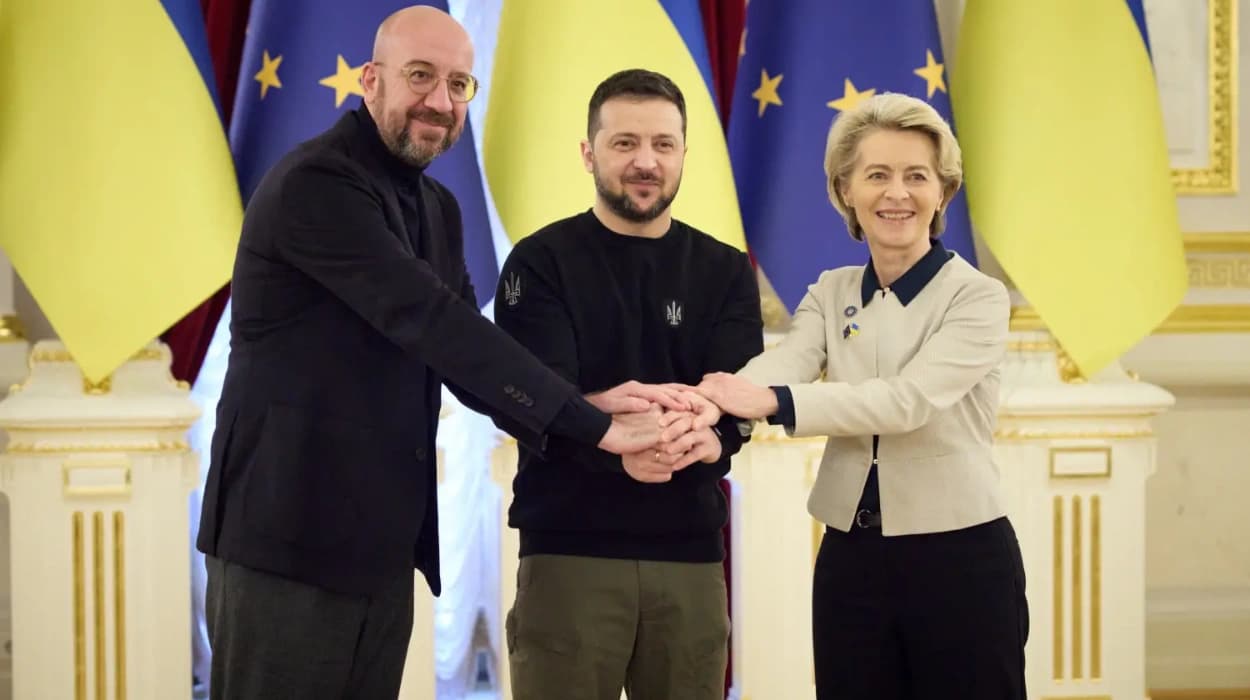
- Ukraine targets full EU energy market integration by 2027, with electricity market coupling by spring alongside Moldova and gas sector alignment via accelerated reforms.
- European Commission provides support package including €10B clean energy investment, gas procurement aid, and 1.5 GW renewables to rebuild war-damaged infrastructure.
- Achieved ENTSO-E electricity synchronisation in March 2022; GTSOU gas certification in 2020 enables 60 bcm annual auctions and reverse flows from EU storage.
- EU financial assistance exceeds €2B via Ukraine Facility, with infrastructure upgrades like Poland-Ukraine 1.6 GW lines and Black Sea Cable planned through 2027.
- UATV English and EU Commission tweets affirm long-term governance needs and resilient infrastructure commitment for integration timeline.
Kyiv (Washington Insider Megazines) January 24, 2026 - Ukraine aims to achieve full integration into the European Union energy market by 2027, with the European Commission offering a comprehensive support package to secure this timeline. The initiative includes electricity market coupling by spring 2027 alongside Moldova and further gas sector alignment, contingent on accelerated Ukrainian reforms. This follows Ukraine's electricity grid synchronisation with ENTSO-E in March 2022 and extensive EU financial assistance exceeding €2 billion since Russia's invasion.
Ukrainian and EU energy officials confirmed the roadmap during meetings in Kyiv, emphasising legal, regulatory, and infrastructure prerequisites under the Ukraine Plan and Energy Community Treaty. The package addresses war-related damage to half of Ukraine's energy infrastructure while enhancing regional security through market interconnections and renewable investments.
European Commission Unveils Comprehensive Energy Support Package
 Credit: NICOLAS TUCAT / AFP
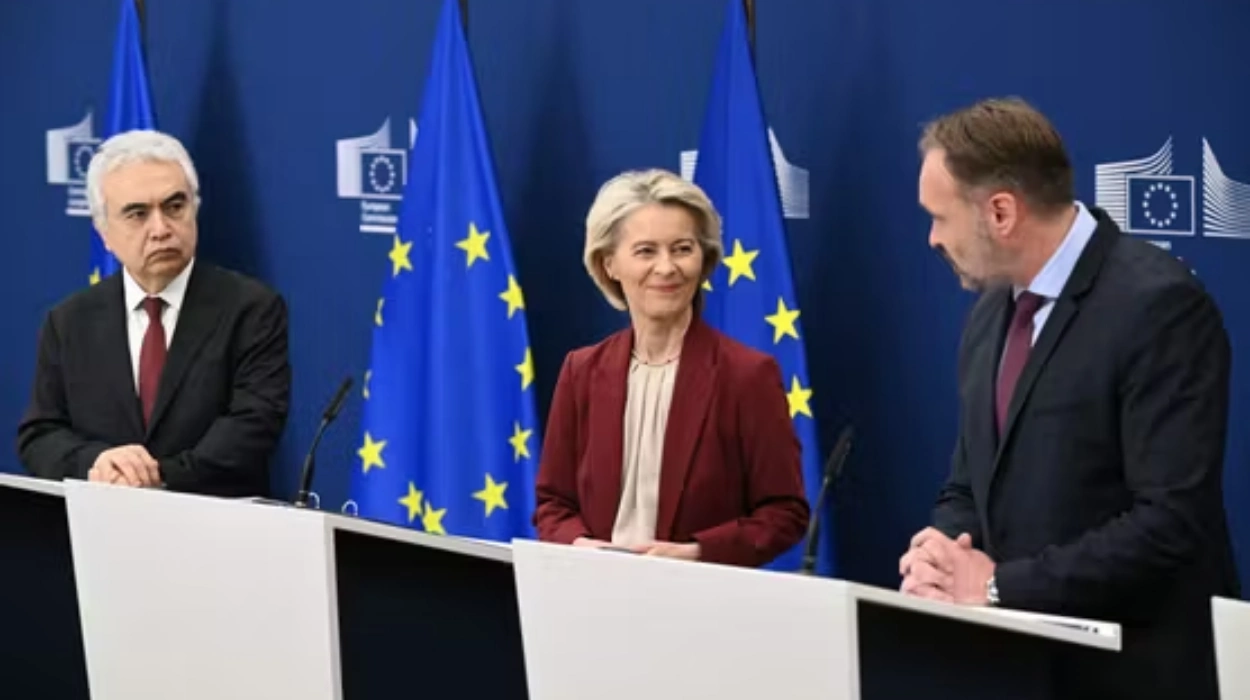
The European Commission announced the package on 24 February 2025 in Kyiv at the International Summit on the Support of Ukraine, marking the third anniversary of Russia's invasion. It facilitates full electricity market integration with the EU by spring 2027, together with Moldova, and advances gas sector integration provided Ukraine expedites commitments on legal frameworks, regulations, and public service obligations.
Commission President Ursula von der Leyen stated that Europe will ensure Ukraine has a resilient, secure, and competitive energy system through increased renewable energy and full market integration. The support includes assistance for gas purchases via the €50 billion Ukraine Facility for 2024-2027, leveraging Ukraine's vast gas storages located near EU member states.
Additional elements cover investments adding up to 1.5 GW of renewable generation capacity, representing a 25% growth in Ukraine's renewables-based power. This addresses relentless Russian attacks that destroyed half of the country's energy infrastructure over three years.
Official Statements Highlight Integration Roadmap and Requirements
Ukrainian state media emphasised the long-term commitment needed for success.
UATV English said in X post,
“Ukraine EU energy integration: Ukraine to be fully integrated into the EU energy market by 2027, requiring long-term governance, investment, and daily work.”
Ukraine EU energy integration: Ukraine to be fully integrated into the EU energy market by 2027, requiring long-term governance, investment, and daily work. pic.twitter.com/h0PAY8TDua
— UATV English (@UATV_en) January 22, 2026
The European Commission detailed its unflinching support for Ukraine's energy resilience.
European Commission said in X post,
“Ukraine needs a fully resilient energy infrastructure, for today and for tomorrow. We are offering a new package to help Ukraine secure its energy system and enable its full integration with the European energy market by spring 2027.”
Ukraine needs a fully resilient energy infrastructure, for today and for tomorrow.
— European Commission (@EU_Commission) February 24, 202
We are offering a new package to help Ukraine secure its energy system and enable its full integration with the European energy market by spring 2027.
Unflinchingly, we #StandWithUkraine ↓
These communications underscore the mutual commitment to overcoming war-induced challenges.
Electricity Market Synchronisation Achievements and Next Steps
Credit: Adam Cohn, CC BY-NC-ND 2.0
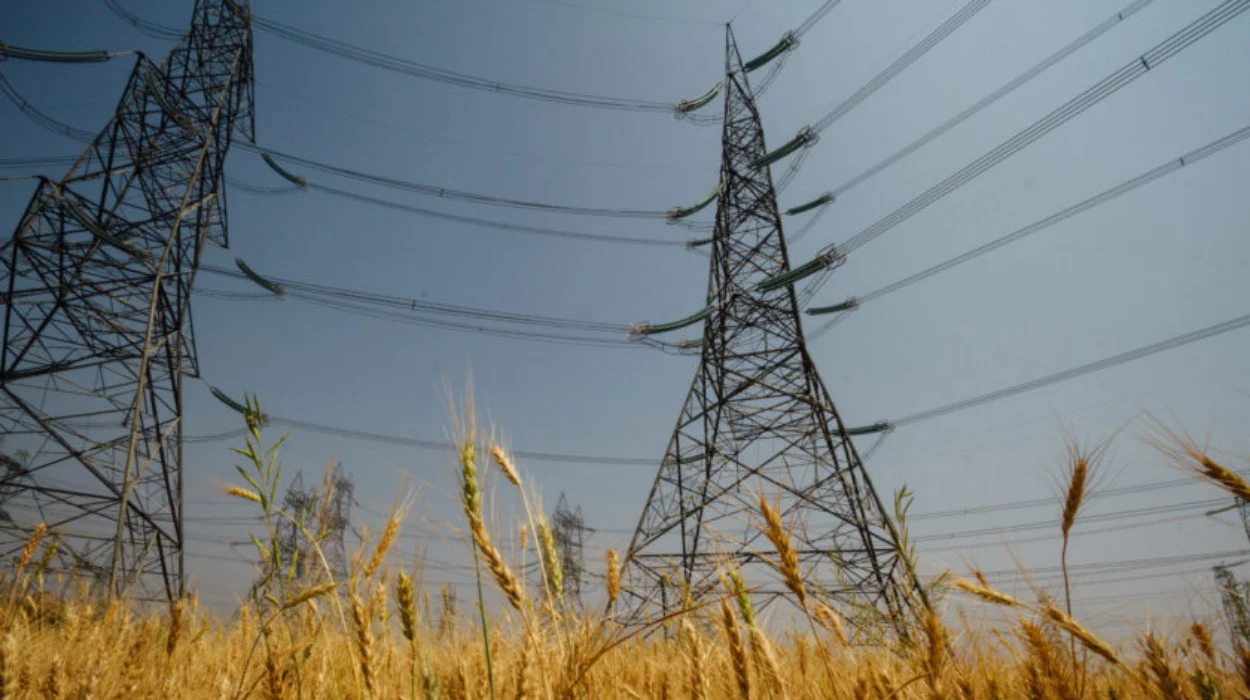
Ukraine and Moldova synchronised their power systems with the continental European network in March 2022, decoupling from the Russia-led IPS/UPS grid. ENTSO-E verified stable operations, enabling bidirectional flows with Poland, Slovakia, Romania, and Hungary totalling over 1,000 MW capacity.
The Commission requires Ukraine to implement Electricity Market Directive (EU) 2019/944 and Regulation (EU) 2019/943 for cross-border trading, including day-ahead and intraday market access via single platforms. Ukrenergo's certification under EU unbundling rules remains a mid-2026 milestone.
EU funding through the Connecting Europe Facility supports €1.2 billion in upgrades, such as the 400 kV Rzeszow-Khmelnytskyi line. The Regional Coordination Centre for System Security in Eastern Europe, launched in 2025, integrates Ukraine into EU adequacy assessments with 95% grid code compliance reported.
Gas Sector Reforms and Storage Utilisation Potential
Ukraine's gas transmission system operator GTSOU achieved EU-compliant certification in 2020, auctioning 60 bcm capacity via the Ukraine-EU Platform for 2025 and generating over $1 billion in revenues. ENTSOG included Ukraine in its 2025 Ten-Year Network Development Plan as an integrated member.
Reverse flows from EU storage reached 10 bcm in 2025 through Poland and Slovakia after Russian pipeline transit expired in 2024. Verkhovna Rada amendments align with EU Gas Directive 2009/73/EC, enforcing third-party access and approved tariff methodologies by the National Energy Regulatory Commission (NEURC).
Full coupling targets unified gas day declarations and platform bidding by 2027, enhancing regional supply security. Ukraine produces 20 bcm domestically annually, supporting import diversification.
Financial and Technical Assistance Under Ukraine Facility
The EU disbursed over €2 billion via the Ukraine Energy Support Fund, Union Civil Protection Mechanism, humanitarian aid, and proceeds from immobilised Russian assets. The new package channels gas procurement and €10 billion for clean energy transition, prioritising wind, solar, and grid flexibility.
KfW and EBRD provided €1.8 billion in loans for 2 GW distributed generation and infrastructure hardening. TAIEX missions and EU4Energy trained 5,000 specialists on REMIT transparency and ACER benchmarks since 2016. Horizon Europe funds 12 hydrogen and flexibility R&D projects.
The EU Civil Protection Mechanism supplied 100,000 tonnes of transformer oil, 500 MW mobile gas turbines, and 200 km of lines, restoring 6 GW amid 18 GW war damage.
Legislative Progress and Regulatory Harmonisation
 Credit: idea.int
Ukraine transposed 92% of EU energy acquis chapters 15 and 30 per Association Agreement Annex XXVII verification. Verkhovna Rada passed 15 laws in 2025 for network codes on capacity allocation and congestion management, introducing locational marginal pricing pilots.
NEURC methodologies match ACER guidelines for balancing tariffs and ancillary services. CEER peer reviews confirmed NEURC autonomy since 2023. Full integration awaits amended association protocols post-2027 market tests.
The Energy Community Treaty, ratified in 2011, enforces eight implemented network codes ahead of schedule. The energy sector shortened European Commission recommendation deadlines.
Infrastructure Projects and Cross-Border Expansions
Priority interconnectors include 750 km lines with Poland (1.6 GW), Slovakia (1 GW), and Romania (1.2 GW) through 2027, plus a 1 GW Black Sea Cable by 2028. ENTSO-E's Regional Investment Plan allocates €3.2 billion, with €850 million grants.
Synchronous condensers at 12 substations ensure stability. Cross-zonal capacity auctions project €500 million annual revenues by 2027 for expansions. ENTSO-E winter outlooks forecast 5 GW Ukrainian surplus for EU balancing.
Strategic Benefits for EU-Ukraine Energy Security
Integration diversifies EU supplies with Ukraine's 40 GW transit and 30 GW generation potential, mitigating 15 GW Central Eastern Europe deficits per ENTSO-E 2025-2040 reports. Gas Infrastructure Standard enables virtual hub participation akin to Title Transfer Facility.
The EU-Ukraine Energy Bridge convenes 15 member state TSOs monthly, with CESEC endorsing 2026 coupling tests. ACER's 2025 opinion confirms intraday readiness pending tariff convergence. World Bank validated TSO financial sustainability.
As of January 2026, Ukraine completed 88% of 109 EU measures, targeting 100% validation by December 2026 for provisional application.