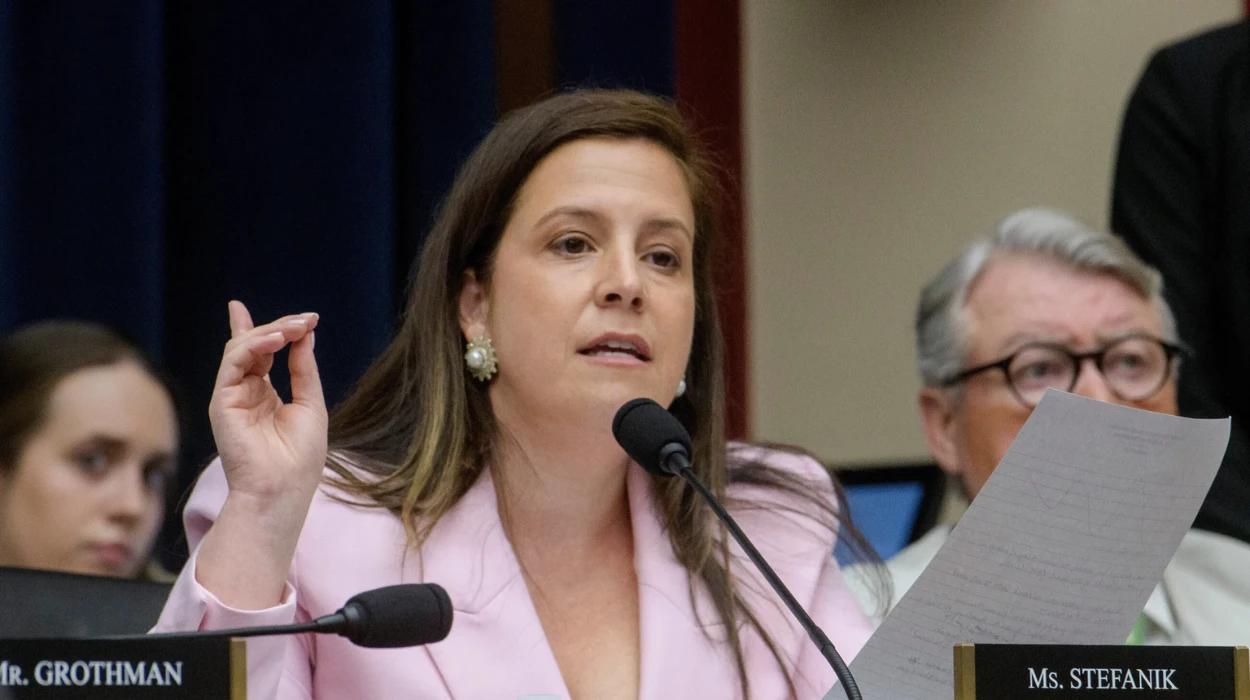

Elise Stefanik has emerged as a significant figure within
the Republican Party, holding the influential role of GOP Conference Chair
while representing New York. Her career trajectory and leadership have placed
her at the heart of contemporary American politics, often highlighting the
evolving dynamics of the Republican Party and its strategies in Congress. This
article explores her political journey, leadership style, and impact on
national legislation, offering a comprehensive look at her role without limiting
the discussion to temporary trends, ensuring enduring relevance.
Early Life and Political Rise
Coming from Upstate New York, Stefanik’s entrance into
politics was marked by a focus on grassroots engagement and strong advocacy for
conservative principles. Her educational background includes a degree from
Harvard University, reflecting a foundation of intellectual rigor she brings to
her political endeavors. Her initial victory to represent New York in Congress
was notable for demonstrating the potential for young representatives to make
significant impacts early in their careers.
Beyond her entry into politics, Stefanik has skillfully
navigated the complexities of congressional roles, progressively building a
reputation for her strategic thinking and adeptness in communication. Her
ability to connect with constituents and party members alike paved the way for
her eventual elevation to GOP Conference Chair, a leadership position
responsible for shaping party messaging and fostering unity within the House
Republican caucus
Communication Style and Media Strategy
Stefanik’s effectiveness as a party leader is closely tied
to her deliberate communication strategy, which combines disciplined messaging
with a strong presence across traditional and digital media platforms. She
frequently uses television, print, and social media to amplify Republican talking points, counter opposition narratives, and reinforce core themes such
as economic freedom, security, and institutional integrity. This consistent
approach helps maintain message cohesion within the party while making her a
recognizable figure in national political debates.
Her media strategy also illustrates how modern political
leaders leverage rapidly evolving information channels to reach both base
voters and undecided audiences. By engaging in realtime commentary, press
conferences, and targeted online content, she contributes to shaping public
perceptions of Republican priorities and responses to major national
developments. This ongoing visibility reinforces her status as one of the most
prominent voices within the conference.
Relationship With Constituents in New York
Despite holding a national leadership role, Stefanik’s
political identity remains rooted in her New York district, where constituent
service and local priorities play an essential role in her agenda. She
emphasizes issues such as rural economic development, infrastructure
investment, support for agriculture, and access to education and healthcare in
Upstate communities. This dual focus allows her to balance national party
responsibilities with the practical needs of households and businesses in her
home region.
Regular engagement through town halls, district events, and
outreach efforts reinforces her connection to voters and local stakeholders. By
highlighting how national policies affect her district, she positions herself
as both a voice for New York within Washington and a conduit for bringing
federal attention and resources back to her constituents
Role of the GOP Conference Chair in Party Leadership
As GOP Conference Chair, Elise Stefanik occupies a key
leadership position that blends organizational management with political
strategy. Her responsibilities extend to overseeing internal communications
within the House Republican caucus, ensuring that messaging remains unified and
consistent across diverse voices. This role involves close coordination with
various party committees and members to set legislative priorities, aligning
efforts to support the broader Republican agenda. By facilitating collaboration
and dialogue among House Republicans, Stefanik helps build consensus around
policy initiatives and legislative tactics, making her office an essential hub
for decision making within the party.
Strategic Influence and Party Cohesion
Beyond
administrative duties, Stefanik’s role demands diplomatic skill and
strategic foresight as she serves as the vital link between rank and file
representatives and senior party leadership. Managing this connection requires
balancing differing viewpoints and ideological factions that characterize
today’s GOP, particularly in a politically polarized environment. Stefanik’s
leadership style combines assertiveness with a willingness to engage various
conservative groups, aiming to maintain discipline and cohesion amidst internal
debates. Her ability to navigate intra party challenges and foster cooperation
has been critical for sustaining party unity and advancing legislative goals at
a time when ideological divisions within the Republican Party have intensified.
Legislative Impact and Policy Focus
Throughout her tenure, Stefanik has championed a range of
policy priorities reflecting her constituency’s interests and the broader
Republican platform. These include economic growth initiatives, national
security measures, and support for small businesses. Her voting record
indicates a consistent alignment with conservative fiscal policies, emphasizing
reduced government intervention and promotion of entrepreneurship.
In national security, Stefanik’s advocacy underscores the
importance of strengthening American defense capabilities and protecting the
country’s geopolitical interests. This stance resonates with broader concerns
about international stability and reflects priorities commonly endorsed by the
GOP. Additionally, her focus on local issues in New York, such as
infrastructure development and job creation, demonstrates her commitment to
balancing national and district specific concerns.
Influence on Party Dynamics and Public Perception
Stefanik’s tenure as a leader has coincided with significant
shifts in the Republican Party’s internal dynamics. Known for her communication
skills and media presence, she has played a role in shaping the party’s
narrative on key issues like election integrity, economic policy, and foreign
affairs. Her outspoken style often positions her as a prominent voice defending
the GOP’s vision in public discourse.
Her rise to prominence is also notable for breaking
traditional gender boundaries in congressional leadership roles, adding to the
increasing presence of women influencing major party decisions. This trend
reflects broader societal changes and the evolving nature of political
leadership in the United States.
Broader Context: Republican Leadership and Government Functioning
Understanding Stefanik’s contribution requires placing her
role within the broader mechanisms of American governance. The Republican
Conference Chair is essential in organizing party strategy, ensuring
legislative efficiency, and mediating between various interest groups. Her
leadership thus directly impacts how effectively the party pursues its goals
both legislatively and electorally.
Globally, governance structures rely on similar roles that
blend political strategy with administrative coordination, illustrating the
importance of such leadership in democracies worldwide. Efficient party
leadership contributes to political stability and responsive governance, which,
according to the World Economic Forum, are critical drivers of sustainable
development and inclusive growth across nations
Engagement With National Policy Debates
Beyond her formal responsibilities, Stefanik plays an active
role in broader national policy debates that extend beyond immediate
legislative votes. She frequently engages in discussions on the future of
American competitiveness, innovation, and security, contributing to the party’s
long term policy vision. Her participation in hearings, policy forums, and
public debates helps shape how Republican priorities are articulated on issues
ranging from technological leadership to national defense and global alliances.
This engagement underscores the way congressional leaders
can influence not only current lawmaking but also the direction of future
policy thinking. By positioning herself at the intersection of party strategy
and substantive issue debates, Stefanik reinforces her status as a key
architect of how Republicans present solutions to enduring economic and
security challenges.
Perspective on Governance and Institutional Role
Stefanik’s position also reflects an evolving Republican perspective on how Congress
should function within the broader system of American governance. She
frequently underscores the importance of legislative oversight, accountability,
and the separation of powers, framing the House as a critical check within the
constitutional structure. This view aligns with long standing conservative
concerns about concentrating authority in the executive branch and unelected
bureaucracies.
Her emphasis on institutional responsibility situates her
leadership within a wider conversation about democratic resilience and
effective governance. As debates over transparency, accountability, and public
trust continue, figures in party leadership roles like hers help define how
their institutions respond, adapt, and defend their relevance in a rapidly
changing political environment.
Evergreen Challenges and Future Outlook
While Stefanik’s career continues to evolve, the challenges
she faces are indicative of enduring themes in American politics: maintaining
party unity amid ideological divides, responding to shifting voter concerns,
and navigating the balance of power within Congress. These dynamics remain
central to understanding political leadership at both state and national
levels.
Moreover, statistics from institutions like the United
Nations highlight that public trust in political institutions globally
fluctuates based on the perceived effectiveness and transparency of leadership.
Therefore, the role of party leaders, including Stefanik, is crucial in shaping
public confidence and promoting democratic engagement.
American politics will likely continue to see leaders like
Stefanik playing influential roles in shaping legislation, party identity, and
policy debates. Her career serves as a case study in contemporary political
leadership, illustrating how strategic communication, policy focus, and
organizational skills combine to drive a political agenda.