
Key Points
- The
European Union remains deeply divided on whether to take action against
Israel amid its ongoing military operations in Gaza. - A
Dutch proposal for reviewing the EU-Israel Association Agreement over
alleged human rights violations garnered support from a majority of EU
foreign ministers, but consensus on direct action remains elusive. - In
recent months, the EU has called for an immediate ceasefire in Gaza and
the unconditional release of all hostages but has stopped short of
imposing sanctions or suspending trade agreements with Israel. - High
Representative for Foreign Affairs Kaja Kallas outlined up to ten possible
steps ranging from suspending the entire EU-Israel agreement to
restricting trade and imposing targeted sanctions on Israeli officials. - Several
EU member states, including Ireland and Spain, called for tougher
measures, while Germany and Hungary remained supportive of Israel,
blocking decisive action. - Humanitarian
organizations, former ambassadors, and international law experts urged the
EU to suspend cooperation with Israel, citing a “plausible risk of
genocide” and grave breaches of international law. - The
ongoing debate has triggered significant protests across Europe and
criticism from both pro-Israel and pro-Palestinian constituencies on the
EU’s perceived inaction and divided stance. - Recent
agreements between the EU and Israel promised increased humanitarian aid
access to Gaza, but aid groups reported limited tangible change on the
ground so far. - Despite
mounting pressure and accusations of inaction, the EU’s internal divisions
and the need for unanimous decision-making continue to stall substantial
policy shifts toward Israel.
The ongoing Israeli invasion of Gaza has laid bare deep
divisions within the European Union, as foreign ministers meet to debate
possible action—ranging from diplomatic censure to trade suspensions—over
allegations of severe human rights abuses in the Palestinian enclave. Despite
growing anger within the bloc and mounting calls for meaningful sanctions,
consensus remains elusive amid sharp disagreements between member states,
humanitarian concerns, and geopolitical calculations.
How Are EU Member States Responding to the Gaza Invasion?
As reported by Alex Morgan of Euronews, the debate over the
EU’s response to Israel’s military actions in Gaza reached a turning point in
May, when 17 out of 27 EU foreign ministers backed a Dutch proposal to review
the bloc’s trade and cooperation agreement with Israel. This proposal aimed to
assess whether Israel breached its human rights obligations under Article 2 of
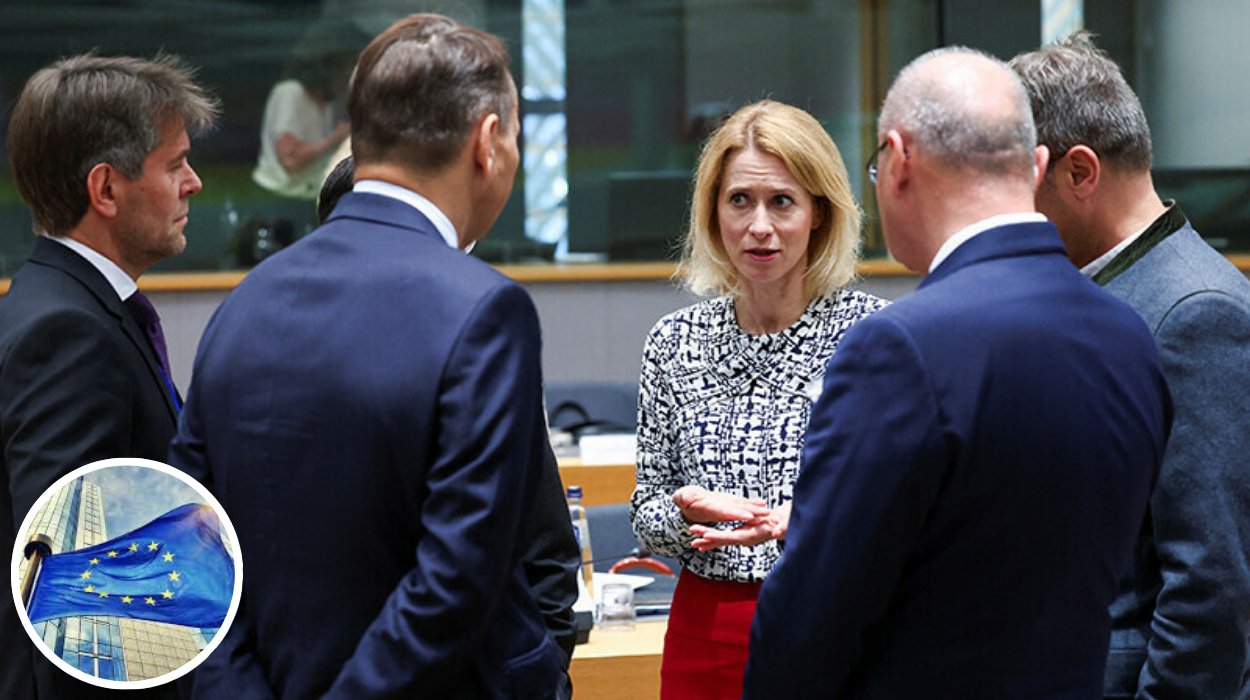
the EU-Israel Association Agreement. Kaja Kallas, EU High Representative for
Foreign Affairs, commented after the meeting in Brussels,
“It is clear from
today’s discussions that there is a strong majority in favour of a review of
article 2 of our Association Agreement with Israel… We will launch this
review and in the meantime, it is up to Israel to release more humanitarian
aid”.
The EU is Israel’s largest trading partner, accounting for
more than €45 billion in yearly trade. While the majority of members agreed to
initiate the review, the decision stopped short of suspending or terminating
the agreement—actions that have never before been taken in response to human
rights violations by a partner country.
What Are the Proposed Measures and Why Has the EU Not Acted?
According to a report by Samira Khan of Arab News, Kaja
Kallas has put forward ten potential measures, ranging from full suspension of
the association agreement, trade restrictions, and targeted sanctions against
Israel ministers, to an arms embargo and suspension of visa-free travel for
Israelis. However, as Kallas candidly told reporters before the latest
foreign ministers’ meeting,
“I can’t predict how the discussion will go… The
main focus would likely be on how the EU could leverage improvements for the
humanitarian crisis in Gaza”.
Despite mounting criticism from both within and outside the
bloc, diplomats acknowledge that there is “no critical mass for any move.”
Countries like Ireland and Spain are vocal in their condemnation of Israel’s
actions, but Germany, Hungary, and others remain staunch advocates for
continued engagement with Israel, contributing to the standoff.
How Many Civilians Have Been Affected According to Reports?
As detailed by Arab News and confirmed by multiple sources
including Euronews and human rights organizations, the humanitarian costs in
Gaza are severe. Since the start of Israel’s military operations in response to
Hamas’s October 7 attacks, over 57,000 people have been killed in Gaza,
according to figures from Gaza’s Ministry of Health, while hundreds have died
trying to access food and aid. Accusations of excessive force, attacks on
hospitals, civilian infrastructure, mass displacement, and the deliberate use
of starvation as a weapon have been levied by rights groups and some EU bodies.
In an open letter obtained by Euronews, 27 former EU
ambassadors—including Sven Kühn von Burgsdorff and James Moran—called the
response of Israel to the October 7 attacks “indiscriminate and completely
disproportionate,” further noting, “We note that the International Court of
Justice in its provisional orders issued last year concluded that there is a
plausible risk of genocide”.
What Are NGOs and Former Diplomats Demanding?
Amnesty International, in a recent public letter addressed
to the EU’s High Representative Kaja Kallas and foreign ministers, urged the
immediate suspension of the EU-Israel Association Agreement, stressing:
“The
agreement promising entry of aid into Gaza must not be an excuse for inaction.
Under the EU-Israel Association Agreement, ‘respect for human rights’ forms ‘an
essential element’ of cooperation—it is abundantly clear that Israel is in
breach of its obligations, and the Agreement must be immediately suspended”.
This sentiment was echoed by rights experts and several EU
countries, notably Ireland, Spain, Belgium, Luxembourg, Slovenia, and Denmark,
who argued that any further delay “will be counted in deaths and displacement,
and will undoubtedly be interpreted by Israel as a green light to continue”
current policies.
Why Has the EU Failed to Agree on Sanctions or Strong
Measures?
Rosa Balfour of Carnegie Europe described the dilemma
succinctly, noting the EU’s split among governments with varying levels of
historic, economic, or political ties to Israel. She pointed to public protests
across Europe, the split between government policy and public opinion, and the
challenges of forging a united front when each country’s security concerns and
historic responsibilities are so distinct. Balfour wrote,
“The Gaza war has
confirmed that the Israeli-Palestinian conflict is the EU’s most divisive
foreign policy and security issue. Germany, because of its past,
unconditionally supports Israel. Ireland, the most pro-Palestinian state in the
EU, wants a ceasefire. These polarizing divisions have several security
implications for Europe”.
Has the EU Secured Any Concessions from Israel?
As reported by Jack Partridge of Euronews, EU diplomacy has
recently focused on improving the humanitarian situation in Gaza. High
Representative Kaja Kallas announced a deal with Israeli Foreign Minister
Gideon Saar to increase entry points for food and essential supplies, promising
“significant steps” to ease the suffering of Gaza’s two million residents. Kallas
commented Monday,
“We see some positive signs when it comes to border crossings
open… reconstructing electricity lines, providing water, also more trucks of
humanitarian aid coming in… But the situation in Gaza remains catastrophic”.
Diplomats confirmed to Euronews that aid distribution would
occur through coordination with the UN, with additional oversight to prevent
diversion to Hamas. There was also mention that the recent agreement might
include redeployment of the EU Border Assistance Mission for the Rafah Crossing
Point, signaling a further attempt at meaningful intervention.
However, skepticism remains high among humanitarian
organizations and aid workers on the ground. Reports from Le Monde’s Michael
Vincent emphasize that despite official announcements, “aid groups are
struggling to see any tangible effects from the agreement” and the humanitarian
catastrophe continues.
Why Hasn’t the EU Suspended Its Agreement With Israel?
As explained in a detailed analysis from The Conversation,
while the EU’s response to Russian aggression in Ukraine showcased its ability
to implement tough sanctions, the same resolve has been absent regarding Israel
due to internal splits and the requirement for unanimous decisions. “The
severe humanitarian crisis in Gaza… necessitates decisive action from the
global community… If [the EU] aims to safeguard Palestinian lives and
establish itself as a consistent and credible global player, it must align its
values with its actions and impose significant sanctions on Israel,” the piece
concludes.
What’s Next? Will the EU Take Further Action?
With a follow-up on the review and potential sanctions
delayed for further discussion next month, the EU’s divided path continues.
Internal documents and classified assessments—according to Al Jazeera—suggest
that assessments of Israel’s conduct remain under wraps and action, if any,
will be put off pending more talks. As quoted by Michael Martin, Ireland’s
leader, in Al Jazeera: “Europe’s inability to pressure Israel to stop the
continuing slaughter of children” is a source of deep frustration for countries
advocating stronger action.
As the crisis deepens, diplomatic wrangling continues in
Brussels, and both critics and defenders of Israel’s policies anxiously await
the outcome of the EU’s internal deliberations.