
Summary
- US
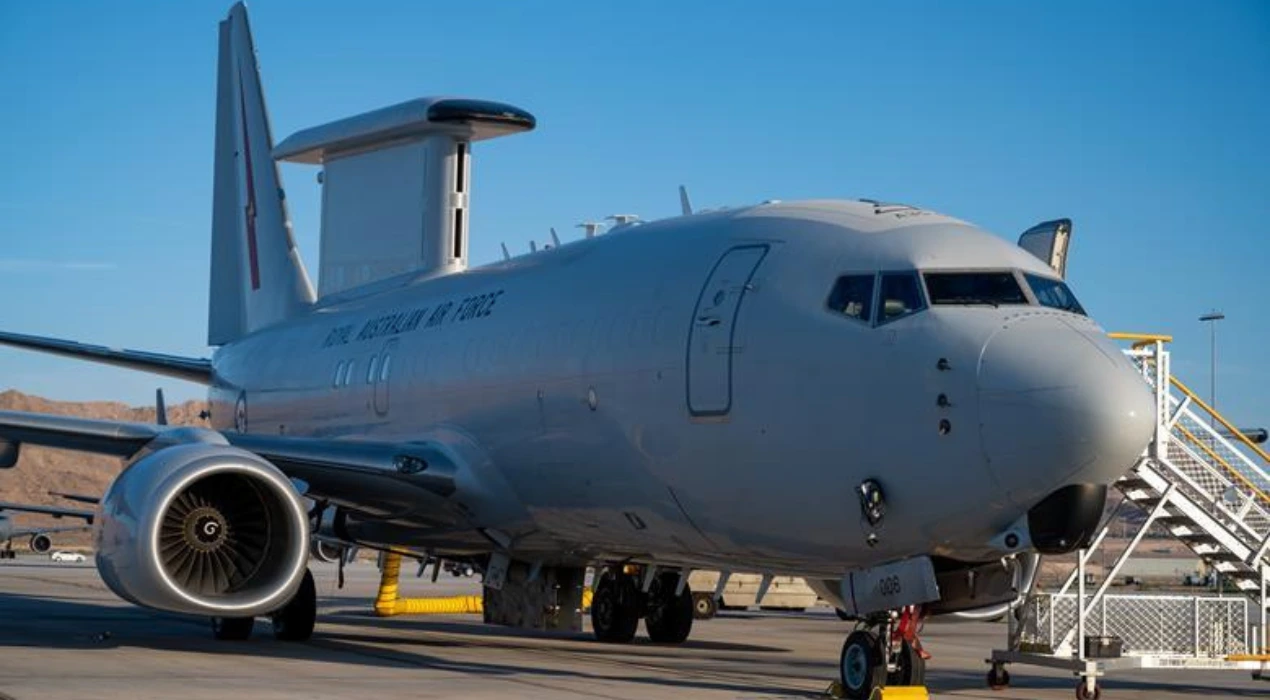
Congress may save Boeing’s E-7A Wedgetail program. - The
Pentagon under the Trump administration sought to cancel it. - Draft
defense bill prohibits terminating E-7A production.
Despite the fact that Trump Administration defense officials
have openly voiced doubts over the Boeing airborne early warning and control
(AW&C) jet, Congress seems ready to overrule them.
The Pentagon would not be allowed to end its E-7A fast
prototyping program with Boeing or try to stop producing the airborne early
warning and control fighter, according to a provision in a draft version of the
United States’ annual defense authorization bill.
“None of the funds authorised to be appropriated by this act
or otherwise made available for fiscal year 2026 for the Department of Defense
may be obligated or expended to terminate the mid-tier acquisition rapid
prototype contract for the E–7A aircraft; or to terminate the operations of, or
to prepare to terminate the operations of, a production line for the E–7A
aircraft,”
the text reads.
The US defense agency was later renamed the Department of
War by the Trump Administration, although the old name still has legal force
because Congress did not approve the change.
Members of the US Senate and House of Representatives are
gathering to finalize the most recent NDAA, which is used by Congress to
influence Pentagon policy but does not involve fiscal allocations.
The bill must be signed by President Trump in order to
become law.
NDAA laws are frequently used to limit the sale of military
equipment, such as airplanes, sometimes in spite of Pentagon officials’
protests.
House members said this year that they would attempt to
prevent the US Air Force from retiring specific Boeing KC-135 tankers, while
simultaneously requiring the service and Boeing to come up with a plan to fix
design issues in the more recent KC-46A refueller.
The Fairchild Republic A-10 attack jet’s desired retirements
have previously been vetoed by Congress.
How does the E-7A compare to other airborne warning systems?
The E-7A utilizes Northrop Grumman’s Multi-Role
Electronically Scanned Array (MESA) radar enabling 360-degree coverage with a
unrestricted field of view and active scanning capabilities focused additional
energy on specific threat indicators.
The coverage area of radar exceeds four million square
kilometers of area, giving it at least one competitor in range and resolution.
Greater resiliency and capabilities of airborne moving
target indicator (AMTI) compared to legacy AEW platforms.
The E-7A is designed using the commercial Boeing 737-700
base aircraft to continue an established global supply chain, while providing
lower operational and maintenance costs to the AEW community relative to
dedicated/specialized and business jet platforms.