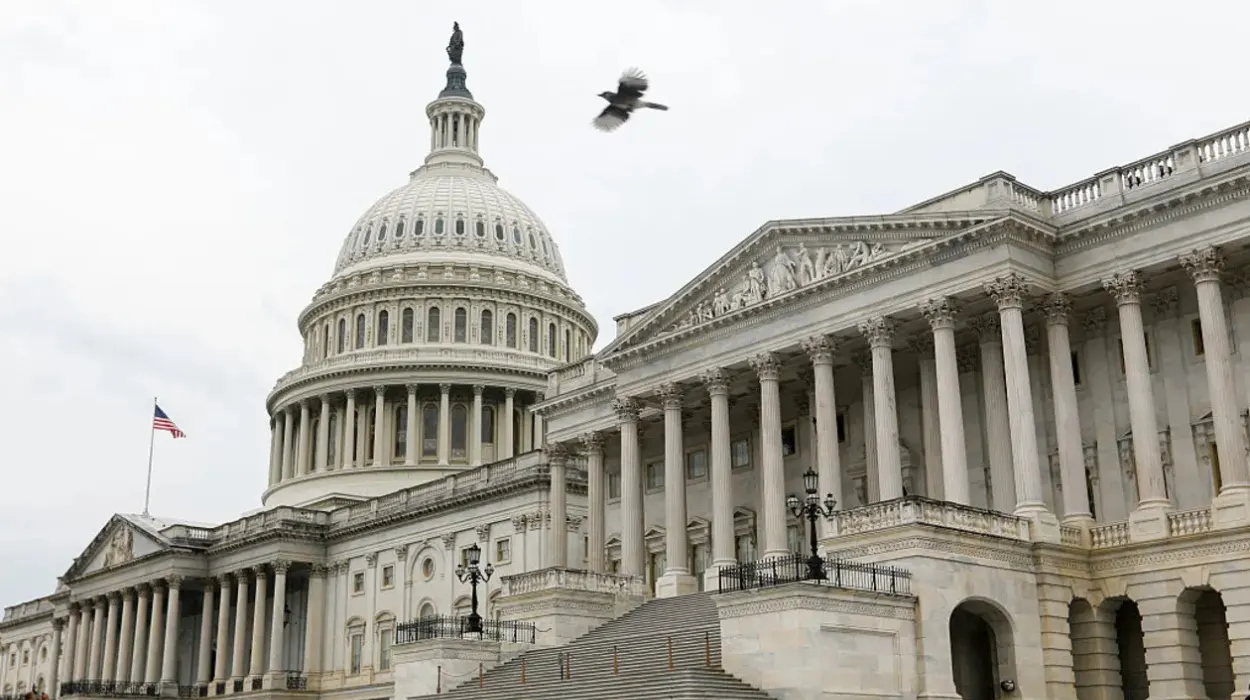

As of October 1, 2025, the United States is on the verge of
a government shutdown, following Congress‘s failure to reach agreement on a
crucial funding bill to operate the federal government for the new fiscal year.
Government shutdowns occur when Congress has not passed appropriations bills or
a temporary continuing resolution (CR), which allow for spending for federal
agencies and programs. Fiscal Year 2026 begins on October 1, and without an
approved budget, the federal government is required to shut down all agencies
and furlough many employees as it cannot operate without a budget. Essential
services–such as national defense, air traffic control, and Social
Security–continue as before, but significant disruptions and uncertainty
affect many other functions and services.
This is even more complicated because there is an underlying
standoff developed over serious partisan disagreements about budget priorities
that are intensified by the two parties’ different visions for healthcare
policy and funding for healthcare. The Republican-controlled House and Senate,
led by Speaker Mike Johnson and Senate Majority Leader John Thune, offered
bills focused on spending restraint, regulatory rollbacks related to the
Affordable Care Act (Obamacare) and proposed ending funding for healthcare
agencies. The Democrats, led by Representative and House Minority Leader Hakeem
Jeffries and Senator and Senate Minority Leader Chuck Schumer convened and
opposed the provisions, including calling for similar investments in health
services and continued subsidies in healthcare.
President Donald Trump has directly engaged in negotiations,
calling meetings with congressional leaders in a bid to prevent the shutdown.
However, remarks from key players like Vice President JD Vance and others indicate
pessimism, with some predicting an inevitable shutdown due to persistent policy
impasses. Historical context underscores the impacts of such shutdowns,
recalling the longest in history in 2018-2019, which lasted 35 days and caused
significant hardships for federal employees and government services.
Political dynamics behind the 2025 shutdown stalemate
The key political fight divides priorities between
Republicans with the majority with control of the House and the Senate versus
the Democrats in the minority, which have a seat at the table by virtue of the
filibuster rules in the Senate requiring 60 votes to pass legislation spending
legislation. Republicans have a slim margin in the Senate with 53 seats and a
large number of dissenting members which limits them from overcoming opposition
from the Democrats without some level of agreement. The Democrats have used
this position to request assurances for Medicaid, tax credits for expanded
health insurance, and maintaining funding for the Centers for Disease Control
and Prevention.
The health matter has become front and center with the
Democrats selling the argument of support for affordable coverage by the
general population, and Republicans framing the other argument as fiscally
conservative for the overall economic good and balance. The controversy has
largely stymied the advancement of appropriations bills and scheduled CRs, the
disagreements also extend to the length and level of inoculations.
Meetings convened between President Trump and congressional
leaders on September 29, 2025, signaled problems with the difference of
opinion, however, there appeared to be no agreement on a consensus. House
Speaker Johnson, and Senate Majority Leader Thune wanted to push through the
House passed getting funding to continue until November 21, and the Democrats
simply wanted healthcare reform. Comments made by President Trump to the media
admitted the real difficulty in reaching an agreement on the matter and made it
quite evident that that readiness for a discussion pre-opening remained out of
reach for earlier in the day.
Internal party dynamics also influence the deadlock. Some
Democrats have been emboldened by progressive base demands for firm negotiation
stances, especially after previous concessions on budget issues. Republicans
face pressure from conservative factions insisting on spending cuts and limited
concessions on entitlement programs. This bipartisan impasse extends beyond
budget specifics to broader ideological clashes over government’s role and
fiscal priorities.
Potential impact of the shutdown on government services and
public
The immediate closure of non-essential, unfunded federal
functions in all federal agencies and departments is the result of a government
shutdown. Federal employees who are considered non-essential are sent home and
do not receive pay until funds are approved. Employees deemed essential,
especially those involved in public safety and security areas, remain at work
but are often paid late, resulting in morale and operational issues.
Mrs. Jones and her family will have limited access to
services a government shutdown might cancel- they’re not going on vacation
while their citizenship application dangles without processing times, real
estate transactions will experience delays, and they will be uncertain as to
when, if ever, they will get their tax refund. The family could be affected
alongside small business owners who anticipate operational difficulties if
unemployment statistics or consumer price index reports are delayed, as they
have experienced during past government shutdowns.
Medicaid and Affordable Care Act subsidies could also be
canceled if funding is rescinded or spending priorities are changed. Medicaid
enrollees and providers would be deeply worried about care continuity, while
airports and transportation would again face long delays because Transportation
Security Administration employees would have returned to work without pay.
The shutdown’s broader economic impact depends on duration
but carries risks of reduced consumer confidence, delayed government contracts,
and hindered regulatory oversight. Some analysts forecast that short-term
shutdowns have minimal long-term market damage; however, extended closures
could dampen economic growth and job market stability.
Current developments in congress and executive negotiations
As the deadline of October 1, 2021, neared, the Senate began
to plan votes on a string of continuing resolutions to maintain government
funding and avert shutdowns, but Democratic officials were still resolute in
opposition, arguing only unworthy fellow-travelers had been considered under
the new health and social programs. Senate Minority Leader Chuck Schumer
chastised Republican proposals as “divorced from reality,” while
House Minority Leader Hakeem Jeffries countered that Democrats were focused on
protecting “life-altering” health-insurance subsidies. Republicans
rejected Democrats’ requests for permanent funding proposals before agreeing to
a short-term proposal.
President Trump’s effort to unify Congress began with
bipartisan meetings with the congressional leadership, which included Senator
Schumer and Representative Jeffries, seeking some compromise between the
parties. Trump walked away from the meetings with little to no substantive
Republican proposals contributing to any outcome in negotiations, but his
comments afterward publicly embodied the divided state of the issue and
uncertainty with Trump asserting a shutdown was “likely,” and placing
the blame on Democrats for not being more flexible on spending. This kind of
political posturing is significantly challenging the quest for bipartisan
compromise rapidly.
Prominent party members from each side, such as Republican
Senator John Thune, indicated they were open to negotiations but reaffirmed
that conservatives were to be cautious around the negotiations, especially
regarding fiscal responsibility. Additionally, moderates on both sides of the
aisle were under extreme pressure from both sides to find a way to produce an
outcome amid vocal protests from conservatives and progressives in the
Republican or Democratic caucus. The combined demand/pressure of a conclusion
with the question of the government shutdown from the two parties influenced
the political and legislative landscape for the projective action, which will
also carry on interest as both party officials prepare carefully for the
midterm elections in 2026.
The legislative calendar and Senate filibuster rules add
procedural constraints, requiring careful coalition-building to pass temporary
funding. Congressional leaders debated possible short-term continuing
resolutions to buy time for longer budget negotiations, although such stopgap
measures often have limited political appeal.
Historical context and lessons from past shutdowns
Government shutdowns have proven to be a recurring issue in
the United States, with 20 having occurred since 1977, some lasting only a few
hours and others lasting over a month. The shutdown that gained the most public
attention lasted for 35 days, from late 2018 to early 2019, during President
Trump’s first term; this event clearly showed the extent to which government
shutdowns disrupt government functioning, participants in the federal workforce,
and the economy. The 2018-2019 shutdown was particularly harmful, as hundreds
of thousands of federal employees missed pay checks during the closure, many
who relied on food banks and other emergency assistance programs just to meet
their daily needs. While government agencies were shut down, regulatory work
was stalled (including essential scientific research and regulatory enforcement
action), leading to a backlog of work and delays that had future repercussions.
Considering this history, timely and bipartisan legislative action to produce a
continuing resolution, potential appropriation bill, or omnibus appropriations
is essential to minimize potential adverse impacts. The current situation for
shutdown in 2025 raises some of the same concerns for unreliable government
functioning, human costs, and economic costs, which have led analysts and
policymakers to warn Congress to reach an agreement so that their dismissive
behavior does not result in significant human and economic costs.
The shutdown also reflects more systemic challenges within
the U.S. budgeting and appropriations cycle, where partisan conflict frequently
stalls the passage of spending legislation. Competing priorities between
political parties, often tied to larger ideological debates over healthcare,
defense, and social programs, contribute to the repeated impasses. Despite
recurring shutdowns, legislative reforms like biennial budgeting—intended to
stabilize federal financing—and automatic continuing resolutions to prevent
funding gaps have struggled to gain sufficient support and thus remain
unrealized. This entrenched polarization complicates budget negotiations and
heightens the risks of future shutdowns.
A government shutdown directly impacts millions of Americans
by halting non-essential government services and placing hundreds of thousands
of federal workers on furlough without pay. According to the Congressional
Budget Office and other analyses, a shutdown that lasts more than a few days
can reduce economic output by 0.1% to 0.4%, depending on duration and severity.
Crucially, in early October 2025, approximately 750,000 federal employees face
furlough daily, including many in agencies that provide critical public
services. Essential services related to national security and safety—including
air traffic control, military operations, and Social Security benefit
payments—continue but often with delayed paychecks, causing financial strain
for workers.
Economic repercussions ripple beyond immediate government
salaries. National parks and federal museums face closure, delaying tourists
and reducing local revenues. Social programs like the Supplemental Nutrition
Assistance Program (SNAP) and the Women, Infants, and Children (WIC) program
risk funding shortfalls that threaten vulnerable populations’ wellbeing. The
pandemic-era disruptions exacerbated these challenges, underscoring the
critical role of uninterrupted government services. Additionally, natural
disaster response funds and infrastructure projects encounter delays, impacting
recovery efforts and economic stimulus. Mortgage lending slows as the National
Flood Insurance Program halts new policies, complicating home financing at a
vulnerable time for real estate markets.
Shutdowns can lead to decreased confidence amongst consumers
and investors. The Bureau of Labor Statistics stops providing data, leaving
financial markets and policymakers without key economic data, specifically
employment data. This is troubling especially when the Federal Reserve is
trying to adjust monetary policy to address inflation and growth – there are
less data available and less certainty. Historically, markets may react to
relatively short-term shocks, but concern comes if the uncertainty is prolonged,
meaning businesses may not invest in growth or may slow growth further (e.g.
the 2013 shutdown where decreased government consumer spending combined with
lower private-sector hiring contributed to small decreases in economic growth).
Although shutdowns can be political spectacles, they generally do not have
significant effects on the macro-economy. However, the 2025 shock comes at a
potentially bad time given the already vulnerable economic recovery.
Despite economics, the social and psychological impacts on
federal workers is significant. When workers are furloughed, financial
insecurity and added stress mount, given uncertainty of returning to work and
backpay. Some federal workers have to rely on food banks or emergency
assistance, while some seek part-time jobs to make up the money they lost or
maintain their living standards. Federal “essential” workers (like
TSA agents or emergency responders) still work, but without immediate pay. This
only traumatizes morale and disrupts workflow. Frequent shutdowns could
negatively impact the federal government’s ability to hire and maintain a
sustainable workforce, which will decrease the quality of workers and services
in the long run.
Political negotiations prior to shutdowns are characterized
by partisan strife and usually revolve around disputes over policy. One of the
primary disagreements in 2025 has been over healthcare funding, particularly
around continued protection for Affordable Care Act subsidies and Medicaid. The
Republicans are looking for the spending restraint that comes with rolling
subsidies back in government funding, while Democrats are more inclined to
maintain, if not expand, healthcare access for people. These battles over
healthcare are not only between the Appropriations Committee members, but they
have also influenced discussions on appropriating funding levels for critical
health agencies such as the Centers for Disease Control and Prevention (CDC)
and the National Institutes of Health (NIH), whose budgets relate to public
health preparedness and develop solutions.
The congressional leaders are bound by procedural mechanics,
especially the Senate requirements on filibusters which necessitates 60 votes
to appropriate funds. The Republican majority in the Senate is often hard
pressed to obtain bipartisan agreement, while Democrats have a veto that
contributes to public deadlock. The congressional calendars put pressure on
everyone to act quickly so that services do not have gaps in funding, but
political interests incentivize hardening party lines in anticipation of
advantage in blame.
In addition to the political implications of what Trump says
directly to congressional leaders in meetings to obtain compromises, these
statements generate more political theater. Trump also raises the likelihood of
criticism when he tweets, speaking of “irreversible consequences,” or
when he accepts an accidental job as the scapegoat for bad legislation. His
role in the complexity of the bipartisan negotiation process during the
shutdown situation continues to weigh on the congressional dynamic, especially
executive-legislative dynamics, as presidents continue to establish roles.
Historically analyzing shutdowns gives us good lessons.
Previous shutdowns caused millions of Americans problems and inhibited the
economy’s growth but were ultimately concluded with negotiations and
compromises. The 2018-2019 shutdown was very costly, economically and socially,
but proved the necessity for legislative reform. While examples of reform aimed
at ensuring those kinds of disruptions (by ensuring, for example, that an
automatic continuing resolution or biennial budgeting were accessible) have
been reintroduced directly after the disruptions to the federal government,
such reforms have been rejected by the political class. The repeated
disruptions emphasize systemic flaws in not only federal governance but federal
budgeting.
The 2025 US government shutdown represents a major test of
bipartisan governance in an era almost completely defined by partisan decline.
Regardless of the immediate issue of funding cessation, the consequences of
shutdowns, economically, socially, and functionally, will last long after they
end, especially for millions of Americans and vital sectors impacted. The best
solution for a complete resolution of a shutdown is for the political class to
be unified and willing to put the national interest ahead of any other
interests. A different, more damaging, scenario is to let the government stay
in a prolonged shutdown mode (that cannot be quickly resolved) and further
compound economic fragility and endanger federal employees and ultimately the
trust of the public in institutions. The tensions surrounding government roles
and priorities, funding, and fiscal responsibility that emerge from the government
shutdown will shape American politics and governance in following years.