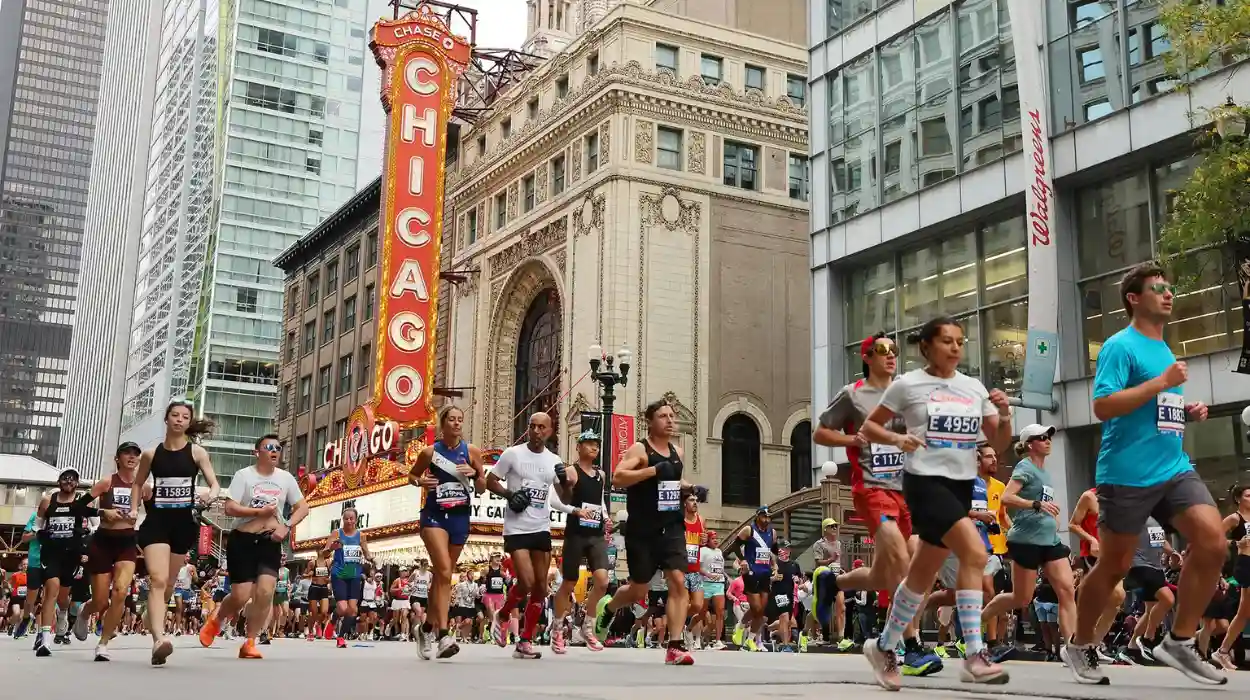

The Chicago Marathon is one of the most prestigious and
well-attended marathon events in the world. First held in 1977 as the Mayor
Daley Marathon, it quickly grew into a major athletic event, drawing thousands
of runners and spectators in its inaugural year. Its rise coincided with the
running boom in the United States during the late 20th century, and Chicago
became a central stage for both amateur and elite marathon running.
Over the decades, the Chicago Marathon has evolved into the
second largest marathon globally after the New York City Marathon, regularly
attracting approximately 40,000 to 50,000 finishers and hundreds of thousands
of spectators.
The significance and popularity
The 2024 edition surpassed 52,000 finishers, underscoring
its enduring popularity and significance within the World Marathon Majors, a
series comprising six of the largest marathons worldwide. The Chicago Marathon
is celebrated for its community spirit, elite competition, and as a qualifying
race for other major marathons such as Boston.
The event is a critical platform for athletic excellence,
charitable fundraising, and city-wide celebration, showcasing Chicago’s diverse
neighborhoods and urban landscape. The marathon’s flat and fast course attracts
runners aiming for personal bests and record times, making it a favored race
for world-class marathoners.
It also serves as
an accessible goal for recreational runners, creating an inclusive environment
that blends competitive sporting achievement with community participation. The
Chicago Marathon’s history reflects decades of growth in the sport of distance
running and exemplifies the integration of athletic ambition, urban culture,
and philanthropic endeavor.
Date and course details of the 2025 Chicago Marathon
The 2025 Chicago Marathon is scheduled for October 12,
within the typical early autumn timeframe that provides favorable running
weather. The race traditionally starts and finishes in Grant Park, a central
and iconic public space in downtown Chicago offering grand scenic views and
ample spectator facilities. The course is renowned for its flat terrain, an
average elevation of approximately 600 feet above sea level with a modest net
elevation gain of only 243 feet, making it optimal for fast times and record
attempts. The route traverses a circuit around Chicago’s diverse neighborhoods,
including the North Side, West Side, and South Side communities, enabling
runners to experience the city’s cultural richness as they compete.
One notable aspect of the course is “Mount Roosevelt,” a
slight uphill near the 26-mile mark on Roosevelt Road, posing a final challenge
before finishing on Columbus Drive. The marathon emphasizes safety and comfort,
featuring multiple hydration stations, medical tents, and amenities along the
way.
Beyond the race itself, the event includes a vibrant
festival atmosphere with entertainment stages, food vendors, and support
activities that contribute to an engaging spectator experience. This
combination of scenic urban engagement and athletic challenge helps maintain
the Chicago Marathon’s status as a top-tier race attracting both elite and mass
participation.
Qualification criteria for the 2025 Chicago Marathon
Qualifying for the Chicago Marathon involves meeting
specific requirements set by the race organizers, aimed at balancing
accessibility with the limitations of the course capacity. The marathon
enforces a participant cap near 53,000 runners, necessitating a well-structured
registration and qualification process to manage demand fairly.
For example, men aged 16-29 must have completed a marathon
in 3 hours and 5 minutes or faster, while women in the same age group need a
time of 3 hours and 35 minutes or less. Qualifying times increase progressively
with age groups, reflecting general trends in performance. Non-binary runners
have their own qualifying standards aligned closely with female times, ensuring
equitable access.
Besides time qualification, runners can gain entry by
participating in charity programs aligned with the marathon’s extensive
philanthropic partnerships. These programs enable runners who commit to raising
a minimum amount for designated charities to receive guaranteed race entry.
Legacy runners, who completed the marathon in previous years, may also receive
priority registration.
Registration procedures and entry deadlines
The Chicago Marathon opens its registration several months
before the event date, typically in late fall of the prior year or early the
same year, with detailed steps for completing the application process on the
official race website. Time qualifiers must verify and submit official race
results to be placed on the entry list, while charity and legacy runners
complete different registration pathways consistent with program
requirements.
Lottery registration usually has a specified entry window,
and applicants must register via an online portal, followed by a randomized
drawing to determine entry allocation for non-qualified runners.
Registration fees vary depending on the entry method and
registration date, with early-bird discounts and late registration penalties
often applicable. The event fee covers organizer costs such as timing
technology, security, medical support, race management, permits, and
participant amenities including finisher medals, race bibs, and post-race
refreshments.
There are refund policies with limited or no reimbursement
options due to high entry demand and planning constraints, making timely and
accurate registration critical. The race organizers provide detailed FAQs and
guidance for prospective runners regarding required documentation, payment
methods, and race-day procedures. Information regarding qualifying race lists,
charity affiliations, and participant codes are regularly updated, ensuring
transparency and accessibility.
Preparing for the Chicago Marathon: Training, support, and
community engagement
Successfully participating in the Chicago Marathon requires
extensive physical preparation, logistical planning, and community involvement.
Training plans are widely available tailored to various ability levels, emphasizing
gradual mileage increases, endurance building, speed work, and injury
prevention.
The event fosters a strong sense of community among runners
through pre-race expos, social media groups, coaching clinics, and local
running clubs. Many participants also engage with charitable causes linked to
the marathon, leveraging the event as a platform for social impact and
fundraising. Runners benefit from well-coordinated race-day facilities,
extensive volunteer support, and medical assistance along the course, ensuring
health and safety are prioritized.
Spectators play a significant role by lining the streets of
Chicago, offering encouragement and energy that fuels runners. The city
organizes related events such as pasta dinners, music performances, and award
ceremonies culminating the marathon weekend experience. Post-race recovery
zones provide physical therapy and nutritional support, helping runners
recuperate.
Overall, the Chicago Marathon embodies an amalgamation of
athletic excellence, community spirit, philanthropy, and urban celebration,
making it one of the world’s premier long-distance running events for both
elite athletes and passionate recreational runners.