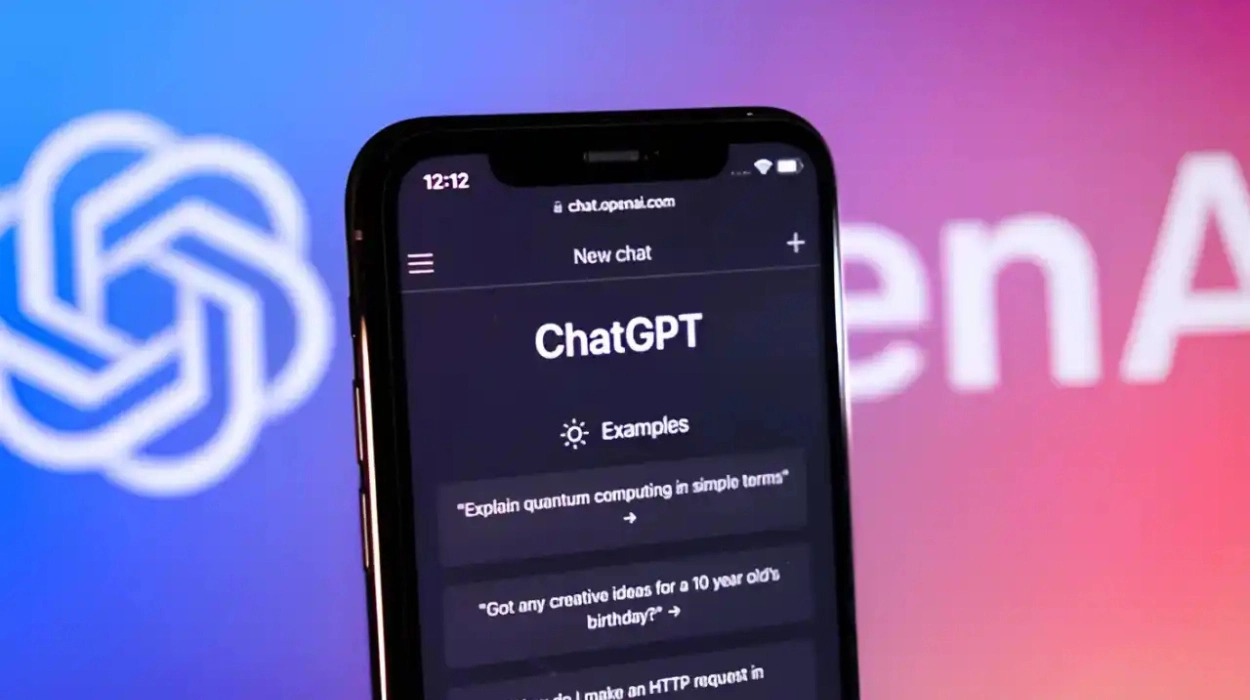

Artificial intelligence (AI) technologies such as ChatGPT
have become more ingrained in our habits and practices and shape how people can
access information, learn, and socialize. ChatGPT from OpenAI is a
conversational agent that is able to generate human-like text, and provide
assistance in education, mental health, and communication. More children and
adolescents are finding ChatGPT to be a valuable tool for homework help,
emotional support, and even social connection, which demonstrates the wide-reaching
influence that AI technology is already having in youth development.
This new, widespread influence brings with it opportunities
for empowerment and risks of placing these children and adolescents into
harmful situations. Children may seek information or emotional reassurances
from ChatGPT as it is their newly accessible and on-demand source for
information and interaction, particularly since children think of ChatGPT more
as a friend or confidant than a computer. Finding a new dynamic of safety in
this relationship will require a rethinking of how we allow positive, supportive,
and age-appropriate experiences of children and adolescents who are exposed to
AI unsupervised and even unknown by their caretakers.
Advantages of AI and ChatGPT in youth education and support
The benefits of AI-powered tools like ChatGPT for young
users are significant. ChatGPT’s ability to provide instant explanations,
step-by-step instruction in subjects like mathematics or science, language
learning assistance, and creative writing support democratizes educational
resources. This accessibility is particularly valuable for students who may
lack personalized tutoring or live in areas underserved by educational
infrastructure.
Furthermore, ChatGPT can offer a non-judgmental listening
ear when youth face personal difficulties, helping them articulate emotions or
access mental health resources. OpenAI has acknowledged that for many teens,
their interactions with ChatGPT often become an essential
outlet, especially when human support is unavailable. Moreover, AI can enable
parents and educators to monitor learning progress by tagging optimal
responses, helping identify areas where youth require additional help. These
advantages highlight AI’s potential to complement traditional educational and
psychological support systems, fostering self-directed learning and awareness.
Disadvantages and risks of AI use among minors
Even with these advantages, it would be wrong to ignore the
major risks of children using ChatGPT and similar AI. Consider, for example,
the potential of inappropriate or harmful content being generated by ChatGPT.
While OpenAI is constantly working to filter and moderate what goes into their
responses, any system cannot guarantee a total fail-safe. There have been
examples of ChatGPT producing bad or inappropriate advice about mental health
issues, and there were some concerning answers to questions about self-harm.
These incidents should trigger alarm bells about who can safely use an AI like
ChatGPT, without a trained clinician to mediate the experience and act as a
safety net.
The ongoing lawsuit in California concerning the 2025
suicide of a teenager who allegedly used ChatGPT to assist in that act has very
publicly highlighted these risks. Concerns also exist around other issues such
as privacy, data security, excessive screen time, and the risk of children
developing emotional dependencies on an AI, which can inhibit or cut off
healthy human relationships and interfere with normative development. Another
risk relates to the inherent nature of artificial intelligence, where the
product of the AI learns from enormous amounts of data on the internet, that
can include inherent biases or incorrect information in the data, that can
sometimes be unintentionally replicated in their responses, which is confusing
or misleading for young or vulnerable users. Additionally, unsupervised access
to AI could expose children to big amounts of misinformation, where incorrect
understanding is reinforced, or saddens experienced copings are shaped.
Introduction and features of ChatGPT’s parental controls
In September 2025, OpenAI announced the launch of a full
suite of parental controls for ChatGPT in light of concerns from families,
mental health advocates, and regulators alike about AI. The new parental
controls give parents or guardians the ability to monitor and control the AI
use of their children aged 13 and over to provide a safer experience for, and
control over, the AI user experience for this group. This comes after some
incidents emerging of the need for better protections targeted to young users
to manage the risks of emotional trauma and viewing inappropriate content.
One of the foundational aspects of these parental controls
is allowing parents to link their ChatGPT accounts to their children’s
accounts, securing the ability to gain a supervised account and use the AI in
this way. Through this linking, parents will be able to see the interactions
and set in accordance with the kids’ age. OpenAI included default content
guidelines in ChatGPT for those under the legal age with what they call
“age-appropriate model behavior rules” that govern how the AI operates.
What the age-appropriate rules aim to do is make even one meeting lower age
users are getting answers that are appropriate for their age & maturity
levels; this reduces the chance that vulnerable persons are exposed to harmful,
distressing, or inappropriate content.
Beyond content moderation, parents are empowered to restrict
or disable functionalities that may lead to excessive dependency or privacy
concerns. Notably, the parental controls allow the deactivation of ChatGPT’s
memory feature, which retains previous conversations to tailor personalized
responses and enhance user experience. While memory can improve interaction
continuity, its retention of sensitive pediatric conversations raises potential
privacy and psychological concerns. Parents can also turn off the saving of
chat history, thus limiting data accumulation and reducing the risk that
prolonged or harmful patterns are formed through repeated exposure or
reinforcement.
A distinguished component of the new controls is a real-time
alert system that notifies parents or guardians if the AI detects signs of
acute emotional distress during their child’s interaction with ChatGPT. These
indicators may include language or behavioral cues symptomatic of depression,
anxiety, suicidal ideation, or other forms of crisis. Upon detection, parents
receive a notification prompting a timely response, which could involve
intervention, counseling, or professional help. This feature does not function
as universal surveillance but focuses on moments where a real-world check-in
could significantly impact the child’s well-being. This targeted approach
respects adolescent privacy while prioritizing safety in critical situations.
To enhance protective measures further, conversations
flagged as sensitive or involving mental health crises are automatically
rerouted to specialized AI models with heightened safety protocols. Among these
is the upcoming GPT-5 reasoning system, engineered with advanced ethical and
empathic frameworks that prioritize supportive, non-triggering, and
professionally informed responses. These specialized models can provide safer
guidance and recommend appropriate resources, potentially directing users toward
human help or emergency contacts when necessary. This innovation reflects
OpenAI’s commitment to science-driven improvements and multidisciplinary
collaboration, working closely with psychologists, adolescent health
specialists, social workers, and human-computer interaction researchers to
ensure that the AI’s safeguards reflect current developmental and mental health
expertise.
The introduction of these parental controls will roll out in
phases over a 120-day period, during which OpenAI will gather data and feedback
to refine features continually. This iterative process underscores a commitment
to adaptively enhance protections as real-world usage informs systemic needs
and user experience. The rollout is supported by OpenAI’s Global Physician
Network comprising hundreds of medical professionals contributing to the
company’s capacity to respond appropriately to health-related questions and
distress signals detected during chats.
While these controls address many immediate safety
challenges, OpenAI acknowledges that they are but one component of a broader
ecosystem of child protection in AI environments. Comprehensive safety requires
ongoing collaboration between technology developers, healthcare providers,
educators, parents, and regulators. Education about AI’s capabilities, risks,
and ethical use should equip families and young users with digital literacy and
critical thinking skills essential for responsible engagement. Building
transparency into AI operations and decision-making processes supports
accountability and user trust, operating alongside technological safeguards.
OpenAI’s parental controls for ChatGPT mark a milestone,
embodying a shift from AI solely as a technological marvel to a socially
responsible tool prioritizing user welfare. It signals a recognition that as AI
systems embed deeply into personal and developmental spheres, design and
governance must evolve to embrace their social impact fully. This initiative
not only responds to tragic incidents linked to inadequate AI safety but also
anticipates emerging challenges as AI’s complexity and ubiquity grow.
Balancing AI’s promise and protection: The path forward
Co-created partnerships between developers of AI,
clinicians, educators, and policymakers should be the backbone of a holistic
framework necessary to ensure that AI is supportive of mental health and
wellbeing while averting and avoiding the risk of doing harm specifically to
some vulnerable populations, especially for young users. As AI tools like
ChatGPT become engaged with educational settings, in mental health care
provisions, as well as for informal social interaction, we must responsibly
usher in the necessary obligation to build these tools with safety, equity, and
ethics in mind. These partnerships with colleagues across various fields,
recognizing their expertise in psychology, the development of childhood and
adolescence, the future use of technology, education, and public policy, help
to build guidelines and best practices. Partnership work includes understanding
how AI should be built to identify signs of distress and cognitive immaturity,
to respond in an empathic way, and when necessary, to escalate cases to human
professionals. Partnerships must also consider the social contexts of how young
people use AI, as well as the digital equity realities in that work, inherent
cultural sensitivities, and the broader scope of needs and wants for all diverse
neurodiverse and disabled young people so we take an inclusive and equitable
approach that will not disadvantage any child.
Educating families and youth forms an equally crucial pillar
of protection in the digital age. Digital literacy programs are increasingly
necessary to teach children and teenagers critical skills not only for
navigating AI but for discerning credible information, recognizing bias,
maintaining privacy, and cultivating healthy relationships online. Parents
require resources and understanding of how AI works, what risks it poses, and
how to use parental controls effectively without fostering surveillance anxieties
or undermining trust with their children. Schools and communities have a role
in disseminating these lessons through curricula and workshops that combine
technological proficiency with emotional and ethical awareness. Empowering
young people with knowledge about AI’s capabilities and limitations enables
them to engage with these tools responsibly, reducing reliance on AI for
emotional validation alone and fostering balanced social development. This
educational framework should extend to policymakers and regulators who often
govern from a legal and macro perspective but benefit from appreciating AI’s
on-the-ground social impacts.
While parental controls are an important source of progress,
experts continue to insist that supervision mechanisms alone cannot solve the
challenges of AI integration in children’s lives. Holistic solutions must also
include accountability, requiring companies to report usage data and instances
of abuse to regulators and the public. Ethical design principles must be woven
into the creation of AI systems, ensuring fairness, nondiscrimination, and
safety before those systems could be deployed. Human-centered support
structures will continue to be important, allowing AI to support and enhance
human social structures but never replace them, particularly in mental health
contexts. The example of OpenAI working with international mental health
experts, youth development researchers, and ethicists demonstrates this point,
and illustrates the constant research and adjustment required to keep pace with
the AI developments.
The implementation of parental controls in ChatGPT indicates
an important crossroad in the introduction of AI technology within the context
of societal responsibility. It recognizes the dichotomy presented by the
amazing ability of AI to promote knowledge and companionship from a distance
while recognizing the positives are accompanied by risks that need to be
tracked and managed, particularly for young children at a time of life when
they are the most impressionable and are navigating formative years of their
lives. Moreover, the acknowledgement of parental controls indicates we are
maturing from earlier phases of AI development where the focus was on
capability to a stage that is potentially starting to embrace regulations,
safety, and ethical stewards.
The evolution of AI is fraught; the very technologies that
may dramatically improve access to knowledge, information, and connectivity
also pose new risks and potential harms that demand our vigilance. The parental
controls of ChatGPT illustrate this evolving tension. They are intended as a
real-world intervention to mitigate some risks related to the platform, at the
level of the individual family. At the same time, they also indicate a cultural
and technological transition of a longer-term character, in how our societies
will navigate the governance of AI. We can expect the momentum surrounding AI
to accelerate as AI increasingly permeates our homes and communities; what we
learn in this nascent moment of AI deployment will inform how we develop future
innovations that advance flourishing human communities as opposed to dependence
and precariousness.
Through the establishment of safety frameworks and
collaboration between stakeholder constituencies, OpenAI, their collaborators,
and their partners, even those that have been reported through the media, will
ideally provide the opportunity for other stakeholders from the AI industry and
policymakers to build upon. Together these are considerations that actively
reflect a grounded reality that AI cannot simply be piloted and rolled out; it
will, and must, require our continuous care and focus; an ethical duty and
responsibility to govern, adaptively, its impacts and consequences as more
potent tools become further complex and their impacts become increasingly
pronounced. As we prepare for a new point of human-technology relationships,
the introduction of parental controls reminds us that our understanding of
social responsibility needs to evolve with technology, and create a future
where AI nourishes the human potential with humanity and care; not a future
that emanates from a lack of awareness, resulting in harm.