
Key Points
- California
mayor publicly denounces President Trump’s immigration raids, labeling
them a “campaign of domestic terror.” - The
mayor’s comments reflect growing local resistance to federal immigration
enforcement under Trump’s second term. - The
statement comes amid a new wave of executive orders and intensified
immigration actions by the Trump administration. - The
mayor’s remarks highlight concerns about the psychological and social
impact of raids on immigrant communities. - The
issue is part of a broader national debate over immigration policy,
federal authority, and local autonomy. - The
mayor’s comments have sparked both support and criticism from various
political leaders and advocacy groups. - The
controversy underscores the tension between federal initiatives and local
governance in California and other states.
A prominent California mayor has fiercely condemned
President Trump’s latest round of immigration raids, describing the federal
actions as a “campaign of domestic terror” targeting immigrant communities. The
mayor’s statement, delivered at a press conference Tuesday, signals escalating
resistance from local officials to the Trump administration’s intensified
immigration enforcement efforts, which have become a defining feature of his
second term.
Why Did the California Mayor Call Trump’s Immigration Raids
a ‘Campaign of Domestic Terror’?
As reported by the editorial team at HotTopics, President
Trump’s second term began with a flurry of executive orders, many targeting
immigration policy and enforcement. The latest series of raids,
coordinated by federal agencies across multiple California cities, prompted the
mayor’s forceful response. In a public address, the mayor stated,
“These raids
are not just about law enforcement—they are a campaign of domestic terror
designed to intimidate and destabilize our communities.”
The mayor’s comments reflect a broader sense of alarm among
local leaders, who argue that the aggressive tactics are sowing fear among
law-abiding residents and undermining trust between immigrant communities and
local government.
How Are Trump’s Executive Orders Shaping Immigration Policy
in 2025?
According to HotTopics’ analysis of the top news stories of
2025, President Trump’s administration has prioritized rapid, high-profile
action on immigration since the start of his second term. The executive
orders have expanded the scope of deportations, increased funding for
enforcement, and reduced protections for undocumented immigrants.
The mayor’s denunciation is emblematic of the growing
pushback from California officials, who have long advocated for sanctuary
policies and greater local control over immigration matters.
What Has Been the Impact of the Raids on California’s
Immigrant Communities?
The mayor’s remarks were echoed by several city council
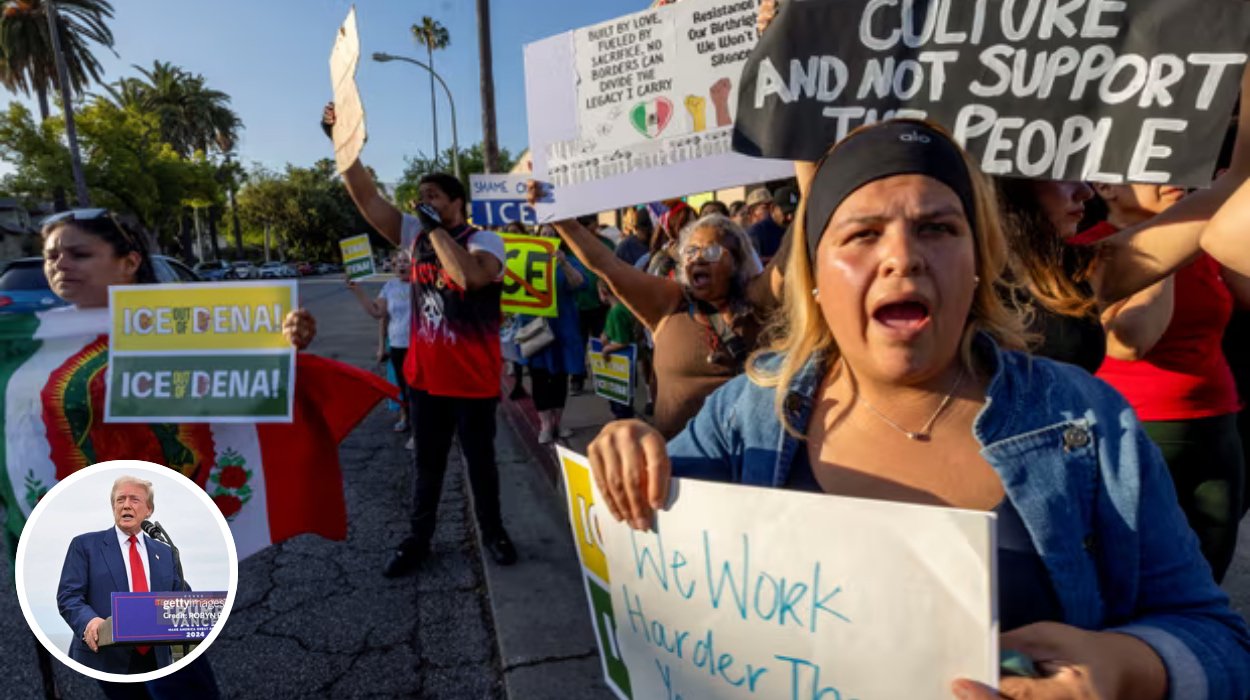
members and community advocates, who described scenes of heightened anxiety and
disruption in neighborhoods targeted by the raids. “Families are living in
fear. Children are afraid to go to school. This is not the America we want to
be,” said one council member during the press conference.
Immigrant rights organizations have documented a surge in
calls to their hotlines, with many residents seeking legal advice or reporting
encounters with immigration agents. Community centers and churches have opened
their doors to provide shelter and support for those affected.
How Are Federal and Local Authorities Responding?
Federal officials, speaking on condition of anonymity to
several media outlets, defended the raids as necessary for national security
and the enforcement of immigration laws. They emphasized that the operations
targeted individuals with outstanding deportation orders or criminal records.
However, local law enforcement agencies in several
California cities have reiterated their commitment to “community policing” and
have refused to cooperate with federal agents in non-criminal immigration
matters. This stance has placed them at odds with the Trump administration,
which has threatened to withhold federal funding from so-called “sanctuary
cities.”
What Are the Broader Political and Legal Implications?
The clash over immigration enforcement is intensifying the
already fraught relationship between California and the federal government. As
highlighted in HotTopics’ 2025 trends report, regional and local politics are
increasingly shaping national debates, especially on contentious issues like
immigration, climate policy, and public safety.
Legal experts note that the Trump administration’s approach
is testing the limits of federal authority and raising questions about states’
rights and the autonomy of local governments. Lawsuits challenging the
constitutionality of certain executive orders are already making their way
through the courts.
How Are Advocacy Groups and Political Leaders Reacting?
The mayor’s statement has drawn support from immigrant
advocacy groups, who argue that the raids constitute a form of state-sponsored
intimidation. “This is about more than immigration—it’s about civil rights and
the soul of our democracy,” said a spokesperson for a leading advocacy
organization.
Conversely, some Republican lawmakers and conservative
commentators have defended the president’s actions, accusing California
officials of undermining the rule of law and enabling illegal immigration.
What Is the National Context for These Immigration Raids?
California is not alone in its resistance. According to
ongoing coverage by multiple news outlets, mayors in several other major
cities, including New York and Chicago, have issued statements condemning the
raids and reaffirming their commitment to protecting immigrant residents.
The issue has become a flashpoint in the 2025 political
landscape, with both parties mobilizing their bases ahead of the next election
cycle.
What Are the Risks for Journalists and Media Covering This
Story?
As noted in PEN America’s report on the challenges facing
journalists, covering contentious issues like immigration enforcement has
become increasingly perilous in an era of disinformation and political
polarization. Reporters must navigate a landscape of competing narratives,
official secrecy, and community mistrust while striving to provide accurate,
unbiased coverage.
How Are Residents Coping With the Fallout?
Community organizations, legal aid groups, and faith-based
institutions have ramped up their efforts to provide assistance to those
affected by the raids. Hotlines, legal clinics, and emergency shelters are
being mobilized to address the immediate needs of families facing detention or
deportation.
Mental health professionals have also reported an uptick in
requests for counseling, as the psychological toll of living under the threat
of raids becomes more apparent.
What Happens Next?
The mayor has called for an emergency meeting with state
officials and urged the governor to take legislative action to protect
vulnerable residents. Meanwhile, advocacy groups are planning rallies and legal
challenges aimed at halting the raids and securing greater protections for
immigrants.
President Trump’s administration, for its part, has signaled
no intention of backing down, insisting that the enforcement actions are
essential to upholding the nation’s laws and securing its borders.
As the debate over immigration enforcement intensifies,
California’s mayoral condemnation of Trump’s raids as a “campaign of domestic
terror” marks a pivotal moment in the ongoing struggle between local autonomy
and federal authority. The outcome of this confrontation will have far-reaching
implications for the future of immigration policy, civil rights, and the
relationship between America’s cities and Washington, D.C.