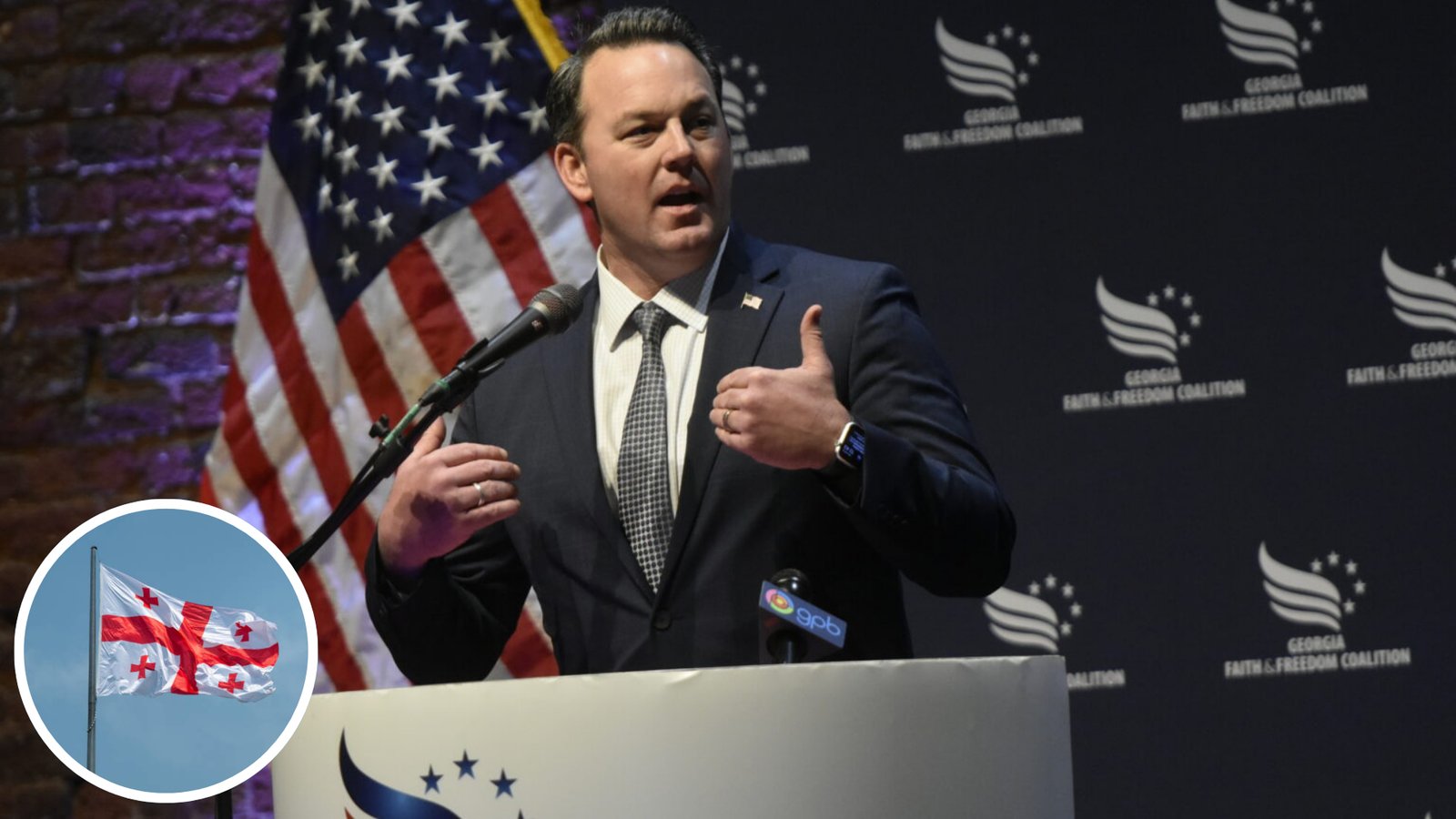

Key Points
- Lt.
Gov. Burt Jones has formally announced his candidacy for Georgia governor,
marking a significant escalation in the 2026 gubernatorial race. - Jones,
a Republican, is expected to be a central figure in what is anticipated to
be a highly competitive and closely watched contest. - His
campaign launch is likely to reshape the field, drawing attention from
both state and national political observers. - The
announcement comes amid a broader context of shifting political dynamics
in Georgia, a state that has become a battleground in recent election
cycles. - Jones’s
entry into the race follows months of speculation and positions him as an
early frontrunner among Republican candidates. - The
2026 gubernatorial election is expected to have significant implications
for the future political direction of Georgia.
Georgia’s 2026 gubernatorial contest has officially
entered a new phase as Lt. Gov. Burt Jones announced his candidacy, setting the
stage for a high-stakes and potentially transformative election in a state that
has become a focal point of national political attention.
Why Did Burt Jones Announce His Candidacy for Governor Now?
Lt. Gov. Burt Jones’s decision to formally enter the 2026
gubernatorial race comes after months of speculation regarding his political
ambitions. As reported by multiple media outlets, Jones’s announcement is
widely seen as a strategic move to solidify his position as a leading contender
in the Republican primary and to capitalize on his current visibility as
lieutenant governor.
Political analysts note that Georgia’s shifting demographics
and its recent role as a swing state have heightened the stakes for the
upcoming election. Jones’s early entry is expected to give him a crucial
advantage in fundraising, organization, and media attention, setting the tone
for what is likely to be a fiercely contested race.
What Is the Political Background of Lt. Gov. Burt Jones?
Burt Jones, a Republican, has served as Georgia’s lieutenant
governor since 2023. He has built a reputation as a staunch conservative and a
strong supporter of President Donald Trump. His tenure in state
government has been marked by advocacy for lower taxes, business-friendly
policies, and a focus on public safety.
According to reporting by CBS Evening News,
Jones has consistently aligned himself with the priorities of Georgia’s
Republican base, positioning himself as a champion of conservative values and a
critic of Democratic policies. His track record in office and his
connections within the state’s GOP establishment are expected to be central
themes in his campaign.
How Does Jones’s Entry Impact the 2026 Georgia Gubernatorial
Race?
The formal launch of Burt Jones’s campaign is widely
regarded as a game-changer for the 2026 gubernatorial race. As noted by Reuters
Institute for the Study of Journalism, the entry of a high-profile
candidate like Jones is likely to prompt other potential contenders to
accelerate their own campaign plans and could reshape the dynamics of the
Republican primary.
Political observers suggest that Jones’s candidacy will draw
significant attention from both state and national Republican leaders, many of
whom view Georgia as a critical battleground in the broader struggle for
political control in the South. His early announcement may also influence the
strategies of Democratic candidates, who will need to prepare for a well-funded
and organized Republican campaign.
What Are the Key Issues Likely to Define the 2026 Campaign?
Based on recent reporting from Democracy Now! and
other outlets, the 2026 gubernatorial race in Georgia is expected to focus on a
range of pressing issues, including:
- Economic
growth and job creation: Georgia’s economy has rebounded in
recent years, but concerns about inflation and income inequality remain
central to voters. - Education
policy: Debates over school funding, curriculum standards, and
parental involvement are likely to be prominent. - Public
safety and crime: Rising crime rates in some urban areas have
become a focal point for both parties. - Healthcare
access: The ongoing debate over Medicaid expansion and rural
hospital closures will be a key issue, especially in light of Georgia’s
diverse and growing population. - Voting
rights and election integrity: Following contentious elections in
2020 and 2022, the state’s voting laws and election administration are
expected to be hotly debated.
What Has Been the Reaction from Other Political Figures and
Parties?
The announcement by Lt. Gov. Burt Jones has elicited swift
responses from both Republican and Democratic leaders in Georgia. As reported
by CBS Evening News, several prominent Republicans have expressed
support for Jones’s candidacy, citing his leadership experience and
conservative credentials. However, some within the party are expected to
mount primary challenges, reflecting ongoing divisions within the Georgia GOP.
Democratic leaders, meanwhile, have criticized Jones’s
record on issues such as healthcare and voting rights, framing the 2026
election as a critical opportunity to build on recent gains in the state. The
Democratic field is still taking shape, with several potential candidates
weighing their options in light of Jones’s entry into the race.
How Does Georgia’s Recent Political History Influence the
2026 Election?
Georgia has emerged as one of the most closely watched
states in American politics, with recent elections marked by narrow margins and
intense partisan competition. The state’s shifting demographics—including a
growing urban population and increasing diversity—have contributed to its
status as a political battleground.
As noted by Democracy Now!, Georgia’s role in
the 2020 presidential election and subsequent Senate runoffs underscored the
importance of grassroots organizing and voter mobilization. The 2026
gubernatorial race is expected to build on these trends, with both parties
investing heavily in outreach and turnout efforts.
What Are the Next Steps in the 2026 Georgia Gubernatorial
Race?
With Lt. Gov. Burt Jones now officially in the race,
attention will turn to the formation of campaign teams, fundraising efforts,
and the rollout of policy platforms. Political analysts expect a crowded
Republican primary, with additional candidates likely to announce their
intentions in the coming months.
The Democratic field remains fluid, but party leaders are
expected to coalesce around a candidate who can appeal to the state’s
increasingly diverse electorate. Both parties are likely to focus on building
broad coalitions and energizing their respective bases in preparation for what
is expected to be one of the most consequential gubernatorial elections in
recent Georgia history.
What Is at Stake for Georgia and the Nation?
The outcome of the 2026 gubernatorial race will have
far-reaching implications for Georgia’s future direction on key policy issues,
as well as for the broader national political landscape. As the state continues
to play a pivotal role in federal elections, the governor’s office will be a
critical platform for shaping debates on voting rights, economic policy, and
social issues.
With Lt. Gov. Burt Jones’s entry into the race, the stage is
set for a high-profile and closely watched contest that will draw significant
attention from voters, activists, and political leaders across the country. The
months ahead are likely to see intense campaigning, robust debate, and a
renewed focus on the issues that matter most to Georgians and to the nation as
a whole.