
Summary
- Biden
created a transportation equity grant program three years ago. - Funded
projects improve access for disadvantaged neighborhoods. - Grants
support walkability, safety, and environmental remediation. - Over
130 communities across 41 states benefited from funding.
For a long time, they had been looking for financing to
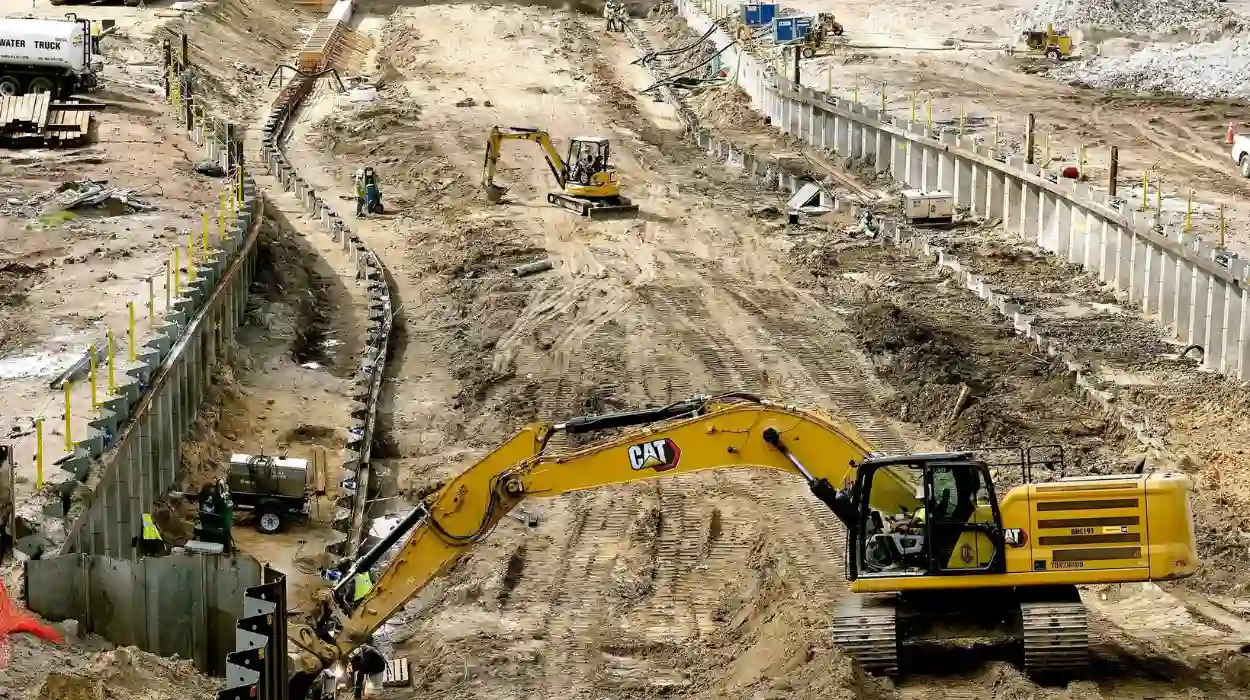
construct two underpasses to cross the interstate highway that splits the city
in two, causing persistent traffic congestion near two schools.
The administration later emphasized the importance of the
project in breaking “a vehicle dependency that is often disproportionately
borne by marginalized communities,” and local authorities applied for a
grant for it when the president of the United States promoted equity in
transportation initiatives.
They received $87 million from the Biden administration.
Next followed the Republican takeover of Washington and the
move by President Trump to eliminate “radical and wasteful government
D.E.I. programs.”
The Transportation Committee’s chairman, Representative Sam
Graves of Missouri, praised the rollback for “cutting wasteful Green New
Deal spending.”
According to federal statistics obtained
by The New York Times, financing was withdrawn for 55 projects in all, 19 of
which were supposed to be constructed in Republican congressional districts.
These featured bike and pedestrian routes, new underpasses
and overpasses, and the reconstruction of highways. Representative Aaron Bean’s
$147 million project to design and construct a 30-mile trail in Jacksonville,
Florida, and Representative Ryan Zinke’s $74.9 million project to rebuild a
highway in Missoula, Montana, as well as Representative Celeste Maloy’s project
in St. George, were the largest included in G.O.P.-held districts.
In recent months, Republican members of Congress have once
again aligned themselves with Mr. Trump’s ideological agenda in ways that might
potentially harm their own voters, as evidenced by the little-known
cancellations.
Additionally, last month, Republicans in Congress voted to
give the president the authority to revoke public broadcasting funding,
especially for stations that can serve as essential communication hubs in rural
areas, many of which are represented by the G.O.P.
Regardless of their partisanship or ideological
inclinations, state and local officials frequently bend to the president’s
wishes and goals when federal funds are available, and they may be swayed by
shifting political tides in the process. This is also reflected in the
transportation funding whiplash.
As the domestic policy bill moved through Congress,
Democrats on the House Transportation Committee were particularly upset that
Republicans had targeted the grants, pointing out that the money had benefited
both G.O.P. and Democratic districts.
“I’m unsure if my colleagues on the other side of the aisle
intended to rescind funds that help reduce road fatalities and make our streets
safer, or if the word ‘equity’ is so triggering because you think inclusion is
a bad word,”
Representative Marilyn Strickland, Democrat of Washington and a
member of the transportation panel, said at a committee hearing on the
legislation in April.
How would the proposed project change connectivity for
affected neighborhoods?
It would repair or eliminate barriers, such as highways or
poorly designed roads, that currently separate neighborhoods, making it safer
to connect pedestrian, bicycle, and transit connections across
communities.
The project would create streets that were more walkable,
bike-friendly streets; a multiuse trail and greenways that would provide
equitable transportation options, especially for underserved populations
without automobiles. The project would reconnect fragmented neighborhoods,
allowing for greater community cohesion, enabling residents to have greater
access and mobility to jobs, schools, health care and local businesses.
The introduction of new infrastructure improvements will
encourage safer active transportation overall, decrease injuries related to
traffic, and encourage healthier activities like walking and riding a bike. The
project engages residents through outreach and participatory planning allowing
the project to be shaped by local needs, while building pride and ownership in
the neighborhood.