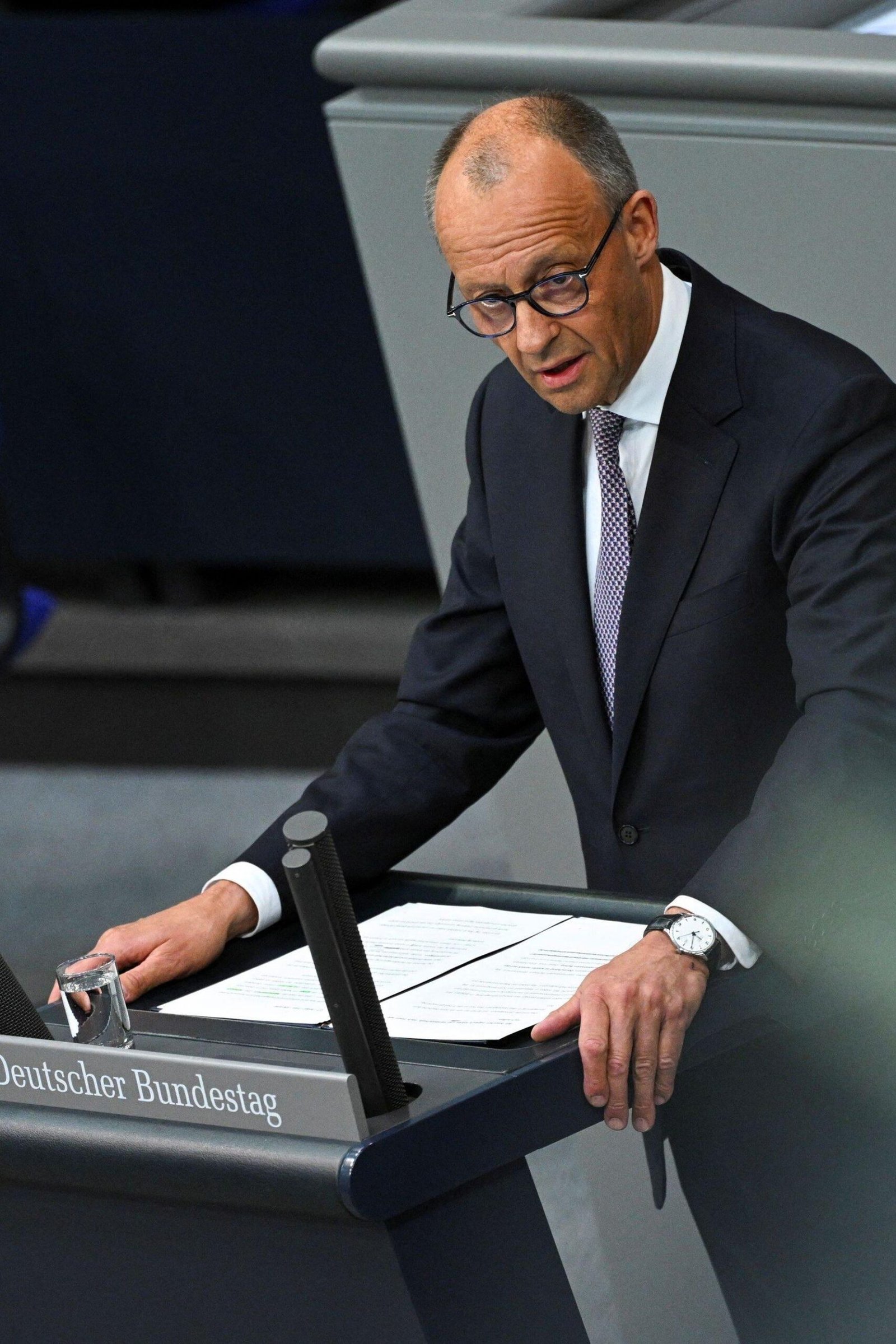

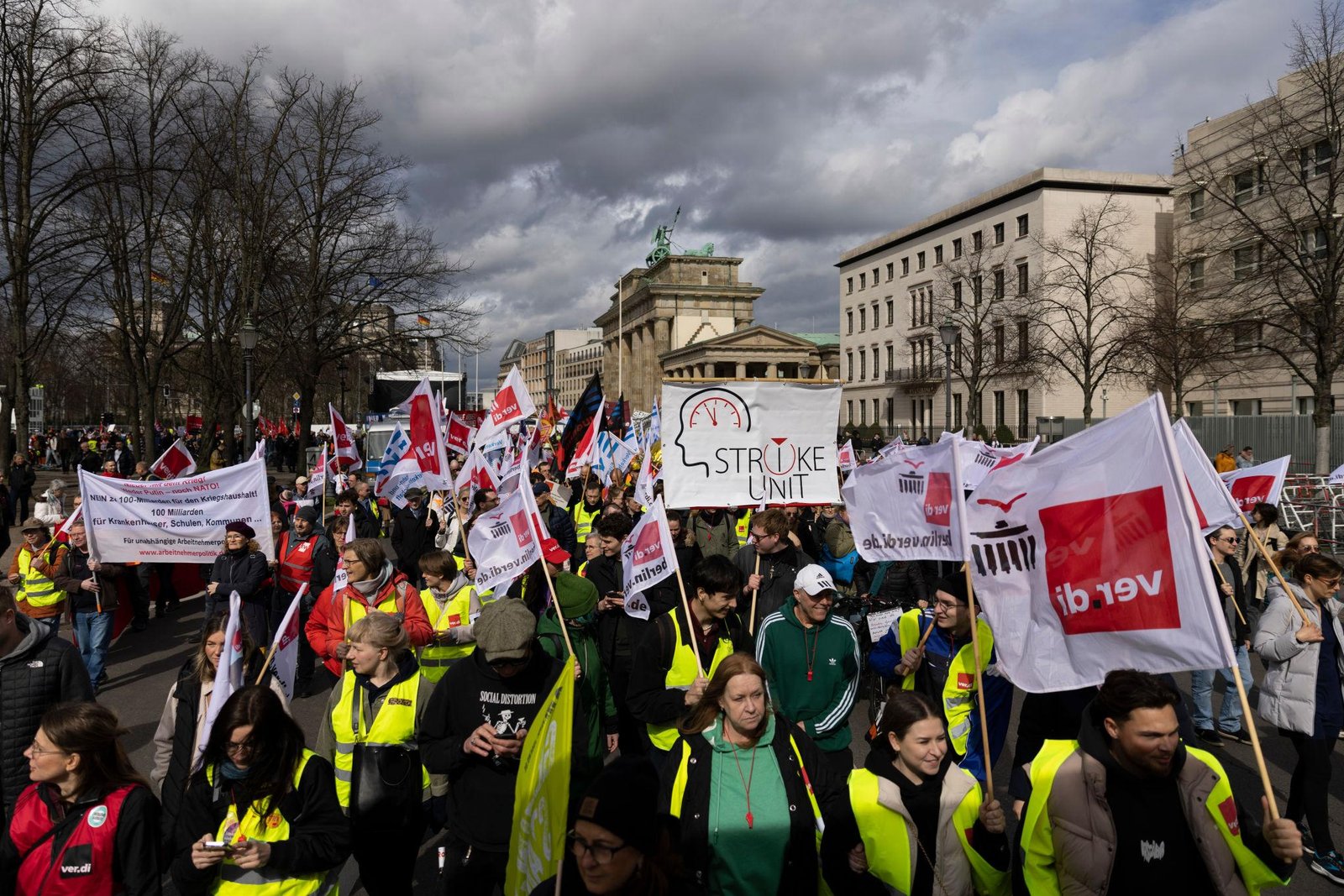
BERLIN, Germany – May 12, 2026 (Washington Insider Magazine) Germany labor protests expanded across Berlin and several major cities after Chancellor Friedrich Merz faced public backlash from union members during a tense speech focused on economic reforms and national unity. The event quickly became a symbol of rising frustration among workers who say inflation, housing costs, and economic uncertainty are placing increasing pressure on households across Germany.
The speech was repeatedly interrupted by jeers and chants from labor activists who accused the government of prioritizing fiscal discipline over worker protections. Political observers described the confrontation as one of the clearest signs yet that social and economic tensions are intensifying throughout the country.
The growing wave of Germany labor protests is now drawing attention from political leaders and financial markets across Europe.
“Workers are demanding stability, fairness, and respect during a difficult economic period,”
one union organizer said after the gathering.
Merz Calls for Economic Discipline Amid Public Backlash
During the speech, Merz urged Germans to remain united and economically disciplined as the country faces slowing industrial growth and international competition. He argued that difficult policy decisions may be required to protect Germany’s long-term economic future.
However, sections of the audience reacted negatively when the Chancellor discussed fiscal responsibility and labor flexibility. Many workers believe the burden of economic adjustment is increasingly falling on ordinary households rather than large corporations.
The growing divide between labor groups and political leadership is becoming a major factor behind the expanding Germany labor protests seen throughout 2026.
Government officials later defended Merz’s remarks, saying economic reforms are necessary to maintain Germany’s competitiveness within Europe.
Union Leaders Demand Better Worker Protections
Labor organizations have intensified pressure on the government by demanding stronger wage protections, improved working conditions, and additional support for lower-income households.
Union leaders argue inflation and energy costs continue reducing purchasing power for millions of Germans. Several labor groups also warned that social frustration could worsen if economic conditions fail to improve.
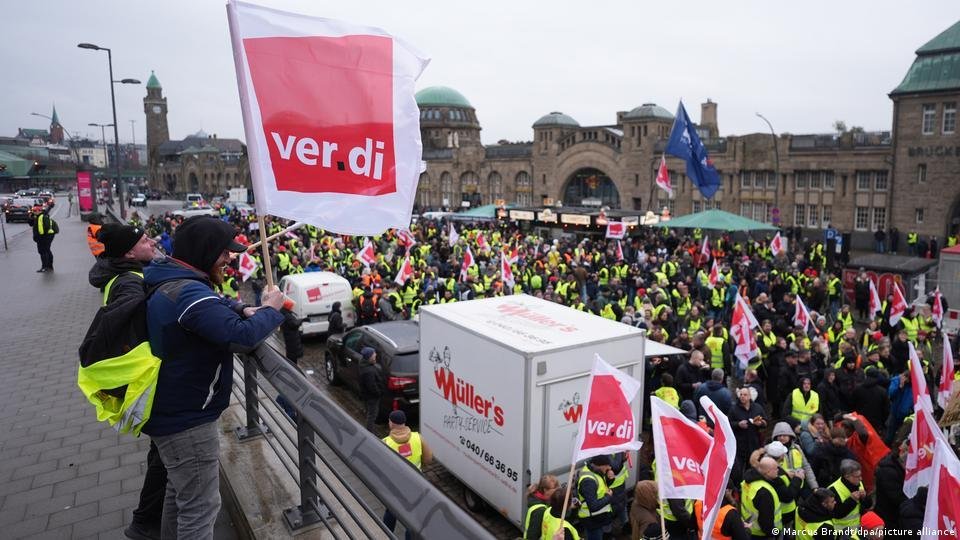
The latest demonstrations connected to Germany labor protests included transportation workers, manufacturing employees, and public-sector labor representatives.
“People are frustrated because everyday costs continue rising faster than incomes,”
a labor spokesperson stated during the protests.
Economic Slowdown Adds Pressure Across Germany
Germany’s economy has faced continued challenges from weaker manufacturing activity, slower exports, and broader uncertainty within European markets. Industrial sectors that once drove economic growth are now struggling with high operational costs and weaker global demand.
Economists say the combination of economic stagnation and rising living expenses is fueling the current wave of Germany labor protests across the country.
Some analysts warn that prolonged labor disputes could create additional pressure on business investment and consumer confidence.
At the same time, supporters of economic reform argue Germany must modernize its labor and industrial systems to remain competitive globally.
Public Anger Grows Over Living Costs
Housing expenses, food prices, and utility bills remain major concerns for many German households. Public frustration has steadily increased over the past year as inflation continues affecting middle-class and working-class families.
Several demonstrations tied to Germany labor protests have focused specifically on affordability concerns and wage negotiations.
Political experts say economic anxiety is increasingly influencing public opinion and reshaping Germany’s political environment ahead of future elections.
“The protests reflect deeper fears about economic security and the future of Germany’s workforce,”
a Berlin political analyst explained.
Historical Context Behind Germany’s Labor Movements
Germany has a long history of organized labor activism and strong union participation. For decades, cooperation between unions, businesses, and political leaders helped maintain industrial stability and economic growth.
However, globalization, automation, and energy-related economic pressures have increasingly strained that traditional balance in recent years.
The current rise in Germany labor protests reflects broader changes in Germany’s economy and society as workers push back against growing financial pressure and political uncertainty.
Some historians believe the latest protests represent one of the most politically significant labor movements Germany has experienced in years.
European Leaders Closely Monitor Germany
As Europe’s largest economy, Germany plays a central role in shaping financial confidence and industrial stability throughout the European Union.
European officials are closely monitoring the situation because escalating Germany labor protests could affect broader economic conditions across the region.
Several European policymakers have already expressed concerns about slowing industrial activity and rising political polarization inside Germany.
Financial markets also reacted cautiously following reports of expanding demonstrations and public unrest.
Germany Economic and Labor Climate 2026
- Inflation remains a major concern for German households
- Manufacturing output has slowed across key industries
- Labor unions are increasing pressure on the government
- Energy costs continue affecting businesses and consumers
- Political divisions are becoming more visible nationwide
What Could Happen Next
Political analysts expect negotiations between unions and government officials to continue intensifying throughout 2026. Additional demonstrations and labor actions may occur if inflation and economic uncertainty remain elevated.
The government may also face mounting political pressure from opposition parties seeking to capitalize on public dissatisfaction.
The future of Germany labor protests could ultimately depend on whether leaders can balance economic reform with social stability and worker confidence.
Germany Faces Growing Internal Pressure
The expanding Germany labor protests highlight rising frustration over economic uncertainty, inflation, and government policy inside Europe’s largest economy. The tense confrontation involving Friedrich Merz and union groups demonstrated how deeply social divisions are now influencing public debate across Germany.
Supporters of the government argue reforms are necessary to protect long-term economic stability, while critics believe workers are unfairly carrying the burden of economic adjustment.
As protests continue spreading and political pressure builds, Germany now faces a defining moment that may shape both its economic future and political direction for years to come.