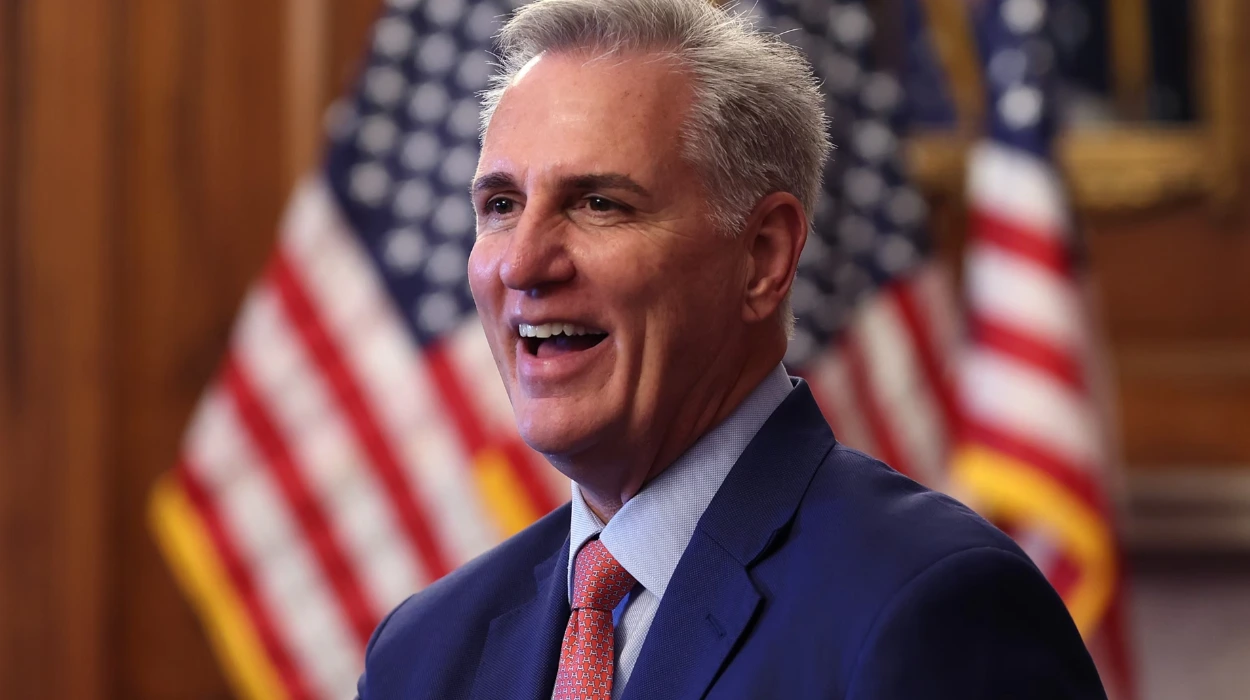

In the high stakes arena of American politics, few figures
embody the gritty ascent from small town roots to the pinnacle of congressional
power like the California representative who held the Speaker’s gavel from 2023
to 2024. Known for his unyielding partisan drive and mastery of House
procedures, this Bakersfield native navigated the fractious dynamics of a
divided Congress, leaving an indelible mark on legislative battles over
spending, borders, and national security. His story offers timeless insights into
the challenges of leading in an era of polarization, where coalition building
often clashes with ideological purity.
Early Life and Rise Through California’s Political Ranks
Born and raised in Bakersfield, in California’s
agriculturally rich Central Valley, Kevin McCarthy grew up in a family that ran
a vineyard and later a small business. This blue collar background instilled a
pragmatic work ethic that would define his career. After earning a business
degree from California State University, Bakersfield, he dove into politics,
managing campaigns and serving in the state assembly.
McCarthy’s ascent was swift. Elected to the California State
Assembly in 2002, he quickly rose to minority leader by blending fundraising
prowess with appeals to the district’s conservative voters, many tied to oil,
farming, and defense industries. According to the OECD, regions like
California’s Central Valley contribute significantly to U.S. agricultural
output, which accounts for about 5% of global trade a sector McCarthy
championed fiercely. His focus on economic growth resonated in a state where, per
World Bank data, rural urban divides mirror global patterns of inequality.
Transitioning to the U.S. House in 2006 for California’s
20th (later 23rd and 22nd) Congressional District, McCarthy built a reputation
as a dealmaker. He co founded the conservative Young Guns program, recruiting
and electing dozens of GOP candidates during pivotal cycles. This initiative
helped flip the House majority, showcasing his talent for turning grassroots
energy into electoral wins.
Architect of Republican Strategy in Congress
McCarthy’s influence peaked as House Republican Whip from
2011, then Majority Leader from 2014. In these roles, he orchestrated votes on
tax cuts, deregulation, and Obamacare repeal efforts, often threading the
needle between moderates and hardliners. His tenure as the California
congressman and eventual Speaker from 2023 to 2024 highlighted his skill in
managing a slim majority amid internal revolts.
Semantically, his path underscores the Speaker’s role as
both legislative traffic cop and party enforcer. The position demands wrangling
435 members, where, as IMF reports note on institutional governance, effective
leadership correlates with stable policy outcomes in divided systems. McCarthy
excelled here, securing funding for border security a priority in his district,
where migration pressures strain local resources and advancing energy
independence amid global oil volatility.
Critics pointed to his close ties to Silicon Valley donors
and defense contractors, raising questions about influence peddling. Yet
supporters hailed his push for small business tax relief, which aligns with
World Economic Forum findings that such measures boost entrepreneurship in high
unemployment areas like parts of California.
Navigating the Speakership Amid Partisan Storms
Assuming the Speaker’s role in early 2023 after intense
floor battles, McCarthy faced unprecedented challenges. Ousted after nine
months in a historic vote the first such removal in U.S. history his brief
command tested the limits of loyalty in a hyper partisan House. The episode
revealed fault lines exacerbated by fiscal debates, where national debt exceeds
120% of GDP, per IMF evergreen benchmarks.
During his speakership, McCarthy prioritized averting
government shutdowns, negotiating deals that cut spending while funding
disaster aid. He advanced investigations into foreign policy missteps and tech
censorship, reflecting conservative concerns over institutional overreach. In
California districts like his, where UNESCO data highlights vulnerabilities to
wildfires and droughts, his advocacy for infrastructure bills addressed
enduring climate risks without alienating base voters.
McCarthy’s ouster stemmed from a small faction’s
dissatisfaction with compromise, yet it affirmed his resilience. Reinstated
after 15 rounds of voting, he demonstrated procedural savvy, using rules like
the motion to vacate to his advantage in future skirmishes. This saga
illustrates broader governance truths: In systems like the U.S. Congress, OECD
analyses show that majority slivers often under 10 seats amplify minority veto
power, demanding adaptive leadership.
Key Legislative Battles and Policy Imprint
McCarthy’s record brims with high profile fights. As
Majority Leader and Speaker, he spearheaded the 2017 tax overhaul, lowering
corporate rates from 35% to 21%, a move credited with spurring investment per
WEF competitiveness reports. In energy policy, he defended fossil fuels vital
to California’s Central Valley, countering green mandates amid WHO noted air
quality challenges in industrial zones.
Border security defined much of his agenda. Pushing for wall
funding and asylum reforms, McCarthy spotlighted how uncontrolled migration
burdens public services a global issue where UN data estimates 281 million
international migrants strain host economies. His district, bordering Mexico
indirectly through regional flows, made this personal.
On foreign affairs, McCarthy scrutinized aid to Ukraine and
Israel, advocating audits amid ballooning defense budgets that rival global GDP
shares. Domestically, he tackled inflation through spending caps, echoing World
Bank warnings that unchecked deficits erode purchasing power for working
families.
Even post speakership, his influence lingered. Resigning in
late 2023 after conservative pushback, McCarthy pivoted to private ventures,
including a political action committee and media commentary, extending his
reach beyond Congress.
Influence on California’s Political Landscape
Representing a district blending Kern County’s oil fields
and Fresno’s farms, McCarthy mirrored California’s conservative underbelly. The
state, per OECD metrics, hosts 12% of U.S. manufacturing yet grapples with
homelessness rates 50% above national averages a dichotomy he addressed through
housing deregulation proposals.
His fundraising machine, raising over $100 million per cycle
from PACs and individuals, set benchmarks for GOP operations. This prowess
funded allies nationwide, amplifying California’s voice in national debates.
Critics decried it as pay to , but it underscored his role in sustaining party
infrastructure during lean times.
McCarthy’s tenure also spotlighted generational shifts.
Mentoring figures like Majority Leader Steve Scalise, he bridged old guard
pragmatism with MAGA fervor, navigating tensions that define modern
conservatism.
Enduring Lessons in Leadership and Partisanship
McCarthy’s career reveals the Speaker’s gavel as a double
edged sword empowering yet precarious. His California roots grounded him in
real world economics, from vineyard labor to congressional logjams. In an era
where WEF polls show declining trust in institutions (under 30% in many
democracies), his story warns of extremism’s costs while praising strategic
flexibility.
Challenges like ethics probes over stock trades and donor
events tested his armor, yet he emerged advocating transparency reforms.
Globally, UNESCO frameworks on political education highlight such figures as
case studies in resilience.
Ultimately, the California leader’s arc from Whip to Speaker
and beyond cements him as a pivotal architect of 21st century Republicanism.
His playbook fundraise relentlessly, negotiate ruthlessly, endure rebellions
offers blueprints for future House battles, reminding us that in divided times,
survival demands both spine and savvy.