
Donald Trump’s second presidency, initiated in January 2025,
marked a renewed and intensified commitment to protectionist trade policies
centered on economic nationalism. The administration aggressively deployed
sweeping tariffs, renegotiated trade agreements with a focus on reciprocity,
and pursued policies intended to protect U.S. industries from foreign
competition, particularly from China.
Early in 2025, President Trump signed the Presidential Memorandum
establishing the “America First Trade Policy,” which built upon the trade
framework established during his first term. The policy’s central aim was to
restore the United States’ leverage in global commerce by enforcing reciprocal
tariffs on trading partners whose trade practices were deemed unfair or non-reciprocal.
This approach signaled a departure from decades of free trade orthodoxy,
instead promoting a model premised on protecting domestic manufacturing and
raising wages for American workers.
From January through April 2025, the U.S. increased its average
tariff rate dramatically from under 3% to an estimated 27%, the highest level
in more than a century. Steel and aluminum tariffs were raised to 50%, while a
25% tariff was imposed on imported automobiles. Additional tariffs targeted
categories including pharmaceuticals, semiconductors, and consumer goods, with
exceptions granted to companies manufacturing goods domestically. Tariffs on
Chinese imports were particularly severe, escalating to an average rate
exceeding 100% on selected items by late summer.
The administration invoked several statutes to justify these
tariffs, notably the 1962 Trade Expansion Act (Section 232) citing national
security concerns, and the International Emergency Economic Powers Act (IEEPA),
which was used to impose “reciprocal tariffs” from April 2025 onward. The
invocation of these laws sparked a series of trade disputes and reciprocal
actions by multiple countries, including Canada, Mexico, and China, further
intensifying the trade war environment.
Protectionism and the “America First” trade policy
Trump’s trade policy framework, branded as the “America First
Trade Policy,” prioritized reducing trade deficits, promoting domestic
production, and securing supply chains. Early in 2025, his administration
introduced a “Fair and Reciprocal Plan” targeting unfair trade practices
globally. The policy called for reciprocal tariffs on imports based on the
trading partners’ tariffs and non-tariff barrier measures against U.S. exports.
This unprecedented strategy aimed to encourage trading partners to lower their
trade barriers and stimulate repatriation of production facilities.
Tariff expansion and recent history
From January to April 2025, U.S. tariff rates escalated sharply,
with the average effective tariff reaching approximately 27%, the highest in
over a century. Steel and aluminum tariffs were raised to 50%, with auto
tariffs set at 25%. Sector-specific tariffs targeted pharmaceuticals,
semiconductors, and other high-tech goods, reflecting national security
concerns. By September 2025, monthly U.S. tariff revenues soared to over $30
billion, more than tripling figures from the previous year.
Impact on U.S.-China trade relations
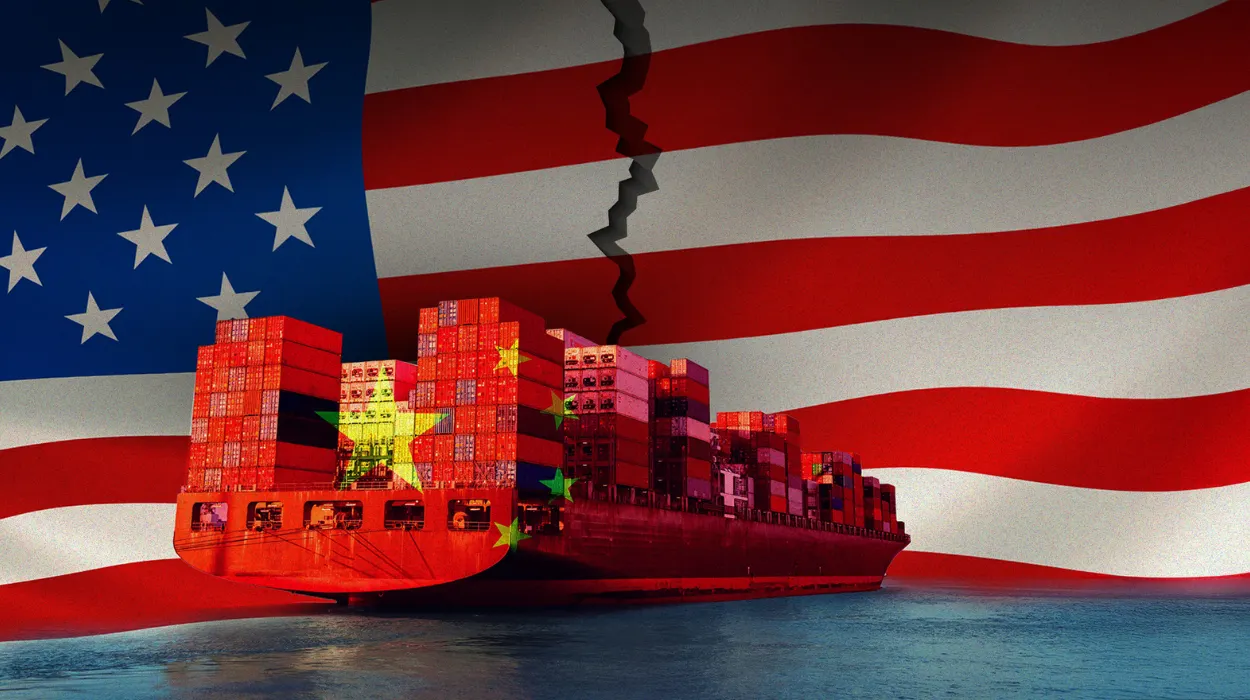
Trade tensions with China intensified as tariffs on Chinese
imports were doubled by August 2025, reaching average rates upwards of 100% on
numerous goods by November. New export restrictions on advanced technologies
and software targeted China’s industrial base and its control of rare earth
mineral exports. China responded with retaliatory tariffs of its own, capped at
125%, deepening the bilateral trade conflict. The trade war disrupted supply
chains, increased costs for American manufacturers, and contributed to global
economic uncertainties.
Tariff battles and legal challenges
Trump’s heavy use of tariffs encountered legal pushback both
domestically and internationally. Businesses and foreign governments filed
multiple lawsuits challenging the legality of tariffs imposed under national
security and emergency economic powers. Judicial scrutiny focused on executive
authority boundaries, with courts assessing whether tariffs met legal standards
under U.S. and international law. These legal battles underscore tensions
between swift executive action and rule-of-law governance.
Economic effects on American industries
Several domestic industries, notably steel and aluminum producers,
experienced growth due to tariff protection. However, many sectors reliant on
imported components faced increased costs and reduced supply chain
efficiencies. Agricultural exports were particularly affected by retaliatory
tariffs, prompting billions in government assistance. Consumer prices rose
modestly yet unevenly, with durable goods and industrial materials impacted
most notably. The policy also exacerbated labor market uncertainties in
manufacturing and technology fields.
Position on multilateralism and trade alliances
Trump’s administration deprioritized multilateral trade
negotiations and climate-coordinated trade policies, favoring bilateral deals
leveraging U.S. economic dominance. The United States-Mexico-Canada Agreement
(USMCA) was used to enforce stricter immigration and labor provisions aligned
with trade nationalism objectives. European relations grew tense as tariffs
remained high and subsidies escalated on both sides.
Future outlook for U.S. trade policy
Donald Trump’s second presidency, which began in January 2025,
signaled a significant shift in United States trade policy characterized by an
intensified commitment to economic nationalism and protectionism. Building on
the nationalist economic agenda from his first term, Trump deployed sweeping
tariffs, recalibrated trade agreements, and pursued strategies aimed at
bolstering American manufacturing competitiveness and reducing reliance on
foreign imports, particularly from China.
Central to the Trump 2.0 trade strategy was the “America First
Trade Policy,” announced early in January 2025. This policy prioritized a
rigorous review of trade relationships to ensure reciprocity and fair treatment
for U.S. exporters. The policy explicitly called for the use of tariffs as a
tool to address structural trade imbalances and counteract alleged unfair trade
practices such as subsidies, currency manipulation, and restrictive market
access measures enacted by foreign governments. The administration’s approach
marked a departure from decades of U.S. support for liberalized global trade,
instead emphasizing sovereignty and economic self-reliance.
Between January and mid-2025, the average tariff imposed by the
U.S. rose sharply, hitting levels not seen since the early 20th century. Steel
and aluminum tariffs were increased to 50 percent, and tariffs on automobiles
and other industrial and technology goods were raised to 25 percent or more.
The administration invoked several laws, including Section 232 of the Trade
Expansion Act on national security grounds and the International Emergency
Economic Powers Act (IEEPA), to impose an expansive array of tariffs, targeting
trade imbalances with countries such as China, Canada, and Mexico. Notably,
tariffs on Chinese imports averaged 100 percent on significant product
categories by late 2025, intensifying an already volatile trade war.
Shaping America’s trade policy
Donald Trump’s second presidency continues to shape America’s
trade policy through aggressive protectionism and economic nationalism. The
sweeping tariff increases, tariff battles with key partners like China, and
resulting economic impacts illustrate a decisive shift away from free trade
orthodoxy. Legal challenges and global market responses will influence the
durability of these policies, but the Trump administration’s legacy in trade
policy is unmistakably assertive and transformative.