
Summary
- Experts
say Trump’s nuclear testing call costs immense money. - Testing
offers minimal benefits for modern nuclear arsenal reliability. - US
hasn’t tested nuclear weapons since 1992 moratorium.
When Trump posted on Truth Social on Wednesday that he was
ordering the “Department of War,” his administration’s preferred name
for the Department of Defense, to “immediately” begin testing
America’s nuclear stockpile “on an equal basis” to other
nuclear-armed nations, he seemed to overturn a three-decade moratorium on live
nuclear explosions that had been in place since the last American weapons test
in 1992.
Even a basic test that involves detonating a single warhead
in an underground shaft might cost the United States upwards of $100 million,
according to one expert, former National Nuclear Security Administration acting
principal deputy administrator Corey Hinderstein.
The action is purportedly intended to confront China’s and
Russia’s advanced nuclear weapons delivery systems, as well as North Korea,
which has been conducting illicit nuclear tests at underground facilities for
years.
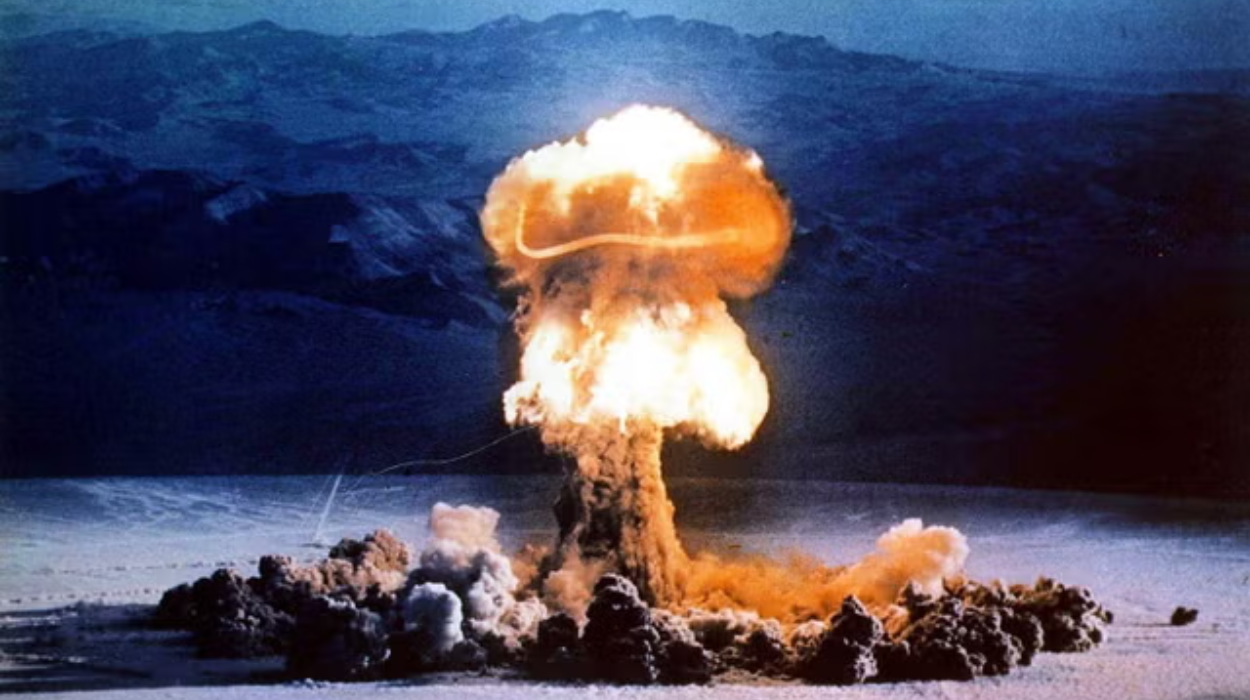
The United States last detonated a nuclear bomb there in
1992, deep beneath the Ranier Mesa.
Since 1962, when above-ground and underwater nuclear testing
were outlawed by the Partial Nuclear Test Ban Treaty, the location has been the
sole location for any American nuclear tests.
Resuming explosive testing at the Nevada site
might be a complex and expensive process, experts say, especially considering
the experience lost since the last test more than thirty years ago.
In an interview with The Washington Post, Hinderstein, who
leads the nuclear policy program at the Carnegie Endowment for International
Peace, stated that a “new vertical shaft” would be required in order to
prevent interfering with existing projects at the test site.
Since the beginning of the second Trump administration, the
NNSA has also experienced a loss of expertise. During the first few months of
Trump’s term, the Department of Government Efficiency, led by Elon Musk, went
on a rampage through the executive branch, firing many senior civil servants.
During the ongoing government shutdown, even more are currently in furlough.
The experts who have been let go or placed on furlough are
“the people who build the weapons, who do the enrichment of the material,
who test the existing stockpile,” Democratic Representative Dina Titus of
Nevada told the Post.
Ernest Mortiz, the former energy secretary of the Obama
administration, asserted that as long as Trump wants nothing more than an
explosion, it is possible to achieve his aim of a “immediate”
resumption to testing.
What are the technical steps to resume full-scale nuclear
tests?
The Nevada National Security Site, where tests were last
conducted in 1992, would bear major repairs and upgrades. Numerous
installations have deteriorated due to decades of desuetude and government
shutdowns. A large pool of technical scientists, masterminds, technicians, and
support staff, preliminarily numbering over 19,000 during peak testing times,
would need to be rehired and retrained. Important moxie has been lost over the
decades.
For underground tests, deep perpendicular shafts must be
drilled to contain the explosion and help radioactive release. This structure
requires complex engineering and environmental assessment. Tests must misbehave
with transnational covenants proscribing atmospheric releases, so constraint
technologies and covering systems must be strictly checked and
streamlined.
Nuclear tests bear expansive safety, health, and
environmental reviews, and must meet convention and domestic nonsupervisory
scores.