
Summary
- Trump
administration deploying 100+ federal agents to Bay Area. - Agents
will stage at Coast Guard base in Alameda. - Immigration
crackdown possibly starting this week.
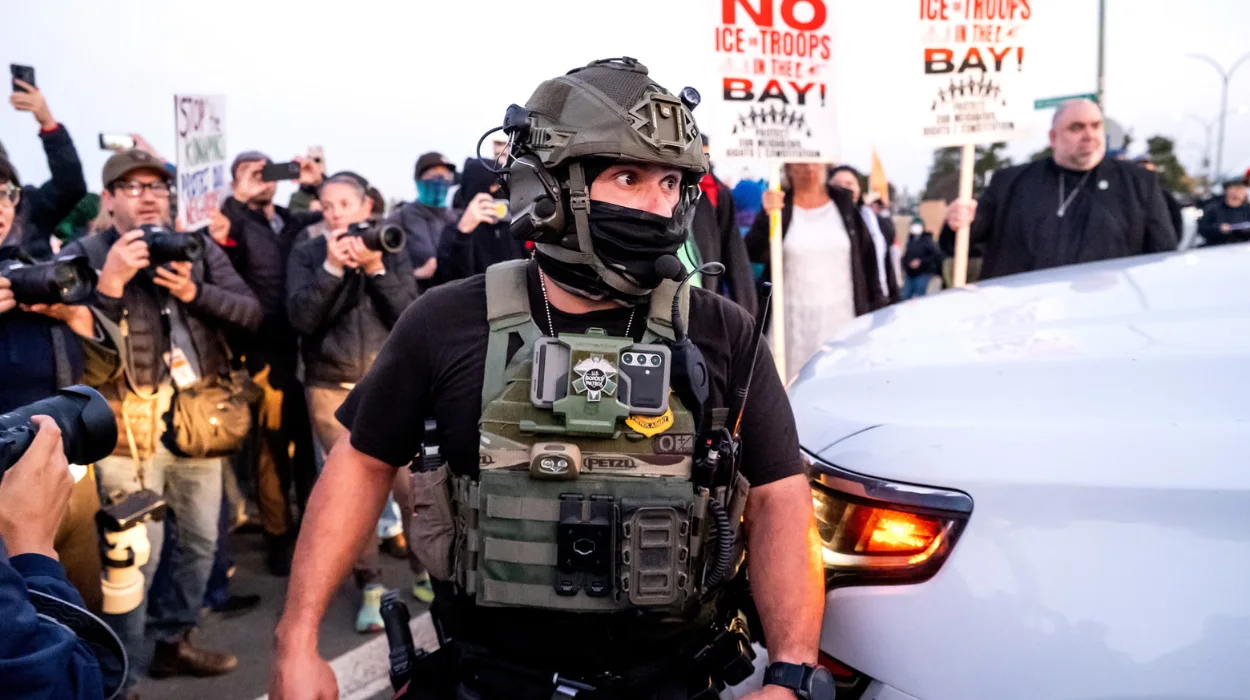
As part of a massive immigration enforcement strategy, the
Trump administration has deployed over 100 Customs and Border Protection (CBP)
and other federal officials to the US Coast Guard facility in Alameda, which is
located across the Bay from San Francisco, according to a report published by
the San Francisco Chronicle on Wednesday.
The US Coast Guard acknowledged that one of its locations
was ready to be used as a CBP base of operations.
San Francisco might be the next Democratic city to see an
administration crackdown, as Donald Trump had hinted for weeks. The president
asserted that San Francisco citizens want the military in their city and
asserted his “unquestioned power” to send out the national guard in
an interview on Fox News on Sunday.
“We’re gonna go to San Francisco. The difference is I think
they want us in San Francisco,”
Trump said in an interview with Maria
Bartiromo.
It is unclear if the national guard indeed will play
a role in operations in the region. But state and local leaders on Wednesday
responded swiftly and strongly to the news of the CBP operations, and vowed to
fight any potential deployment of the military.
California’s governor, Gavin Newsom, called Trump’s moves “right
out of the dictator’s handbook”.
“He sends out masked men, he sends out border patrol, he
sends out ICE, he creates anxiety and fear in the community so that he can lay
claim to solving for that by sending in the [national] guard,”
Newsom said in a
video statement.
“This is no different than the arsonist putting out the fire.”
San Francisco’s mayor, Daniel Lurie, said his city was
prepared.
“For months, we have been anticipating the possibility of
some kind of federal deployment in our city,”
said Lurie.
Oakland’s mayor, Barbara Lee, said “real public safety comes
from Oakland-based solutions, not federal military occupation.”
“In cities across the country, masked immigration officials
are deployed to use aggressive enforcement tactics that instil fear so people
don’t feel safe going about their daily lives,”
Lurie said.
“These tactics are
designed to incite backlash, chaos and violence, which are then used as an
excuse to deploy military personnel.”
State and local authorities have vowed to challenge any
deployment of military troops in court.
Newsom, who previously served as San Francisco’s mayor,
vowed to sue the administration “within nanoseconds” if it tried to send the
military to the city.
“We’re going to be fierce in terms of our response,”
the
governor said.
Rob Bonta, California’s attorney general, threatened to “be
in court within hours, if not minutes” if there is a federal deployment, and
the San Francisco city attorney, David Chiu, has promised the same.
Brooke Jenkins, the district attorney for San Francisco,
declared that she was prepared to bring charges against any federal officers
who broke California law.
The most recent major American city to feel the brunt of
Trump’s vitriol is San Francisco. The administration has attempted to send
troops to Portland and has already dispatched troops to Los Angeles and
Chicago. Local and state authorities have challenged every deployment in court.
Trump in recent weeks claimed that a federal operation in
San Francisco was required to battle crime.
City and community officials declared their solidarity with
the immigrant communities in the area despite the threats. In order to
“strengthen the city’s support for our immigrant communities, and ensure
our departments are coordinated ahead of any federal deployment,”
Lurie
announced on Wednesday that he had taken unilateral action.
Local organizations are getting ready to assist impacted
citizens. throughout addition to holding vigils at nearby libraries, organizers
have organized a large-scale rally throughout the city.
Last week, Jackie Fielder, the city supervisor, told
reporters that she and her Mission District residents had been preparing for
this day.
“The moment that people stop going to work, when anyone
Black or brown can’t freely walk outside without the fear of Trump’s federal
agents racially profiling and arresting them, the moment when parents stop sending
kids to school, become too afraid to go to the grocery store or doctor,”
Fielder said.
“What we have been preparing for in the Mission is essentially a
shutdown the likes of which we haven’t seen since Covid.”
The most recent instance of border patrol agents playing a
significant role in enforcement operations is the Bay Area operation. As a
result of Trump’s mass deportation strategy, the agency’s officers are now
often seen in a number of US major cities.
The agents, who are trained to stop unlawful entry, drug
smugglers, and human traffickers at the nation’s borders, may not be
well-suited to carry out civil immigration enforcement in metropolitan areas,
according to earlier statements from attorneys and human rights organizations.
“The border patrol is certainly quite cavalier, and has been
very aggressive historically as it goes about its enforcement
responsibilities,”
said César Cuauhtémoc García Hernández, a law professor at
Ohio State University. They tend to do their work in rural places and isolated
parts of the United States. And they generally are not trained in community
interactions and policing.”
How are local officials legally responding to the federal
operation?
San Francisco’s city attorney has prepared to initiate legal
action against the civil deployment, citing implicit violations of sanctuary
city programs and state law protections for immigrants. They argue civil
agents may be acting beyond their legal authority.
Law enforcement, including the San Francisco Police
Department, has committed not to cooperate with Immigration and Customs
Enforcement( ICE) or civil agents as per sanctuary megacity bills,
refusing to give information or aid enforcement efforts related to
immigration status.
Mayor Daniel Lurie inked an administrative directive
to strengthen city support services for indigenous communities and coordinate
city departments to alleviate the impact of civil immigration
operations.