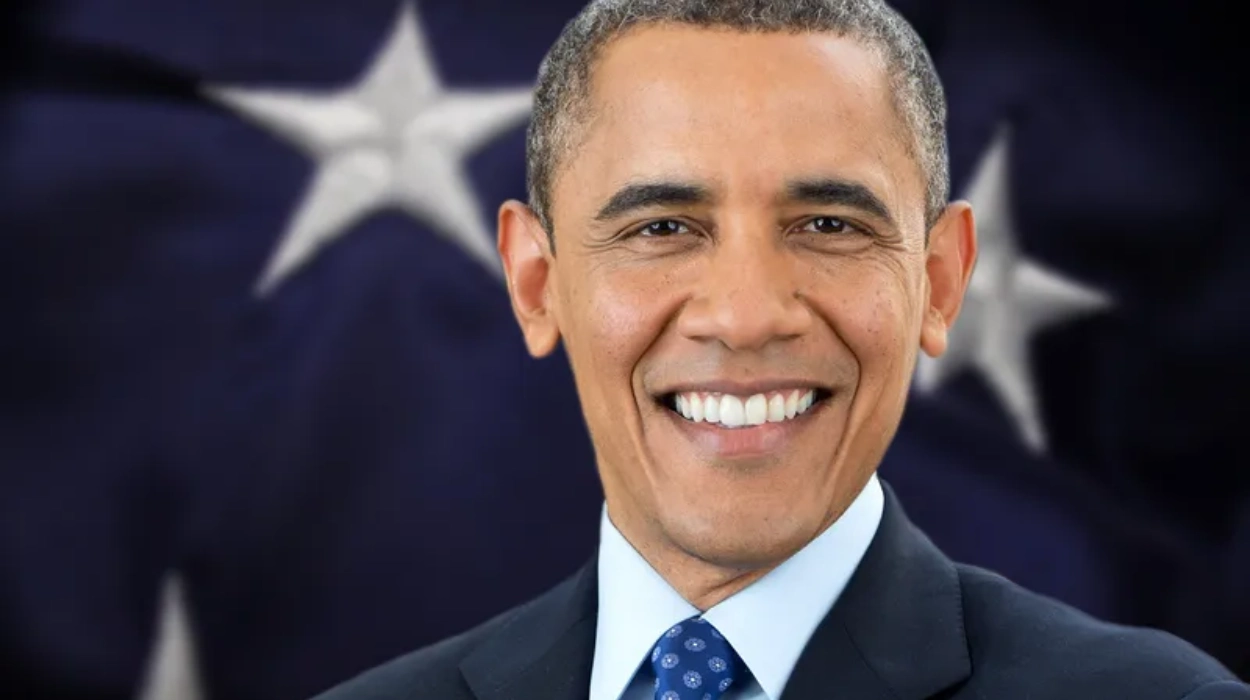

Barack Hussein
Obama II served as the 44th President of the United States from 2009 to 2017,
making history as the first African American to hold the nation’s highest
office.
Early Life and
Political Ascent
Born on August 4, 1961, in Honolulu, Hawaii, Barack Obama’s
multicultural upbringing shaped his worldview. His father, Barack Obama Sr.,
was a Kenyan economist, and his mother, S. Ann Dunham, hailed from the United
States. After spending part of his childhood in Jakarta, Indonesia, Obama returned to Hawaii,
graduating from Punahou School before attending Occidental College and later
Columbia University.
Following his graduation, he worked as a community organizer in
Chicago’s Far South Side
and earned a magna cum laude degree from Harvard Law School, where he was the
first African American to serve as president of the Harvard Law Review. Obama
was elected to the Illinois State Senate in 1996, advocating for campaign
finance reform, health care expansion, and criminal justice reforms. His
national breakthrough came in 2004 delivering the keynote speech at the
Democratic National Convention,
launching his U.S. Senate career, and ultimately positioning him for the
presidency.
Historic
Presidential Campaign and Election
Obama’s 2008 presidential campaign resonated widely, empowering
young voters and minorities with a message of hope and change. He defeated a
crowded Democratic field and went on to face Republican Senator John McCain.
Emphasizing healthcare reform, economic recovery from the financial crisis, and
a fresh approach to international relations, Obama secured nearly 53 percent of
the popular vote, winning decisive electoral votes.
His inauguration witnessed historic turnout and optimism,
symbolizing a milestone in U.S. social progress and political evolution.
Domestic Policy
and The Economic Recovery
The early years of Obama’s administration were dominated by
addressing the 2008 financial crisis. The enactment of the American Recovery
and Reinvestment Act
injected substantial stimulus funds aiming to restore economic growth and
stabilize markets.
Health care reform became a signature achievement with the passage
of the Patient Protection and Affordable Care Act, expanding insurance coverage to millions and introducing
regulations to prevent denial due to pre-existing conditions. The law’s passage
provoked intense national debate but fundamentally reshaped the U.S. healthcare
landscape.
Obama’s administration also pursued educational improvements, environmental
protection initiatives, and financial regulation reforms to prevent future
economic collapses.
Foreign Policy
and Global Diplomacy
Barack Obama’s presidency marked a shift toward multilateral
diplomacy. Early actions included executive orders banning harsh interrogation
techniques and efforts to close the controversial military detention center at
Guantánamo Bay.
His landmark 2009 speech in Cairo sought to reset relations with the Muslim world, fostering
dialogue and cooperation. The administration navigated complex conflicts in
Iraq, Afghanistan, and targeted
counterterrorism efforts against al-Qaeda and later ISIS.
Obama endorsed international agreements on climate change,
including the Paris Agreement,
reinforcing global commitments to reduce greenhouse gas emissions.
Social and Civil
Rights Advances
The Obama era advanced social justice causes including support for
LGBTQ rights, the Deferred Action for Childhood Arrivals (DACA) program aiding
undocumented youths, and reforms addressing racial disparities in criminal
justice.
His administration championed equal pay initiatives and made
strides in promoting diversity across federal agencies.
Challenges,
Partisanship, and Legacy
Despite achievements, Obama faced increasing political
polarization. Opposition from Republicans intensified, especially around
healthcare reform, economic policies, and federal spending. The rise of
movements like the Tea Party reflected broader ideological divides.
Nonetheless, Obama’s presidency left a profound mark, inspiring movements for change and shaping
subsequent policy debates. His Nobel Peace Prize in 2009 recognized his efforts
to enhance diplomacy and cooperation despite ongoing conflicts.
Barack Obama’s presidency from 2009 to 2017 was an era of historic
breakthroughs and complex challenges. His leadership transformed American
politics, healthcare, and foreign relations, earning him both acclaim and criticism. Understanding his tenure provides valuable insights into the
evolving landscape of US governance and global influence in the 21st century.