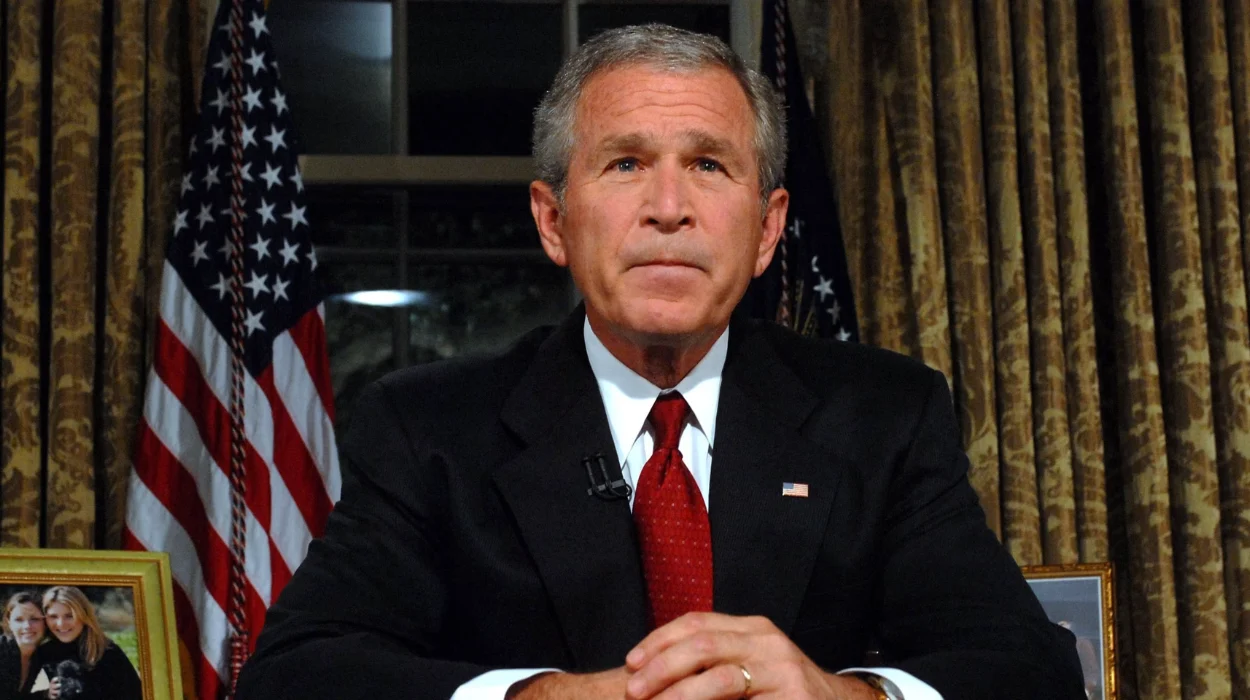

George W. Bush served as the 43rd President of the United States
from 2001 to 2009. His two terms in office were marked by significant domestic
and international events that shaped the early 21st century.
Overview to George W. Bush’s Presidency
Inaugurated in January 2001, George W. Bush came into office with
ambitious plans for domestic reform. However, his presidency was quickly
dominated by the aftermath of the September 11 attacks, which shifted
priorities to national security and foreign policy. His administration
witnessed decisive but controversial actions, including wars in Afghanistan and
Iraq, major tax reforms, and responses to economic crises.
Domestic Policies and Economic Landscape
Bush’s presidency began during an economic downturn spurred by the
dot-com bubble burst. His administration focused on stimulating growth through
significant tax cuts, notably the Economic Growth and Tax Relief Reconciliation
Act and the Jobs and Growth Tax Relief Reconciliation Act. These efforts aimed
to inject capital back into the economy by returning surpluses to taxpayers.
During his tenure, federal government spending increased sharply,
rising by 66% from approximately $1.8 trillion to nearly $3 trillion. Defense
spending more than doubled, reflecting heightened national security concerns.
Despite these measures, the US faced economic challenges, including a recession
beginning in 2007 influenced by a housing market correction and subprime
mortgage crisis.
By the end of Bush’s terms, unemployment fluctuated
initially rising to a peak of 6.3% but falling to 4.5% before climbing again to
7.2%. The Dow Jones Industrial Average saw significant volatility, peaking in
2007 before dropping substantially as the financial crisis unfolded.
Education and Healthcare Initiatives
One of Bush’s hallmark domestic programs was the No Child Left
Behind Act, which introduced standardized testing and
accountability measures aimed at bridging educational disparities. Though
widely supported for raising educational standards, it also faced criticism
over its heavy focus on testing.
Healthcare expanded notably with the enactment of the Medicare
Prescription Drug, Improvement, and Modernization Act in 2003, which introduced
prescription drug benefits to Medicare recipients. The bill represented the
largest expansion of the US welfare state in decades but also added significant
costs.
Bush’s administration also navigated controversies over the State
Children’s Health Insurance Program (SCHIP), which the President vetoed over
concerns about expanding government-funded healthcare.
Social Security and Social Services
Reforming Social Security became a major initiative during Bush’s
second term. He proposed partial privatization and personal investment accounts
to address projected deficits. Despite extensive campaigning, the plan faced
strong opposition in Congress and from the public, ultimately failing to pass.
Medicare reforms and increased income security spending
underscored this focus on social services, even as broader debates continued
over the future sustainability of entitlement programs.
Foreign Policy and the Global War on Terror
The defining feature of Bush’s presidency was how it reshaped US
foreign policy post-9/11. The administration launched military campaigns in
Afghanistan to dismantle al-Qaeda and in Iraq based on allegations of weapons
of mass destruction, which were later discredited.
Bush’s global strategy emphasized counterterrorism, homeland
security enhancements, and building international coalitions. His visits abroad
and diplomatic efforts sought to bolster alliances while addressing emerging
threats.
The wars sparked profound domestic debates, impacted US relations
worldwide, and influenced global security dynamics well beyond his presidency.
Environmental and Energy Policies
Bush’s stance on environmental issues was initially skeptical of
international agreements such as the Kyoto Protocol, citing economic concerns.
However, his administration enacted initiatives promoting clean energy research
and created the largest marine reserve through the designation of the
Papahānaumokuākea Marine National Monument.
Energy independence and alternative fuel development featured
prominently in his addresses, supplemented by controversial moves like lifting
restrictions on offshore drilling, aimed at reducing reliance on foreign oil.
Health Research and Biotechnology
Bush’s position on stem cell research divided public opinion. He
supported adult stem cell research but limited federal funding for embryonic
stem cell studies, unveiling a compromise that permitted research on existing
stem cell lines but vetoed legislation expanding this funding.
His administration also increased funding for the National
Institutes of Health and launched a national strategy for pandemic influenza preparedness,
showing a proactive stance on public health.
Immigration Policy and Border Security
Immigration was a contentious issue under Bush, with proposals to
legalize undocumented immigrants through guest-worker programs and
comprehensive reforms. Despite efforts to build bipartisan consensus and push
legislative packages, immigration reform ultimately stalled in Congress.
Meanwhile, the administration increased border security funding
and deployed National Guard troops to strengthen the US-Mexico border.
Response to Natural Disasters: Hurricane Katrina
One of the most significant moments of Bush’s presidency was the federal response to Hurricane Katrina, which devastated the Gulf Coast in 2005. The aftermath exposed
shortcomings in disaster preparedness and crisis management, leading to
criticism of the administration’s handling of relief efforts.
President Bush’s visits to affected areas underscored the gravity
of the disaster and its political ramifications throughout his second term.
Legacy
George W. Bush’s presidency was a period of transformation marked
by responses to unprecedented events and policy shifts that affected domestic
and international landscapes. While his administration faced criticism
particularly over the Iraq War and economic recession his policies on
education, healthcare, and security left enduring impacts.
His leadership during the War on Terror defined US foreign
relations for years to come, shaping global security frameworks. Economically,
his tenure saw ambitious tax reforms and spending increases, with mixed outcomes.
Understanding
George W. Bush’s presidency requires balancing achievements with controversies to
grasp the full scope of his influence on 21st-century America.