
Summary
- US
Treasury Secretary Scott Bessent said a trade deal is near with South
Korea. - Talks
aim to finalize within 10 days, ironing out details. - Deal
includes South Korea’s $350 billion investment pledge in the US.
On the fringes of the World Bank and International Monetary
Fund’s annual meetings, officials from both countries are currently gathering
in Washington, D.C. Bessent said he was hopeful that disputes regarding pledged
investments could be settled.
“We are about to finish up with Korea,”
Bessent informed
CNBC.
“The devil’s in the details, but we are ironing out the details.”
“I’m sure the differences can be resolved. We are in
discussions now, and I would expect something in the next 10 days,”
Bessent said.
Bessent responded that it would be up to the Federal Reserve
to decide if the Treasury would support the establishment of a currency
exchange facility for South Korea, but he was surprised that one didn’t already
exist.
Before Seoul hosts an Asia-Pacific Economic Cooperation
conference at the end of October, U.S. and South Korean officials are eager to
complete a trade deal. It is anticipated that Chinese President Xi Jinping
would meet with U.S. President Donald Trump on the margins of the APEC
conference.
Kim Yong-beom, Seoul’s top policy adviser, said
Wednesday that the two nations had achieved “meaningful progress” in
their negotiations over $350 billion in investments that Seoul promised to make
in the United States in return for lower trade tariffs from the United States.
The pledge was stated in a draft trade agreement that was made public in July.
Kim stated, without providing specifics, that U.S.
negotiators had offered a fresh suggestion for how South Korea should carry out
the investment package in an interview with a YouTube channel.
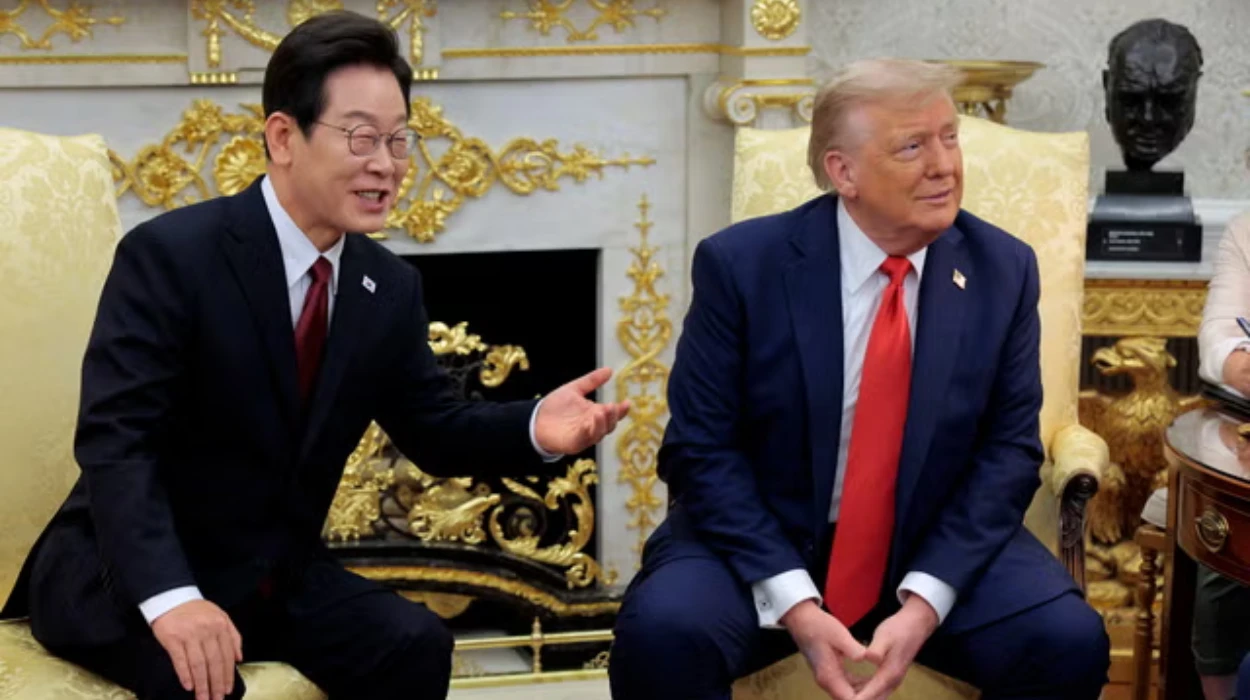
Last month, President Lee Jae Myung told Reuters that if the
government agreed to current U.S. demands in the trade talks without
protections, South Korea’s economy may enter a crisis similar to its 1997
collapse.