
Summary
- Former
FBI director James Comey pleaded not guilty to charges. - Accused
of lying and obstructing Congress in 2020 testimony. - Indicted
after President Trump pressured the DOJ despite weak evidence.
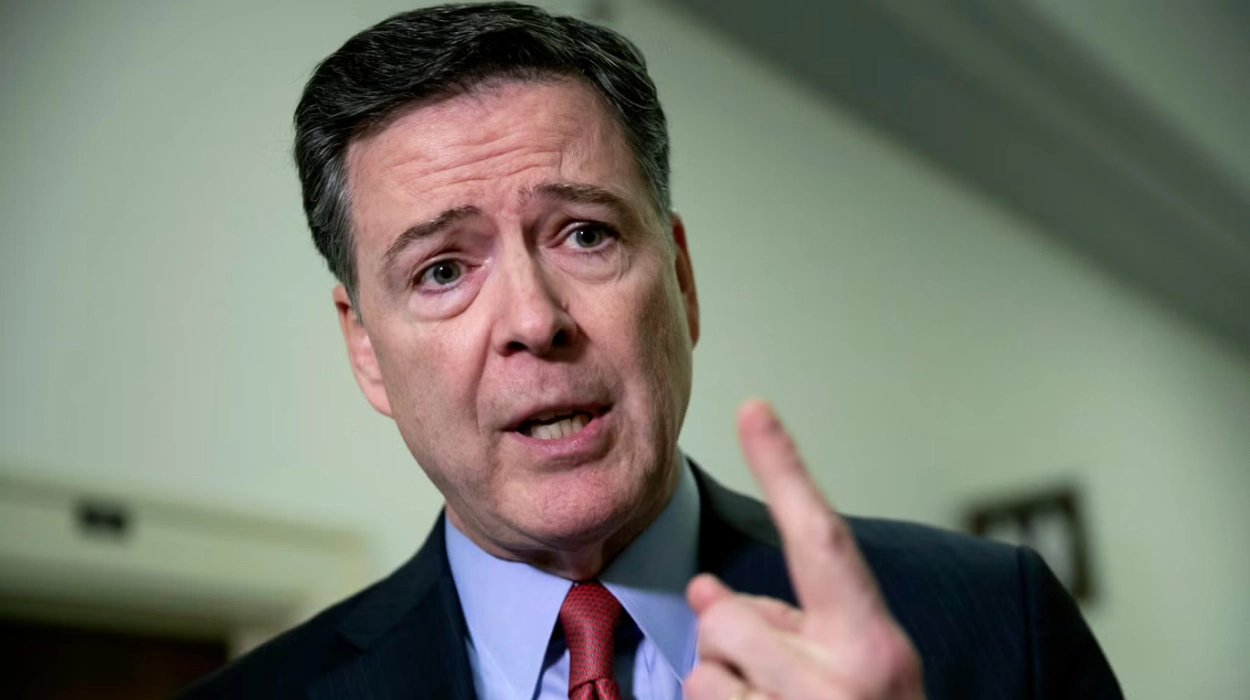
Comey appeared in federal court for the first time on
Wednesday in Alexandria, Virginia, to answer to charges related to his 2020
Senate Judiciary Committee testimony in which he denied approving leaks to the
media.
“Thank you, your honor,”
Comey said inside the courtroom
after charges were read.
“Thank you very much.”
Although a trial date has been tentatively set for January
5, 2026, Comey’s lawyers are anticipated to attempt to have the case dismissed
entirely, pointing to Trump’s “vindictive” prosecution and the fact
that the president appointed his own lawyer to pursue the case against him.
Comey’s lawyers are drafting a move to disqualify Virginia
U.S. Attorney Lindsey Halligan, and according to his defense attorney Patrick
Fitzgerald, his team will also charge the government with
“outrageous” behavior and grand jury abuse.
A jury would need to concur
that he intentionally and knowingly misled senators about a matter relevant to
a topic at the heart of the 2020 Senate hearing in order to find him guilty of
making false statements to Congress.
The FBI’s involvement in the Trump-Russia probe was the main
topic of the hearing, but Comey’s alleged false comments to the committee are
related to a different 2016 investigation into Hillary Clinton’s foundation.
Comey is currently facing charges of lying regarding whether
he gave permission for an FBI agent to serve as a source for The Wall Street
Journal, which released an article in October 2016 about an investigation into
Trump’s former Democratic opponent just before the election, which Trump won.
During the session, Republican Senator Ted Cruz questioned
Comey about whether he had ever given permission for “someone else at the
FBI” to be an anonymous source. Comey said that he was sticking to his
earlier testimony, which stated that he had not given permission for a leak.
His testimony was allegedly fraudulent, according to the
indictment, and Comey had given permission for someone else, who is not named
in the indictment, “to serve as an anonymous source in news reports”
regarding the FBI’s Clinton investigation.
An inspector general investigation from 2018 supported
Comey’s story, stating that Andrew McCabe, the deputy FBI director at the time,
had given FBI employees permission to speak to The Wall Street Journal in 2016.
However, when Comey and other officials confronted McCabe about the source of
the leak, McCabe “lacked candor.”
The following month, a few days before he was supposed to
retire, McCabe was let go from the FBI.
McCabe told CNN last month that it’s
“unbelievable” that he was never contacted by law enforcement over
the case.
Prosecutors decided that a key witness, Comey’s longtime
friend Daniel Richmond, a law professor at Columbia University, would prove
“problematic” and probably prevent them from building a case,
according to an internal memo in which career prosecutors outlined their
reasons for not pursuing an indictment, ABC News reported.
According to the letter, the prosecution would face
“likely insurmountable problems” as a result of Richman’s testimony.
However, Comey was charged when Trump was successful in
getting the acting head of the Eastern District of Virginia U.S. Attorney’s
Office to step down.
Then, even though she had no prior prosecution expertise, he
appointed another of his old personal lawyers to the position.
Last month, the grand jury decided to indict him after
Lindsey Halligan, in a very unusual move, presented the case to them herself.
Twelve or more jurors rejected Halligan’s initial three
allegations against Comey, stating that there was insufficient evidence to
prosecute him. He may spend up to five years behind bars if found guilty of the
two other offenses.
What are the specific charges and alleged false statements
against Comey?
Comey is charged with willfully making false statements
under oath when he stated that he had not authorized anyone at the FBI to leak
information to the media regarding ongoing investigations of Hillary Clinton,
known as “(PERSON 1)” in the indictment, and into the Russia election
interference investigation.
Prosecutors point to his denials of authorizing leaks that
were reported in the press.
The indictment charges that Comey “corruptly endeavored
to influence, obstruct, and impede” the Senate Judiciary Committee by
giving false testimony and testimony that was meant to mislead the
investigation.